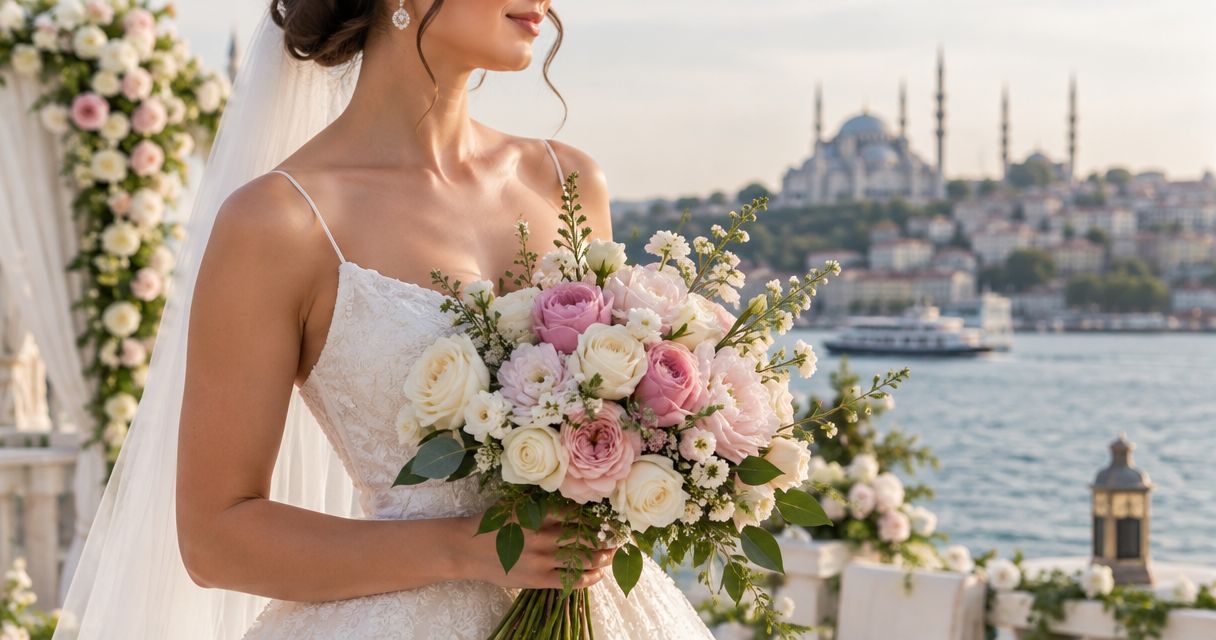
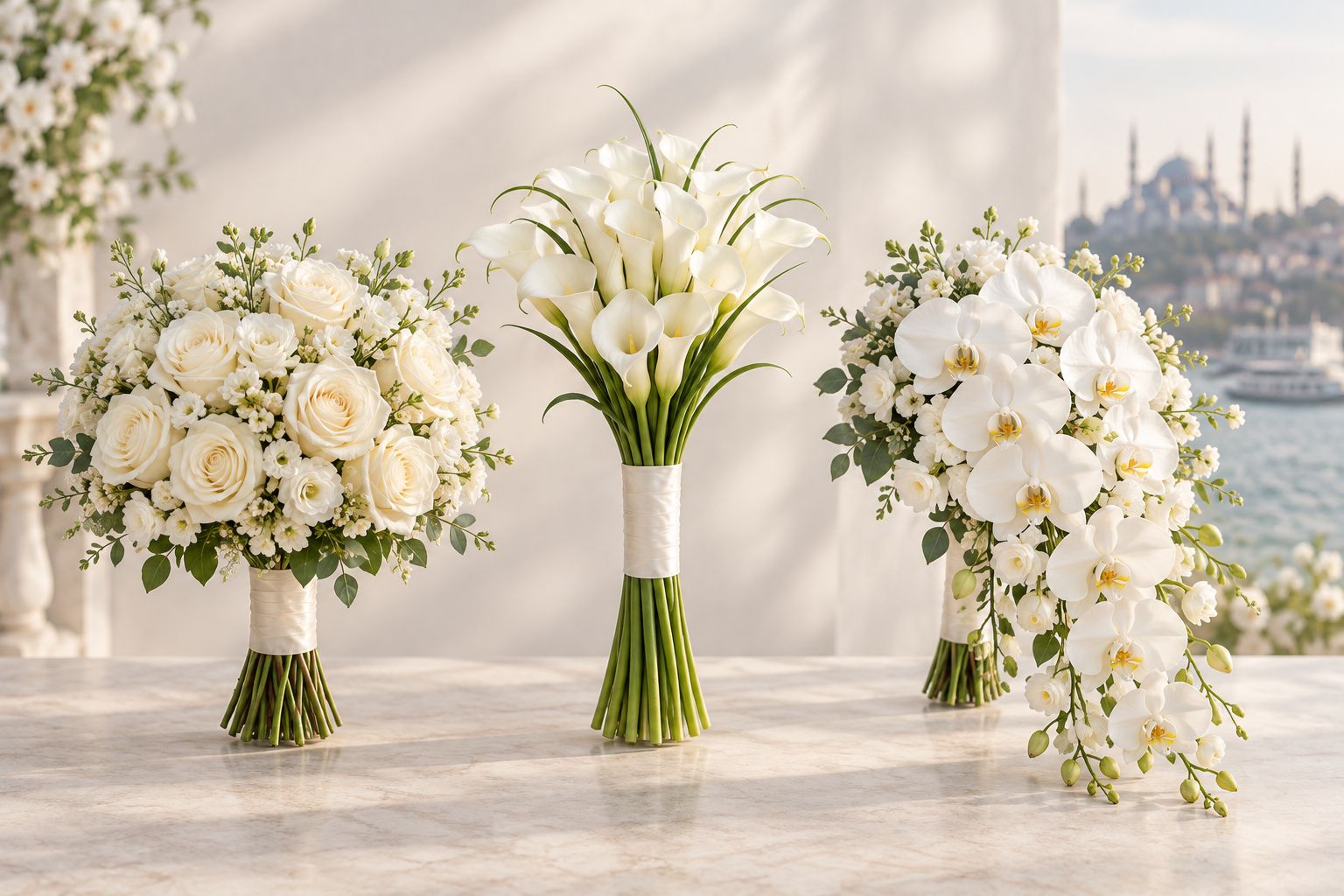
Best overall: roses. Best for a sculptural bouquet: calla lilies. Best for a cascading bouquet: orchids. The best bridal bouquet flower types for Istanbul weddings in 2026 depend on the shape you want, your dress and how the flowers will be handled between preparation and photographs.
- Roses lead the best bridal bouquet flower types for adaptable shapes and a broad colour palette.
- Calla lilies suit sculptural bouquets; orchids suit cascading designs with visible movement.
- Peonies create fullness, while ranunculus brings layered detail to smaller bouquets.
- Pollyannaflowers offers bridal flower arrangements for Istanbul couples seeking a local florist.
Why this matters
Your bridal bouquet appears against your dress, beside your face and in your hands. A flower that looks beautiful in a close-up photograph can create a different effect when gathered into a complete bouquet. Choose the silhouette before you choose every stem.
For your 2026 Istanbul wedding, separate the visual decision from the handling plan. An indoor ceremony and outdoor portraits place different demands on flowers, especially when the bouquet spends time away from water. Tell your florist where you will carry it and where it will wait.
Pollyannaflowers is a fit for Istanbul couples seeking a local florist for bridal flower arrangements. You can start your enquiry with Pollyannaflowers, then use the comparisons below to describe the bouquet rather than asking for an exact copy of a photograph.
What makes the best bridal bouquet flower types?
Assess each flower against these criteria before choosing a favourite:
- Silhouette: Decide whether you want a rounded cluster, a narrow hand-tied bouquet or a trailing arrangement.
- Scale: Look at the finished bouquet against your dress, not just the size of an individual bloom.
- Texture: Smooth calla lilies, layered roses and branching orchids create distinctly different surfaces.
- Colour: Specify the shade as well as the colour family; ivory, cream and bright white are different directions.
- Handling: Consider exposed petals, unsupported flower heads and the time the bouquet spends outside water.
- Scent: Ask about the actual flowers proposed, rather than assuming every variety has the same fragrance.
For a useful starting brief, choose 3 reference images, compare 2 bouquet shapes and produce 1 written brief. These are planning recommendations, not rules about how many flowers belong in your bouquet. The brief should explain what you like in each image so the florist can distinguish colour preferences from flower preferences.
Bridal bouquet flowers at a glance
| Rank | Flower type | Best for | Standout feature | Key limitation |
|---|---|---|---|---|
| 1 | Roses | An adaptable, rounded bridal bouquet | Layered blooms that work in tightly grouped or looser designs | Thorns require preparation; exposed petals can bruise |
| 2 | Calla lilies | A sculptural, minimalist bouquet | Smooth, curved spathes and a strong outline | Less suited to a fluffy, densely textured look |
| 3 | Orchids | A cascading bridal bouquet | Branching flower sprays that introduce movement | Individual flowers need protection from knocks |
| 4 | Peonies | A full, romantic bouquet | Broad blooms with abundant petals | Large heads need careful support and handling |
| 5 | Ranunculus | A smaller bouquet with fine detail | Closely layered petals on compact flower heads | Slender stems and delicate petals need gentle handling |
| 6 | Hydrangeas | A rounded bouquet with broad colour areas | Clustered flower heads that create volume | Water management deserves particular attention |
| 7 | Baby's breath | An airy bouquet with fine texture | Branching stems covered in small flowers | Does not create a bold focal bloom on its own |
The ranking is a decision tree, not a claim that one flower outperforms every other flower. Roses are the default because they accommodate different design directions. Move down the table when you have a more specific silhouette or texture in mind.
1. Roses: best bridal bouquet flowers for an adaptable design
Roses give you a recognisable focal flower without committing you to a single bouquet shape. They work in rounded arrangements, looser hand-tied designs and mixed bouquets where other flowers supply movement. That flexibility makes roses the strongest default for an undecided bride.
Ask to see the proposed rose variety, not simply a photograph labelled roses. A tightly formed bloom and a more open, ruffled bloom produce different results, even when their colours are similar. Specify whether you want visible individual flowers or a continuous surface of petals.
Roses pros:
- Suit both structured and relaxed bouquet shapes.
- Offer a broad range of colour choices.
- Combine with small supporting flowers or larger focal blooms.
Roses cons:
- Thorny stems require careful preparation.
- Outer petals can show bruising from handling.
Best for: Brides who want a clear starting point without narrowing the design too early.
Verdict: Buy roses as your default focal flower; settle the variety and shape before approving the arrangement.
2. Calla lilies: best bridal bouquet flowers for sculptural simplicity
Calla lilies create a strong outline with relatively little visual clutter. Their curved, funnel-like structures are spathes surrounding a central flower spike, which explains their distinctive appearance. A calla-led bouquet puts the shape of each stem on display rather than building a dense surface of petals.
Choose calla lilies when you want the bouquet to read as a deliberate sculptural object. Discuss whether the stems should sit together in a narrow cluster or spread into a wider arrangement. The silhouette matters more here than adding decorative filler.
Calla lilies pros:
- Create a clean, recognisable outline.
- Suit narrow, elongated bouquet designs.
- Provide a smooth contrast to lace or textured fabric.
Calla lilies cons:
- Do not deliver the soft, ruffled effect of layered flowers.
- A sparse design leaves each bloom visually exposed.
Best for: Brides seeking a pared-back bouquet with a strong shape.
Verdict: Buy calla lilies for sculptural simplicity; skip them if abundant petal texture is your priority.
3. Orchids: best bridal bouquet flowers for a cascading shape
Orchid sprays bring branching lines and flowers positioned along a stem. That structure suits arrangements with trailing sections or movement beyond the central cluster. Orchids also work as accents, but a cascading design gives their branching form a clear purpose.
Orchid types differ substantially in flower size and stem structure. Ask your florist which type supports the proposed shape rather than treating orchids as interchangeable. For a 2026 wedding brief, describe the direction and length of the cascade in words alongside your reference photograph.
Orchids pros:
- Introduce branching movement into the bouquet.
- Provide distinctive flowers with open space between them.
- Work as focal sprays or supporting accents.
Orchids cons:
- Exposed individual flowers need protection from knocks.
- A trailing design requires more attention to carrying position.
Best for: Brides who want a cascading bouquet rather than a compact round cluster.
Verdict: Buy orchids when the cascade is part of the design, not simply an extra decoration.
Seeing the difference: rounded, sculptural and cascading
A rose-led rounded bouquet concentrates attention near your hands. A calla-led sculptural bouquet emphasises clean lines, while an orchid-led cascade extends the outline below the main cluster. Compare these shapes against your dress before deciding which flower photograph you prefer.
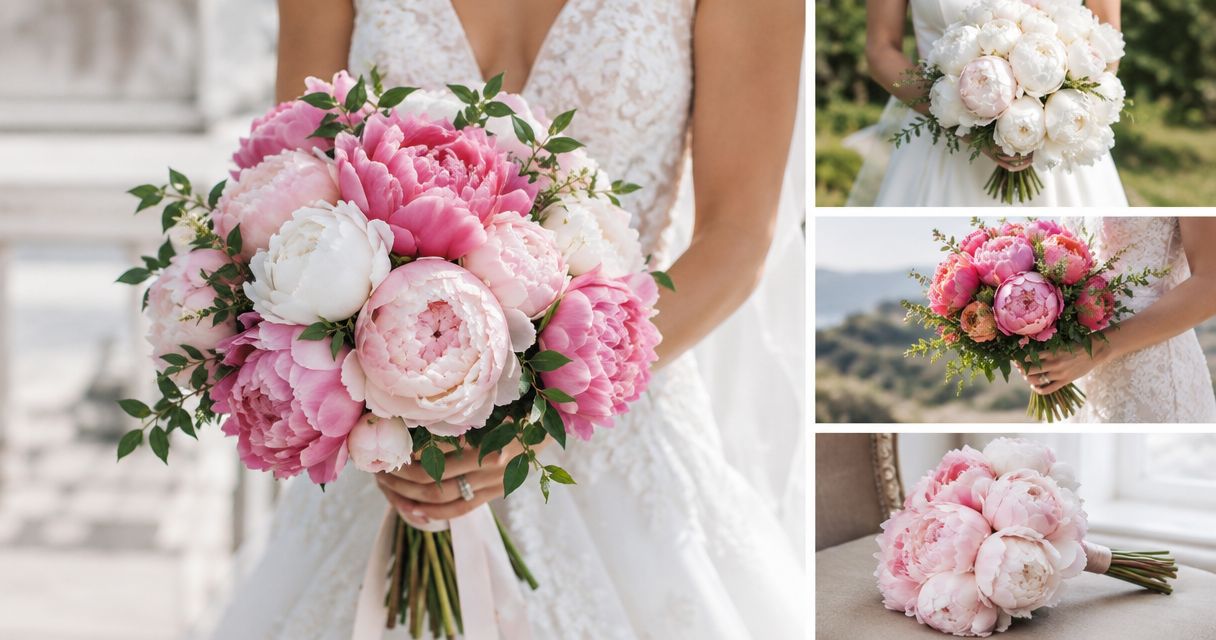
4. Peonies: best bridal bouquet flowers for romantic fullness
Peonies create fullness through broad flower heads and abundant petals. They suit a bouquet where the focal blooms should feel generous and visibly layered. If your reference image depends on that effect, identify fullness as the requirement rather than making the entire brief depend on one flower name.
Ask your florist how open the blooms should be when you carry them. Buds and open flowers create different proportions, so the preparation stage affects the finished outline. Keep the handling plan clear: broad flower heads should not be pressed against clothing or packed tightly against surrounding objects.
Peonies pros:
- Create a full, petal-rich focal point.
- Suit rounded and loosely gathered bouquets.
- Pair visually with smaller supporting flowers.
Peonies cons:
- Broad flower heads need careful support.
- Open petals are vulnerable to crushing during handling.
Best for: Brides whose main priority is a full, romantic bouquet.
Verdict: Hold the peony decision until your florist confirms how the proposed blooms fit the design and preparation plan.
5. Ranunculus: best bridal bouquet flowers for compact detail
Ranunculus offers closely layered petals without the broad scale of a peony head. It suits a smaller bouquet where you want detail visible in close-up photographs. It also works alongside roses when the design needs variation without losing a layered-petal theme.
Do not confuse a compact flower head with a flower that needs little care. Ranunculus has slender stems and delicate petals, so bouquet construction and handling still matter. Ask how the florist will maintain the intended shape without crowding the flower heads together.
Ranunculus pros:
- Adds fine, layered detail to a compact arrangement.
- Works as a focal flower or a supporting bloom.
- Provides texture without requiring broad flower heads.
Ranunculus cons:
- Slender stems need gentle handling.
- Delicate petals are not suited to rough contact.
Best for: Brides who want a smaller bouquet with visible petal detail.
Verdict: Buy ranunculus for compact texture; choose another focal flower if you want large individual blooms.
6. Hydrangeas: best bridal bouquet flowers for rounded volume
Hydrangeas create volume through clusters of small flowers gathered into broad heads. They suit a rounded bouquet with large areas of colour rather than clearly separated focal blooms. Use them when the overall mass matters more than seeing each flower individually.
Water management is central to using cut hydrangeas. Discuss where the bouquet will remain hydrated before the ceremony and between planned uses. For an outdoor portion of your 2026 Istanbul wedding, make that handling discussion part of the design approval rather than an afterthought.
Hydrangeas pros:
- Build a rounded outline through clustered heads.
- Create broad, continuous areas of colour.
- Provide a different texture from individually layered blooms.
Hydrangeas cons:
- Need particular attention to hydration.
- Large clusters can obscure smaller supporting flowers.
Best for: Brides seeking a rounded bouquet with a strong block of colour.
Verdict: Hold hydrangeas until the hydration plan is clear; skip them if that plan does not suit your schedule.
7. Baby's breath: best bridal bouquet flowers for airy texture
Baby's breath creates an airy effect through branching stems carrying many small flowers. It works as a supporting material and as the main element in a deliberately fine-textured bouquet. Its appeal comes from the collective cloud-like outline, not a prominent individual bloom.
Choose it because you want that texture, not because you assume it automatically simplifies every arrangement. Gathering branching stems into a balanced shape still requires design decisions. Decide whether you want a loose outline or a more tightly gathered cluster.
Baby's breath pros:
- Creates fine texture with space between branches.
- Supports larger focal flowers without adding another large bloom.
- Can form a bouquet without a dominant focal flower.
Baby's breath cons:
- Does not provide bold individual blooms.
- Fine branches can catch against textured fabrics.
Best for: Brides who prefer an airy, small-flowered bouquet.
Verdict: Buy baby's breath for its fine texture; skip an all-baby's-breath bouquet if you want a strong floral focal point.
How the flower types are ranked
This 2026 ranking prioritises design flexibility first, then assigns each flower a distinct use case based on its visible structure. Roses lead as the adaptable default; calla lilies, orchids and the remaining options answer more specific preferences. The ranking does not represent a durability test or a comparison of named commercial products.
Handling limitations matter alongside appearance. A bouquet should suit your ceremony and photographs without asking you to ignore exposed petals, trailing stems or hydration needs. Keep those requirements in the written brief.
Which bridal bouquet flowers should you choose?
Choose roses if you are undecided. Start with a rounded or loosely gathered shape, then select the colour and degree of petal texture. Switch to calla lilies for a sculptural outline or orchids for a cascade; choose the other flowers only when their specific texture solves your design brief.
For bridal bouquet planning with Pollyannaflowers, bring your dress reference, preferred silhouette and wedding-day locations into the same conversation. Pollyannaflowers offers bridal flower arrangements, but your enquiry should establish the particular design and handling details you need.
Discuss your bridal bouquet
Share your preferred flowers, bouquet shape and Istanbul wedding details.
FAQ
What are the best bridal bouquet flower types for Istanbul weddings?
Roses are the best default for an adaptable bridal bouquet. Calla lilies suit sculptural designs, orchids suit cascades, and peonies suit a full, romantic look.
Are roses better than peonies for a bridal bouquet?
Roses are the stronger default when you have not settled the design; peonies suit a brief centred on broad, petal-rich blooms. Choose according to the finished silhouette rather than the flower name alone.
What's the best flower for a minimalist bridal bouquet?
Calla lilies suit a minimalist bridal bouquet because their smooth, curved forms create a clear outline. Specify whether you want a narrow cluster or a wider sculptural arrangement.
Which flowers work best in a cascading bridal bouquet?
Orchid sprays suit cascading bridal bouquets because their branching structure introduces movement beyond the central cluster. Ask your florist which orchid type supports the intended shape.
Can I use hydrangeas in an outdoor wedding bouquet?
Hydrangeas can form an outdoor wedding bouquet, but hydration must be part of the handling plan. Agree where the bouquet will remain in water before the ceremony and between uses.
How do I brief an Istanbul florist for my wedding bouquet?
Give the florist your wedding date, locations, dress reference, preferred bouquet shape and colour direction. For a 2026 enquiry with Pollyannaflowers, distinguish essential design features from flowers you simply like in a photograph.
Should every flower in my bridal bouquet be the same type?
No, a bridal bouquet can combine focal flowers with supporting flowers. Keep each addition purposeful: it should contribute shape, texture or colour rather than repeat something the bouquet already has.
One last thing
Ask for the bouquet to be considered against your dress, not just on a florist's table. A close-up image hides scale and carrying position. Before approving your 2026 bridal bouquet brief, explain where the flowers should sit in your hands and which dress details you want to remain visible.