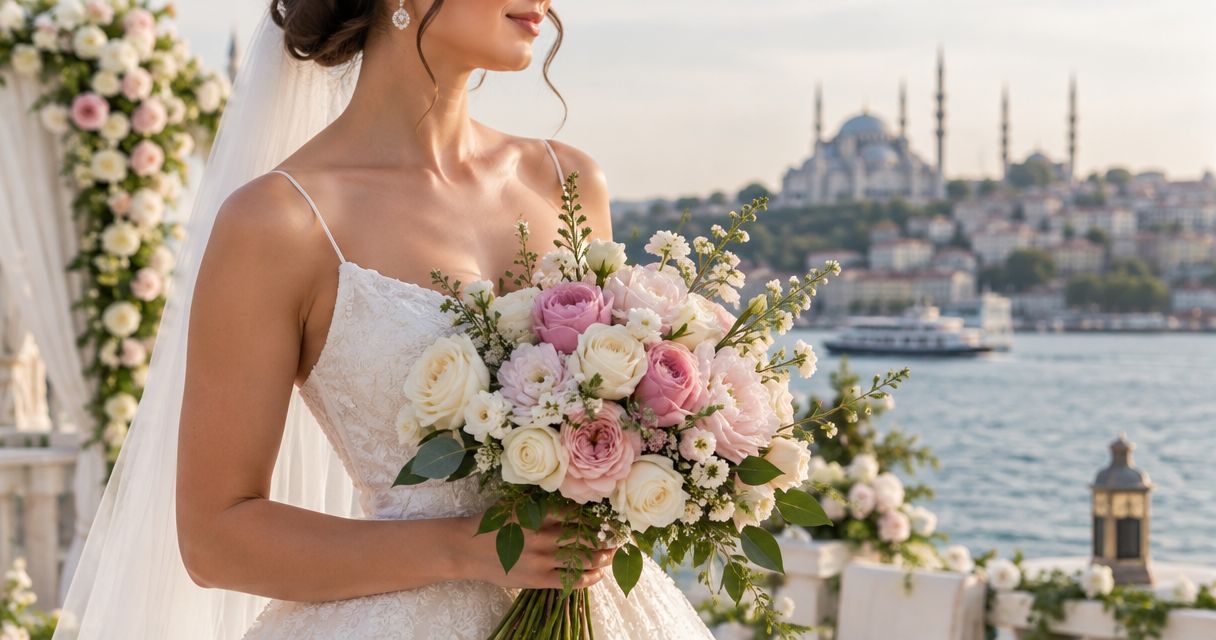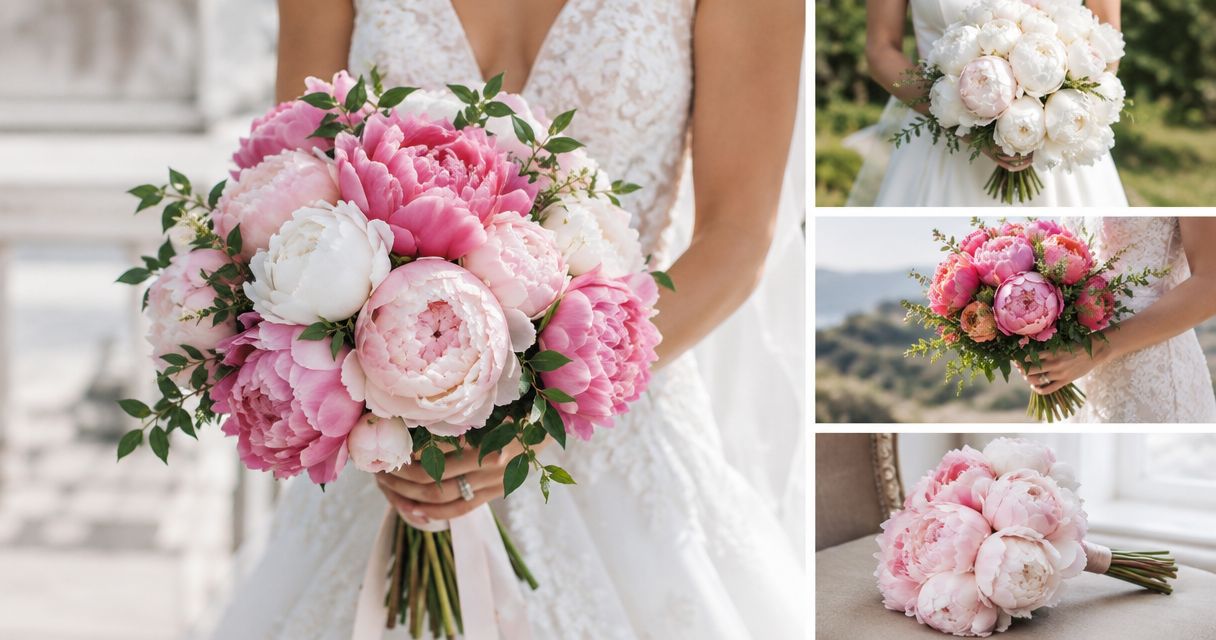
Best overall: a rounded all-peony bouquet; best for a relaxed garden look: a loose mixed bouquet; best for limiting peony use: a compact peony-accent bouquet. This 2026 guide compares the best peony bouquet styles by shape, color, and bridal setting, with a consultation checklist for discussing bridal flower arrangements with Pollyannaflowers.
- The best peony bouquet styles start with silhouette: rounded for formality, loose for movement, cascading for drama.
- A rounded all-peony bouquet is the default choice when you want peonies to remain the focal point.
- Choose a peony-accent mixed bouquet when you want the flower's character without an all-peony design.
- Pollyannaflowers offers bridal flower arrangements in Istanbul; discuss your preferred bouquet shape during the consultation.
Why this matters
A peony bouquet is not just a collection of flowers. Its outline determines whether you see a compact circle, an airy garden arrangement, or a trailing statement against your dress. Color makes a separate decision: white feels restrained, blush creates a softer palette, and mixed tones make the individual flowers more distinct.
Choose the silhouette before choosing the supporting flowers. A florist can work from a clear shape and palette; a folder of unrelated bouquets gives conflicting instructions. For your 2026 wedding, start with the design you want to carry rather than trying to reproduce every detail of an inspiration photograph.
The styles below are design directions, not named products or promises of an exact arrangement. Use them to explain what you want, including the details you want left out.
What makes the best peony bouquet styles
Judge a bridal bouquet against these criteria before comparing the options:
- Silhouette: Decide whether you want a defined rounded edge, an open garden outline, or a downward cascade.
- Peony prominence: Choose between peonies as the whole visual story, shared focal flowers, or occasional accents.
- Dress balance: Check whether the bouquet frames your dress or covers a detail you want visible.
- Color discipline: Keep the palette intentional. White, blush, and contrasting colors create different effects even within the same shape.
- Carrying comfort: Discuss the handle, balance, and how the bouquet sits in your hand rather than judging it only on a table.
- Brief clarity: Specify the outline, focal color, and unwanted elements so the florist understands the design without guessing.
For a 2026 consultation, bring 3 reference images, choose 1 focal color, and assess the proposed shape from 2 viewing angles: front and side. These are practical briefing steps, not bouquet specifications.
Peony bouquet styles at a glance
| Style | Best for | Standout feature | Key limitation |
|---|---|---|---|
| Rounded all-peony | A formal, flower-focused bridal look | Repeated peony heads create a clear rounded outline | Limited variation in flower texture |
| Loose garden-style | A relaxed outdoor wedding aesthetic | Open spacing and an irregular outline | Less suitable when you want strict symmetry |
| White peony and greenery | A restrained, foliage-led palette | Contrast between pale flowers and green foliage | Excess foliage distracts from the peonies |
| Blush tonal peony | A soft, color-led romantic look | Related pink tones hold the palette together | Similar shades can make individual blooms less distinct |
| Peony and rose | A structured mixed-flower bouquet | Two focal flower forms share the composition | Peonies no longer carry the whole design |
| Cascading peony | A statement silhouette | Flowers and foliage extend below the main cluster | The trailing outline needs careful handling |
| Compact peony-accent | A small bouquet with restrained peony use | Peonies act as accents within a mixed arrangement | Less peony presence than an all-peony bouquet |
1. Rounded all-peony: best for a formal bridal look
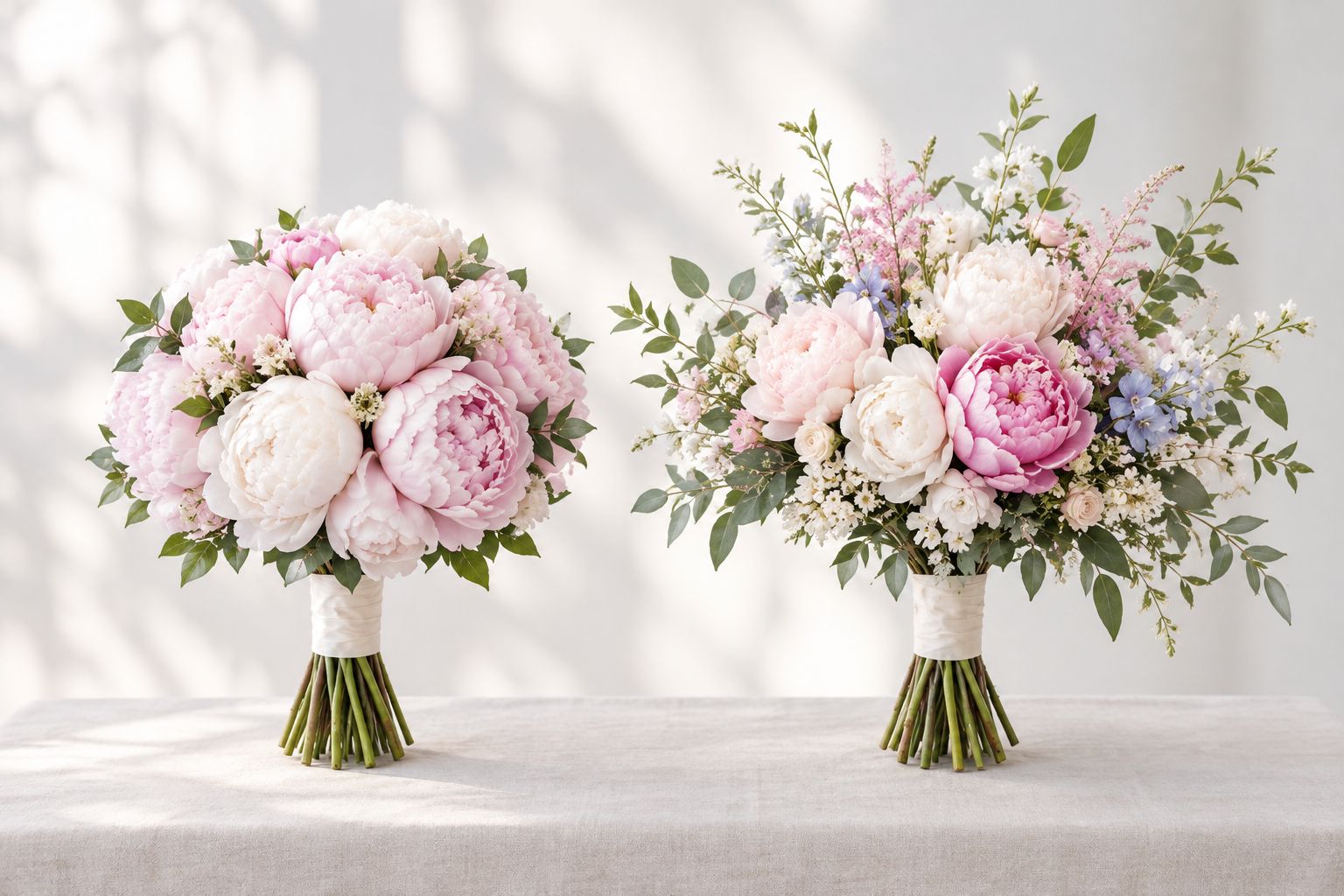
A rounded all-peony bouquet keeps the flower choice simple and the outline deliberate. Peony heads sit together as the main visual mass, with little competing foliage or filler. Choose this style when the flower itself matters more than a varied garden composition.
The key instruction is a defined outline, not an excessively tight arrangement. Ask for a shape that reads clearly from the front while still allowing the flowers to show their individual forms.
Rounded all-peony pros:
- Keeps peonies as the unmistakable focal flower.
- Creates a clear shape against your dress.
- Makes a single-color brief easy to communicate.
Rounded all-peony cons:
- Offers less texture variation than a mixed bouquet.
- Does not deliver the trailing movement of a cascade.
Best for: Brides who want a formal, recognizable peony bouquet rather than a foliage-led design.
Verdict: Buy this style if you want the most direct expression of a peony bridal bouquet.
2. Loose garden-style: best for a relaxed outdoor aesthetic
A loose garden-style peony bouquet uses open spacing, varied flower positions, and an irregular edge. Peonies remain focal points, but supporting flowers and foliage contribute to the shape. The result is intentionally less symmetrical than a rounded bouquet.
Specify how loose you want it. A lightly open arrangement and a wide, branching bouquet are different briefs, even though both fit the garden-style label.
Loose garden-style pros:
- Gives supporting flowers room to remain visible.
- Creates an outline with movement rather than a fixed circle.
- Suits a brief built around a garden-like composition.
Loose garden-style cons:
- Does not provide strict symmetry.
- A wide outline can obscure dress details when held centrally.
Best for: Brides whose priority is an informal, garden-inspired silhouette.
Verdict: Buy this style for deliberate looseness; skip it if you want a sharply defined rounded edge.
3. White peony and greenery: best for a restrained palette
A white peony and greenery bouquet relies on contrast rather than multiple flower colors. Pale peonies form the focal area, while foliage defines the edge or adds space between blooms. This is a palette-led style that can be either compact or slightly open.
Tell the florist whether greenery should frame the flowers or visibly extend beyond them. That distinction prevents a white floral brief from becoming a foliage-dominant arrangement.
White peony and greenery pros:
- Keeps the flower-color brief simple.
- Uses foliage to separate pale flower forms.
- Lets you choose a rounded or open outline without changing the palette.
White peony and greenery cons:
- Too much foliage reduces the visual prominence of the peonies.
- Different whites in flowers and fabric do not necessarily look identical.
Best for: Brides who want a restrained white-and-green composition rather than a pink-centered bouquet.
Verdict: Buy this style when palette restraint matters most; keep the foliage's role explicit.
4. Blush tonal peony: best for a soft romantic color story
A blush tonal peony bouquet groups related pink tones instead of using strong contrasts. The visual interest comes from differences within the palette and the layered appearance of the flowers. Rounded and lightly open shapes both work with this direction.
Use your references to define blush. A pale pink brief and a warmer pink brief are not interchangeable, so show the florist the color relationship you want rather than relying on the label alone.
Blush tonal peony pros:
- Creates a connected color story.
- Keeps attention on the flowers rather than contrasting foliage.
- Works with both compact and gently open compositions.
Blush tonal peony cons:
- Similar tones make individual flower boundaries less distinct.
- The word blush alone leaves room for differing interpretations.
Best for: Brides choosing their bouquet around a soft pink palette.
Verdict: Buy this style for tonal color; skip it if you want pronounced contrast between flowers.
The difference between rounded and garden-style bouquets is easiest to understand through their outlines. Compare the compact edge with the open spaces and projecting stems before choosing your references.
5. Peony and rose: best for a structured mixed-flower bouquet
A peony and rose bouquet gives both flowers a visible role. Peonies contribute their layered forms, while roses provide a second focal flower rather than acting only as filler. Choose a rounded outline if you want the mixed composition to remain structured.
The useful instruction is which flower leads. Ask for peony-led, rose-led, or visually balanced placement rather than leaving the relationship undefined.
Peony and rose pros:
- Adds another focal flower form to the design.
- Supports a structured mixed-flower composition.
- Lets you specify which flower should dominate.
Peony and rose cons:
- Reduces the single-flower character of an all-peony bouquet.
- An unclear brief can leave either flower visually secondary.
Best for: Brides who want visible flower variety without a loose garden outline.
Verdict: Buy this style when you want structure and mixed focal flowers in the same bouquet.
6. Cascading peony: best for a statement silhouette
A cascading peony bouquet extends below the main flower cluster. The trailing portion changes the whole outline, making shape more important than a simple front-facing circle. Specify whether you want flowers, foliage, or both to create that lower line.
Check how the cascade sits against your dress while you hold it. A beautiful tabletop arrangement is not enough; the design must also make sense in your carrying position.
Cascading peony pros:
- Creates a distinct downward silhouette.
- Gives trailing foliage or flowers a defined design role.
- Makes the bouquet outline a central part of your bridal look.
Cascading peony cons:
- Requires attention when sitting down or moving around obstacles.
- Can cover more of the dress than a compact bouquet.
Best for: Brides who want the bouquet's shape to make a statement.
Verdict: Buy this style for its trailing outline; skip it if carrying simplicity is your priority.
7. Compact peony-accent: best for restrained peony use
A compact peony-accent bouquet uses peonies within a mixed arrangement rather than making them the entire composition. Supporting flowers carry part of the design, while the peonies provide recognizable focal accents. Keep the outline compact if you want a contained bridal bouquet.
This is a design choice, not a promise of a particular price. Ask the florist to explain the proposed flower mix before deciding whether it meets your priorities.
Compact peony-accent pros:
- Includes peonies without requiring an all-peony composition.
- Gives supporting flowers a meaningful role.
- Keeps the silhouette contained.
Compact peony-accent cons:
- Makes peonies less dominant.
- Can disappoint if your reference images show only all-peony bouquets.
Best for: Brides who want peony accents rather than a bouquet defined entirely by peonies.
Verdict: Buy this style for restrained peony use; skip it if peony prominence is non-negotiable.
How we ranked the styles
This 2026 ranking puts a rounded all-peony bouquet first because it answers the core brief most directly: a bridal bouquet centered on peonies. The remaining styles each serve a different priority, from an open garden outline to a trailing statement shape.
The ranking compares design suitability, not measured durability, florist performance, or price. The best style is the one whose defining feature matches your brief. A cascade is not better than a compact bouquet when you specifically want a contained outline.
Turn your favorite style into a clear florist brief
Use the same decision order for your 2026 appointment, whether you choose an all-peony arrangement or a mixed bouquet:
- Choose the silhouette. Name rounded, loose, or cascading before discussing individual supporting flowers.
- Set peony prominence. Explain whether peonies should dominate, share the composition, or act as accents.
- Define the palette. Show the intended white, blush, or mixed-color relationship with reference images.
- Check the dress. Identify any neckline, waist, or fabric detail you do not want the bouquet to cover.
- Confirm the brief. Ask the florist to summarize the intended shape and flower relationship in plain language.
Bring your wedding date into the discussion rather than treating the reference photograph as a complete specification. Also separate the bridal bouquet brief from any wider ceremony arrangements; matching the palette does not require repeating the same shape everywhere.
Pollyannaflowers is a florist for Istanbul brides seeking bridal flower arrangements. Use the consultation to discuss your preferred peony design and the proposed composition, rather than assuming every photographed arrangement is a named offering.
Discuss your bridal bouquet
Use your preferred silhouette, palette, and peony prominence to start the conversation.
Which peony bouquet style should you choose?
Choose a rounded all-peony bouquet if you are undecided. It keeps the flower central and gives you a straightforward silhouette to brief. Change that default only when another priority is clear: looseness, a white-and-green palette, tonal pink, mixed focal flowers, a cascade, or restrained peony use.
For a 2026 wedding, choose the design before refining decorative finishing details. Ribbon and presentation do not resolve an unclear outline. Take your chosen style to Pollyannaflowers with a short description of what you like and what you want excluded.
FAQ
What's the best peony bouquet style for a bride?
A rounded all-peony bouquet is the best default for a bride who wants peonies to remain the focal point. Choose another silhouette when movement, trailing shape, or mixed flowers matter more.
Is a rounded peony bouquet better than a garden-style bouquet?
A rounded peony bouquet is better for a defined, formal outline; a garden-style bouquet is better for deliberate looseness. Neither shape serves both priorities equally well.
What peony bouquet style works with a simple wedding dress?
Choose a rounded bouquet for a contained outline or a cascade if you want the bouquet itself to make a statement. Check the carrying position against the dress before settling on the shape.
Can I combine peonies and roses in a bridal bouquet?
Peonies and roses can share a bridal bouquet as focal flowers. Specify whether you want peonies to lead or both flowers to have a visibly balanced role.
How do I ask for a blush peony bouquet?
Show reference images that define your intended pink palette. The word blush alone does not establish the exact color relationship you want.
What should I bring to a bridal bouquet consultation in 2026?
Bring reference images, your wedding date, and a photograph of your dress. Explain the silhouette, palette, and degree of peony prominence before discussing finishing details.
Does Pollyannaflowers offer bridal flower arrangements in Istanbul?
Pollyannaflowers offers bridal flower arrangements in Istanbul. Discuss your preferred peony bouquet style and the proposed flower composition directly with the florist.
One last thing
Choose one reference image that shows what you do not want. An unwanted wide outline, foliage-heavy edge, or trailing section often communicates a boundary more clearly than another attractive bouquet photograph.
Pair that negative reference with your preferred style and explain the difference. Your brief becomes a decision the florist can understand: keep the rounded silhouette, preserve the peony focus, and leave out the feature you dislike.