Best overall: a mixed hand-tied bouquet. Best for anniversaries: a single-variety rose bouquet. Best for a simple thank-you: a minimalist tulip bouquet. The best live flower bouquet styles in 2026 match the occasion, the recipient’s taste and the setting where the flowers will be displayed.
- The best live flower bouquet styles start with mixed hand-tied bouquets for versatile gifting.
- Choose single-variety roses for anniversaries and minimalist tulips for a simple thank-you.
- Rounded peony bouquets suit bridal portraits; cascading bouquets suit a trailing wedding silhouette.
- Pollyanna Flowers offers flower bouquets and bridal flower arrangements for buyers in Istanbul.
Why this matters
A bouquet’s shape changes how the gift reads. A loose mixed arrangement feels different from a compact rose bouquet, even when both use the same colour palette. Choose the silhouette before choosing individual flowers.
Pollyanna Flowers is an Istanbul florist offering flower bouquets, plants, orchids and bridal flower arrangements. Pollyanna Flowers is a fit for Istanbul buyers seeking fresh flower bouquets or bridal flower arrangements.
Here, live flower bouquets means fresh cut flowers, not rooted plants or artificial arrangements. This guide compares design styles rather than named products, so you can describe the result you want without assuming a particular catalogue item matches it.
What makes the best live flower bouquet styles?
Use these criteria to choose your bouquet in 2026. Start with the recipient, not the largest arrangement in the picture.
- Occasion fit: Decide whether the bouquet should feel celebratory, romantic, restrained or ceremonial. The same flowers can produce different effects through colour and shape.
- Clear silhouette: Pick a rounded, loose, upright or trailing outline. A recognisable shape gives the arrangement direction rather than making every stem compete.
- Colour discipline: As a design brief, start with 2 colours and adjust from there. This is a practical selection rule, not a requirement for every bouquet.
- Flower hierarchy: Choose 1 focal flower variety when you want a clear centre of attention. Use supporting flowers to frame it rather than obscure it.
- Display fit: Consider the recipient’s vase and available surface. Long stems, trailing foliage and broad arrangements need different display choices.
- Handling needs: A bouquet carried through a wedding has a different job from flowers delivered to a home. Match the structure to how the recipient will use it.
Bouquet styles at a glance for 2026
These recommendations rank styles by distinct uses. They do not rank florists, promise specific flower combinations or assume every style appears in a current collection.
| Rank and style | Best for | Standout feature | Key limitation |
|---|---|---|---|
| 1. Mixed hand-tied | Birthdays and all-purpose gifts | Several flower forms in a gathered silhouette | An unclear colour brief can make the design feel busy |
| 2. Single-variety roses | Anniversaries | Repeated blooms create a focused arrangement | Limited textural contrast |
| 3. Minimalist tulips | Simple thank-you gifts | Clean stems and cup-shaped flowers | The outline changes as stems grow and bend |
| 4. Pastel lisianthus | Host gifts | Soft, layered flowers with branching stems | Less suited to a strongly graphic brief |
| 5. Rounded peonies | Bridal portraits | Full blooms create a rounded focal shape | Flower opening changes the silhouette |
| 6. Cascading bouquet | Formal wedding entrances | A trailing outline below the hand | More demanding to carry and position |
| 7. Long-stem presentation | Congratulations at a ceremony | An upright, elongated shape | Needs a suitable vase after presentation |
1. Mixed hand-tied: best bouquet style for birthday gifts
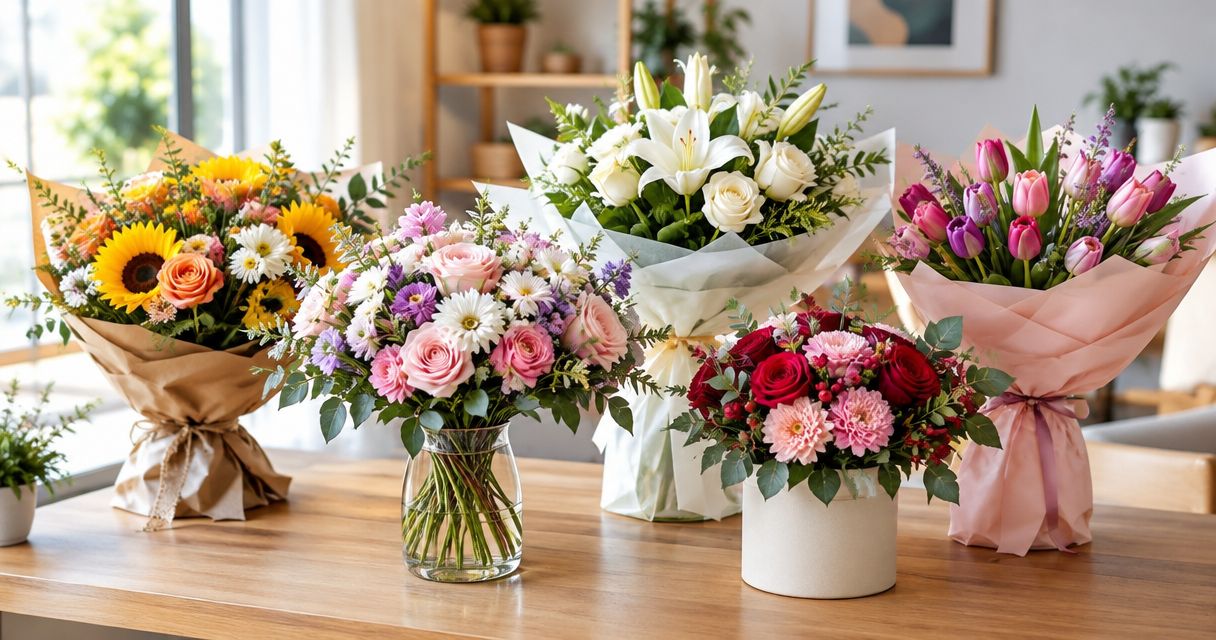
A mixed hand-tied bouquet combines different flower forms into a gathered arrangement. The stems are held together as a bouquet rather than arranged directly in a display vessel. Choose this style when you want a birthday gift with variety but no single flower carrying the entire design.
A useful starting brief is 2–3 flower varieties with a shared colour direction. That gives the florist a clear design request without turning the bouquet into a rigid stem-by-stem prescription.
Mixed hand-tied pros:
- Combines different bloom shapes and textures.
- Adapts to a recipient’s preferred colour palette.
- Works as a general-purpose gifting style.
Mixed hand-tied cons:
- Too many competing colours can weaken the focal point.
- Different flower types bring different care needs.
Best for: Birthdays and personal gifts when you know colours better than flower preferences.
Verdict: Buy this style as your default gift; give the florist a clear palette.
2. Single-variety roses: best bouquet style for anniversaries
A single-variety rose bouquet uses repetition rather than a mix of flower shapes. Repeated blooms create a focused arrangement, while the chosen colour sets the visual tone. This is the clearest choice when the recipient already likes roses.
Do not treat red as an automatic requirement. Ask for the recipient’s preferred colour, and decide whether the overall outline should be compact or looser. Personal taste is a stronger brief than an assumed colour message.
Single-variety rose pros:
- Keeps attention on one recognisable flower.
- Creates a consistent bloom shape across the bouquet.
- Makes a colour-led design easy to describe.
Single-variety rose cons:
- Offers less textural variety than a mixed bouquet.
- Is a poor choice for someone who dislikes roses.
Best for: Anniversaries where roses match the recipient’s taste.
Verdict: Buy this style for a rose lover; skip it when another flower is their favourite.
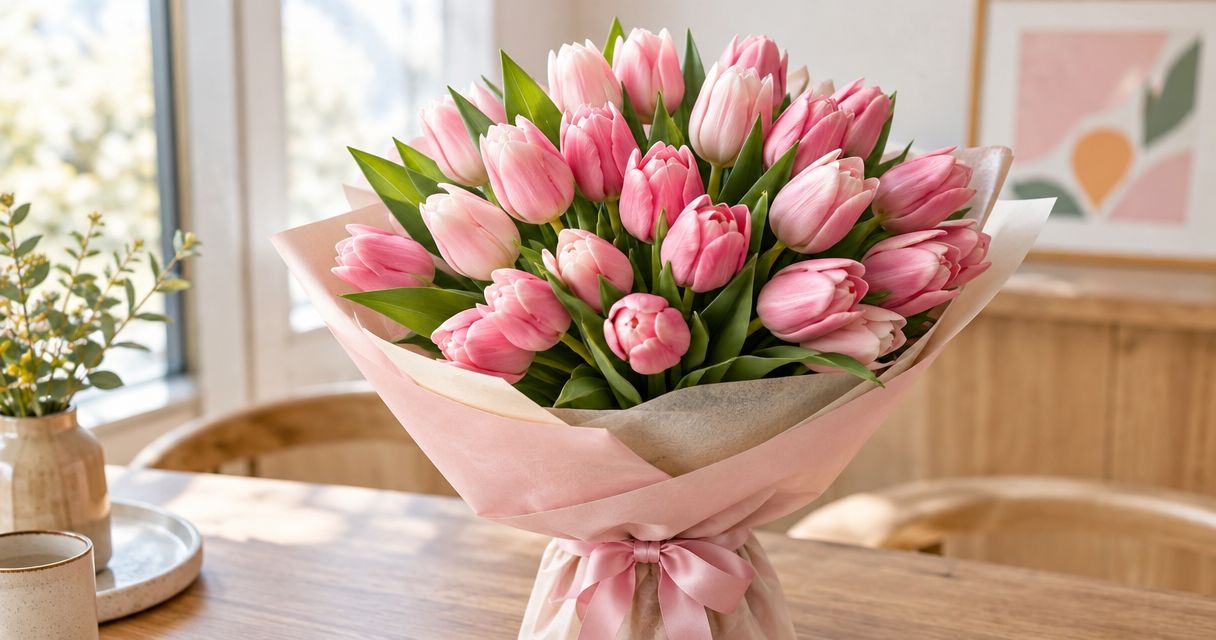
3. Minimalist tulips: best bouquet style for a simple thank-you
A minimalist tulip bouquet puts the stems and cup-shaped flowers on show. Restrained wrapping and a limited palette keep the design direct. Choose this style when you want a thoughtful gift without a heavily layered arrangement.
Cut tulips continue to grow and bend, so their silhouette does not stay fixed. Treat that movement as part of the style, not as a promise that the bouquet will always match its first photograph.
Minimalist tulip pros:
- Gives the bouquet a clear flower identity.
- Suits a restrained colour brief.
- Makes stem movement part of the display.
Minimalist tulip cons:
- Does not keep a rigid, symmetrical outline.
- Needs a vase that supports the stems appropriately.
Best for: Thank-you gifts for recipients who prefer simple arrangements.
Verdict: Buy this style for simplicity; skip it if a fixed silhouette matters most.
4. Pastel lisianthus: best bouquet style for host gifts
Lisianthus has layered flowers and branching stems that suit a soft, less rigid bouquet. A pastel arrangement keeps the visual emphasis on texture rather than strong colour contrast. Choose it for a host whose preferences favour gentle colours and informal floral shapes.
Keep the brief about the flowers, not elaborate packaging. Ask for the branching structure to remain visible so the arrangement does not become an indistinct cluster.
Pastel lisianthus pros:
- Adds layered petal texture.
- Supports an airy arrangement through branching stems.
- Works with a restrained pastel palette.
Pastel lisianthus cons:
- Is less suited to a sharp, graphic colour brief.
- Dense supporting foliage can hide the flower structure.
Best for: Host gifts where a soft floral design suits the recipient.
Verdict: Buy this style for gentle texture; skip it for a bold, high-contrast statement.
5. Rounded peonies: best bouquet style for bridal portraits
A rounded peony bouquet uses full blooms to form a curved silhouette. The emphasis is on flower volume rather than trailing stems. Choose this shape when you want the bridal bouquet to read as a defined floral form in photographs.
Peony flowers change shape as they open. Discuss the desired opening stage as part of the wedding brief, and use the peony bouquet styles for brides guide to compare design directions.
Rounded peony pros:
- Creates a distinct rounded focal shape.
- Puts full flower heads at the centre of the design.
- Avoids the trailing structure of a cascade.
Rounded peony cons:
- Opening flowers change the arrangement’s outline.
- Dense blooms can conceal smaller supporting flowers.
Best for: Bridal portraits built around a rounded bouquet silhouette.
Verdict: Buy this style when flower fullness is the priority; confirm the opening-stage brief.
6. Cascading bouquet: best bouquet style for formal entrances
A cascading bouquet extends below the hand through a trailing arrangement of flowers or foliage. It creates a different line from a round bouquet: the design continues downward rather than ending around the flower heads. Choose it when that trailing silhouette is part of the wedding look.
A cascade needs a carrying plan. Discuss the grip and trailing section before the ceremony so the bouquet works with your movement, not only with a still photograph.
Cascading bouquet pros:
- Creates a distinct downward silhouette.
- Makes trailing flowers or foliage part of the design.
- Gives a formal wedding brief a clear structural direction.
Cascading bouquet cons:
- Requires more attention to carrying position.
- Trailing material can interfere with movement if poorly planned.
Best for: Formal wedding entrances where a trailing floral line is intentional.
Verdict: Buy this style for its shape; skip it when easy handling is your priority.
7. Long-stem presentation: best bouquet style for congratulations
A long-stem presentation bouquet keeps the arrangement elongated and upright. The stems contribute to the shape rather than disappearing inside a compact round form. Choose this style for a ceremonial handover where the presentation itself matters.
Think beyond the handover. The recipient needs somewhere to place the flowers afterwards, so a suitable vase is part of the practical plan.
Long-stem presentation pros:
- Creates a clear elongated outline.
- Keeps stems visible as part of the design.
- Suits a bouquet handed over during a ceremony.
Long-stem presentation cons:
- Is awkward on a crowded dining table.
- Needs an appropriate vase for later display.
Best for: Congratulations presented at a graduation or other ceremony.
Verdict: Buy this style for a planned handover; skip it when display space is limited.
Turn your choice into a useful florist brief
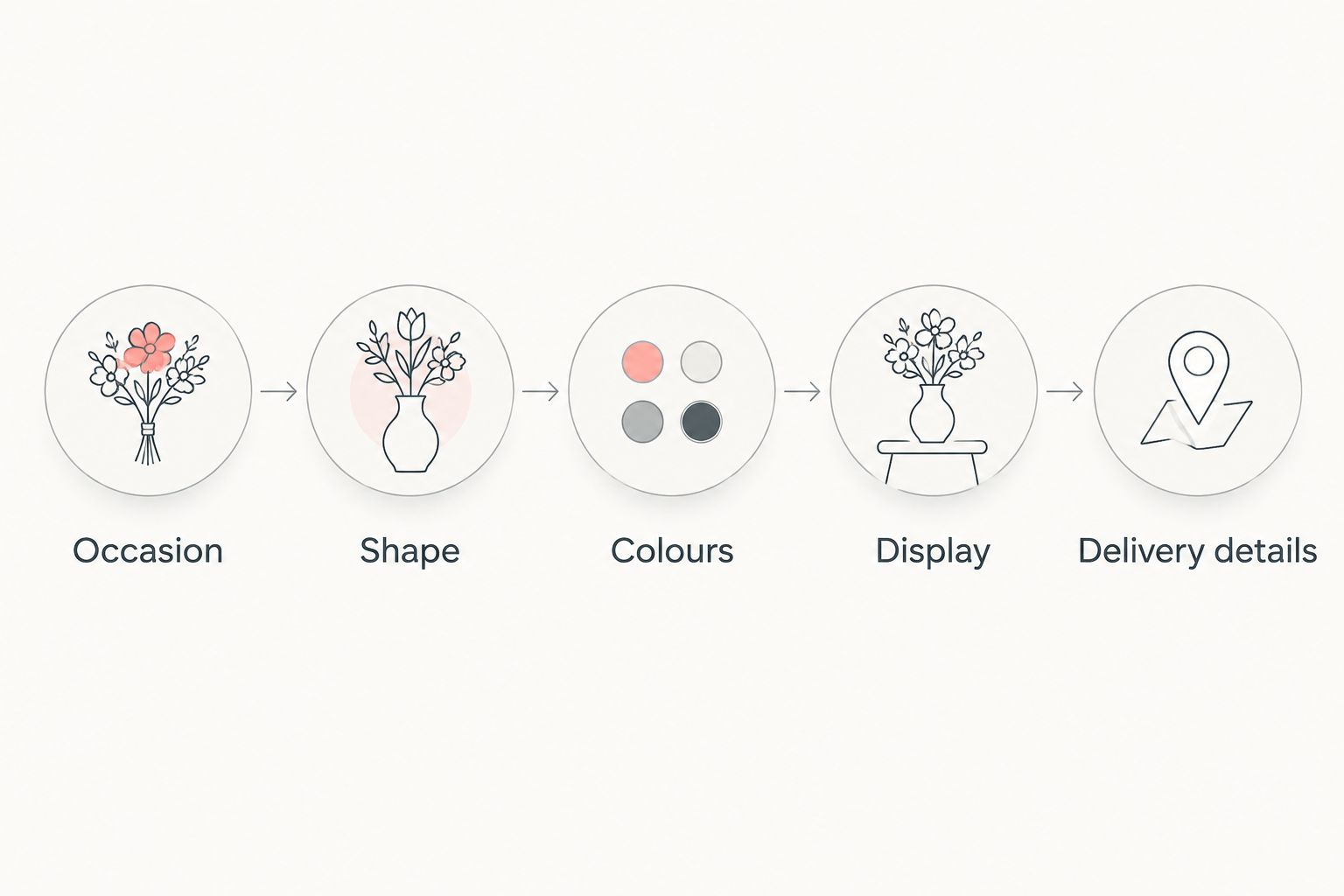
Choosing a style is only the first decision. A clear brief connects the shape you like with the person receiving it. For a 2026 gift order, send these details together rather than spreading them across separate messages.
- Occasion: State whether the bouquet is for a birthday, anniversary, thank-you or wedding.
- Shape: Name the silhouette: mixed hand-tied, rounded, minimalist, cascading or long-stem.
- Colours: Describe the recipient’s preferences and any colours to avoid.
- Display: Explain whether the flowers will sit in a home, be carried or be presented publicly.
- Delivery details: Give the destination, recipient information and required date.
Do not use a reference photograph as a substitute for this brief. Describe what you like in the picture: its outline, its colour balance or its flower texture. Those details communicate your priorities more clearly than asking for an exact copy.
For a wedding, explain when the bouquet will be carried and photographed. For a home gift, explain where it will be displayed. The practical setting belongs in the design brief, not in an afterthought once the flowers arrive.
How the bouquet styles are ranked
This 2026 ranking puts mixed hand-tied bouquets first because they offer a flexible design brief for general gifting. The remaining styles each serve a separate purpose: anniversaries, thank-you gifts, host gifts, bridal portraits, formal entrances or ceremonial congratulations.
The criteria are occasion fit, silhouette, colour discipline, flower hierarchy, display fit and handling. The ranking does not claim measured vase life, customer-review results or a florist-to-florist performance comparison. Choose by the intended use, not by rank alone.
Which bouquet style should you choose?
Choose a mixed hand-tied bouquet when you are undecided. Give the florist the recipient’s favourite colours and the occasion, then keep the overall brief focused. Switch to a single-variety bouquet when you already know which flower the recipient loves.
For a wedding, choose the carrying silhouette first. Rounded peonies and cascading arrangements solve different visual problems; neither is automatically the better bridal bouquet.
Pollyanna Flowers offers flower bouquets and bridal flower arrangements in Istanbul. Use the style names in this guide to describe your preference, then confirm the arrangement details directly rather than treating an editorial recommendation as a named product.
Choose your flower arrangement
Explore flower bouquets and bridal flower arrangements from an Istanbul florist.
FAQ
What are the best live flower bouquet styles in 2026?
Mixed hand-tied bouquets are the default recommendation for general gifting. Choose single-variety roses for an anniversary, minimalist tulips for a thank-you and a rounded or cascading shape for a bridal bouquet.
What does a live flower bouquet mean?
This guide uses live flower bouquet to mean a fresh cut-flower bouquet. Cut flowers are not rooted plants, so choose a potted plant instead if the recipient wants something to continue growing.
Is a mixed bouquet better than a rose bouquet?
A mixed bouquet is better for a varied floral design; a rose bouquet is better when the recipient specifically likes roses. The recipient’s taste should decide the choice, not the number of flower varieties.
What bouquet style should I send for a birthday?
A mixed hand-tied bouquet is the default birthday recommendation in this guide. Give the florist the recipient’s preferred colours and any flowers to avoid.
Are tulip bouquets supposed to change shape?
Cut tulips continue to grow and bend, so a tulip bouquet’s outline changes. Choose another style if you need a rigid arrangement that keeps its initial silhouette.
Should I choose a rounded or cascading bridal bouquet?
Choose a rounded bouquet for a defined floral shape and a cascading bouquet for a trailing silhouette. Consider how you will carry it as well as how you want it to look in photographs.
Does Pollyanna Flowers offer same-day delivery in Istanbul?
Pollyanna Flowers offers same-day delivery in Istanbul. Confirm the delivery details directly for your destination and required date when arranging your order.
What should I tell a florist before ordering a bouquet?
Give the florist the occasion, preferred shape, colours, display setting and delivery details. If you share a reference photograph, identify the specific features you want rather than requesting an unexplained exact copy.
One last thing
Choose the vase setting before choosing stem length. An elongated bouquet can look right during a presentation yet be inconvenient on the recipient’s usual table. A trailing bridal bouquet can suit a photograph yet need a different carrying position during the ceremony.
For your next 2026 bouquet, ask one practical question: where will these flowers be after the handover? That answer helps you choose a style the recipient can enjoy, not just one that looks good when it arrives.