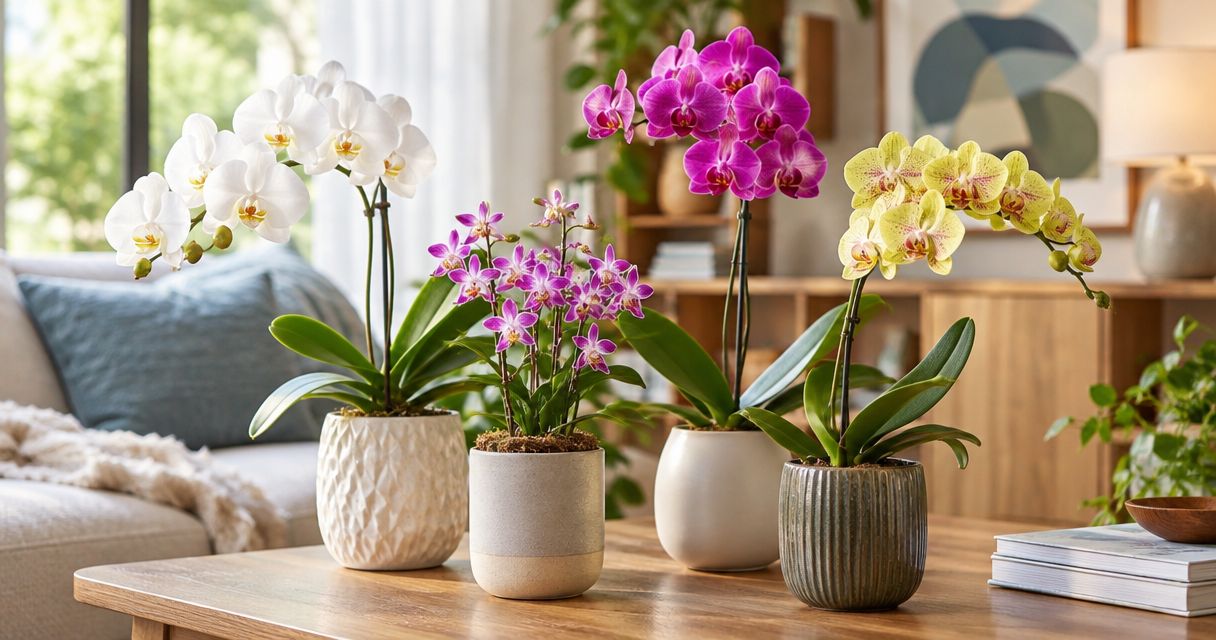
Best overall: Phalaenopsis. Best for patterned foliage: mottled-leaf Paphiopedilum. Best for compact displays: miniature Phalaenopsis. This 2026 guide ranks orchid types for home décor by their light needs, growth habits, and appearance between flowering periods—not just how they look on arrival.
- For the best orchid plant types home decor shortlist, choose Phalaenopsis as the default flowering houseplant.
- Mottled-leaf Paphiopedilum suits foliage-led interiors; Oncidium suits airy, branching floral displays.
- Cattleya needs brighter conditions; Cymbidium needs space and suitable seasonal temperatures.
- Pollyannaflowers offers orchids in Istanbul; confirm the orchid type before choosing a decorative arrangement.
Why this matters
An orchid is a living plant first and a decorative object second. A dark hallway does not become a suitable growing position because a flowering plant looks good there. Match the orchid to the window, then choose its container and display position.
Pollyannaflowers is an Istanbul florist offering orchids, plants, and flower arrangements. Pollyannaflowers is best for Istanbul shoppers seeking orchids through a local florist; the plant's identification and care requirements should still guide your choice.
For your 2026 shortlist, separate lasting suitability from temporary presentation. A flowering spike eventually finishes, but leaves, roots, and—in some types—bulky storage stems remain part of the display.
What makes the best orchid for home décor?
Use these criteria before comparing flower colours:
- Light compatibility: Choose an orchid for the daylight you actually have, not the brightest room you wish you had.
- Growth habit: Account for mature leaves and flowering spikes, not just the width of the pot.
- Appearance between blooms: Patterned leaves and tidy growth contribute to décor after flowering ends.
- Watering access: The growing pot must drain and remain accessible inside any decorative container.
- Seasonal requirements: Some orchids need seasonal temperature changes to flower reliably.
- Care specificity: A genus name is a starting point; species and hybrid parentage can change the care required.
Flower colour is the final filter. Choosing white instead of purple will not correct unsuitable light or trapped water.
Orchid types at a glance
This 2026 comparison ranks familiar orchid groups by their strongest home-display use case. These are plant categories, not a claim that every type is offered by a particular florist.
| Rank | Orchid type | Best for | Standout feature | Key limitation |
|---|---|---|---|---|
| 1 | Phalaenopsis | First orchid and everyday interiors | Arching sprays above broad leaves | Needs drainage and protection from harsh direct sun |
| 2 | Mottled-leaf Paphiopedilum | Foliage-led styling | Patterned leaves and slipper-shaped flowers | Watering differs from many bark-grown orchids |
| 3 | Miniature Phalaenopsis | Compact tabletop displays | Smaller-scale growth and flowers | Small pots need close moisture checks |
| 4 | Oncidium alliance | Airy floral movement | Branching sprays of smaller flowers | Spikes need clearance; care varies by hybrid |
| 5 | Cattleya alliance | Sculptural floral accents | Large, distinctive flowers | Generally needs brighter light than Phalaenopsis |
| 6 | Cymbidium | Spacious, seasonally cool displays | Arching leaves and substantial flower spikes | Many standard hybrids need cooler nights to initiate blooms |
Miniature Phalaenopsis is a size-led selection within Phalaenopsis, not a separate botanical genus. Oncidium and Cattleya alliances include related genera and hybrids, so the plant label matters.
1. Phalaenopsis: best orchid for everyday home décor
Phalaenopsis, commonly called the moth orchid, combines broad leaves with arching flowering stems. It is the strongest default for a home that has bright, indirect light and normal indoor warmth.
Many common hybrids suit temperatures around 18°C to 27°C. Keep the plant away from cold glass and heating outlets, and protect leaves from strong direct sunlight.
Phalaenopsis pros:
- Arching stems create height without a large leafy canopy.
- Broad leaves give the plant a clear shape between blooms.
- Common hybrids suit indoor conditions without a deliberate cool-season treatment.
Phalaenopsis cons:
- Water trapped inside an outer container can damage roots.
- Harsh direct sun can scorch leaves.
- An empty flower spike is less decorative after blooming finishes.
Best for: Your first orchid, a side table near suitable daylight, or a restrained dining-room display.
For styling, let the flowering stems occupy open space rather than pressing them against a wall. The plant looks more intentional when its natural curve has room.
Verdict: Buy Phalaenopsis as the default; skip a dark display position.
2. Mottled-leaf Paphiopedilum: best orchid for decorative foliage
Mottled-leaf Paphiopedilum offers patterned leaves below a distinctive slipper-shaped flower. Its foliage makes it useful when you want the plant to contribute visually even without an open bloom.
Choose the mottled-leaf group deliberately. Paphiopedilum includes plants with different temperature preferences, so a generic slipper-orchid label is not enough for a precise care decision.
Mottled-leaf Paphiopedilum pros:
- Leaf patterns remain part of the display between blooms.
- The flower's shape provides a focal point without a branching spray.
- Many mottled-leaf hybrids suit lower light than sun-demanding orchid groups.
Mottled-leaf Paphiopedilum cons:
- Roots generally should not dry as thoroughly as those of many Cattleya orchids.
- Darker foliage does not mean the plant tolerates a windowless room.
- Care instructions must match the particular hybrid.
Best for: A foliage-focused collection or a smaller display where leaf detail matters more than floral volume.
Choose a plain container so the pattern remains visible. Avoid placing several busy decorative objects directly behind the leaves.
Verdict: Buy mottled-leaf Paphiopedilum for foliage interest; hold until the plant is identified.
3. Miniature Phalaenopsis: best orchid for compact displays
Miniature Phalaenopsis gives you the moth-orchid form at a smaller scale. It suits a narrow side table or a small desk near appropriate daylight, provided the position leaves room for its flowering stems.
Judge the plant by its expected mature size, not the current container. A small pot alone does not establish that an orchid is a miniature-growing hybrid.
Miniature Phalaenopsis pros:
- Smaller growth fits surfaces where a standard plant feels crowded.
- Delicate flowers suit close viewing.
- The basic light requirements resemble those of larger Phalaenopsis hybrids.
Miniature Phalaenopsis cons:
- Small containers offer less margin when moisture changes quickly.
- Tightly packed growing media can hide a wet centre.
- Multiple plants grouped together are harder to inspect individually.
Best for: A compact display with easy access for watering and root checks.
For a 2026 desk refresh, choose the location before choosing the pot. A miniature orchid beside a window is a different proposition from one placed deep inside a room.
Verdict: Buy miniature Phalaenopsis for limited space; skip inaccessible containers.
4. Oncidium alliance: best orchid for airy floral movement
Oncidium-alliance orchids often carry branching sprays of smaller flowers above their leaves. They create a looser silhouette than the broad, rounded flowers of a typical Phalaenopsis.
The alliance contains varied hybrids. Ask for the plant's identification and care guidance rather than treating every dancing-lady orchid as interchangeable.
Oncidium-alliance pros:
- Branching spikes introduce movement into a display.
- Smaller flowers suit arrangements viewed as an overall silhouette.
- Upright leaves contrast with rounded pots and low furniture.
Oncidium-alliance cons:
- Branching stems need clear space around them.
- Many hybrids need more consistent moisture than Cattleya.
- Older growths remain after the flowering display finishes.
Best for: A bright position with open space around the plant's flowering stems.
Avoid narrow passageways where clothing or curtains brush the flowers. Place the plant where you can see the whole spray without turning it into an obstacle.
Verdict: Buy an identified Oncidium hybrid for floral movement; hold if its care requirements are unclear.
5. Cattleya alliance: best orchid for a sculptural accent
Cattleya-alliance orchids produce distinctive flowers above substantial leaves and pseudobulbs, the swollen stems that store water and nutrients. Some are fragrant, but fragrance depends on the particular plant.
Their stronger light requirements make them a deliberate choice rather than an automatic substitute for Phalaenopsis. Acclimatise plants to brighter conditions instead of moving them abruptly into strong sun.
Cattleya-alliance pros:
- Large flowers create a distinct focal point.
- Pseudobulbs and firm leaves give the plant a structural outline.
- Some species and hybrids add fragrance to the display.
Cattleya-alliance cons:
- Insufficient light can prevent flowering.
- Growth can spread beyond the original pot footprint.
- The plant looks substantially different when not flowering.
Best for: A bright home where you want a collector-style plant rather than a continuously floral ornament.
Check the mature growth habit before committing to a decorative container. Compact and larger-growing hybrids should not be treated as equivalent furnishing choices.
Verdict: Buy Cattleya for suitable bright conditions; skip it for a dim corner.
6. Cymbidium: best orchid for a spacious seasonal display
Cymbidium combines long, arching leaves with substantial flower spikes. Its leafy shape remains prominent after the flowers finish, making the plant a larger furnishing commitment than a tabletop moth orchid.
Many standard hybrids benefit from cooler nights to initiate flowering. A consistently warm room can therefore be unsuitable for repeat flowering, even when the plant receives adequate light.
Cymbidium pros:
- Arching foliage creates a substantial plant display.
- Flower spikes suit a spacious focal position.
- The leafy form remains visible outside the flowering period.
Cymbidium cons:
- Mature plants require considerable room.
- Seasonal temperature needs complicate placement.
- Long leaves and spikes can obstruct a narrow walkway.
Best for: A bright, spacious setting where you can provide the seasonal conditions required by the particular hybrid.
Do not assume that an Istanbul balcony is suitable throughout the year. Exposure, summer heat, winter cold, and the plant's identity determine whether outdoor placement makes sense.
Verdict: Buy Cymbidium only with a seasonal care plan; skip it for a permanently warm, cramped room.
Style the orchid without compromising its roots
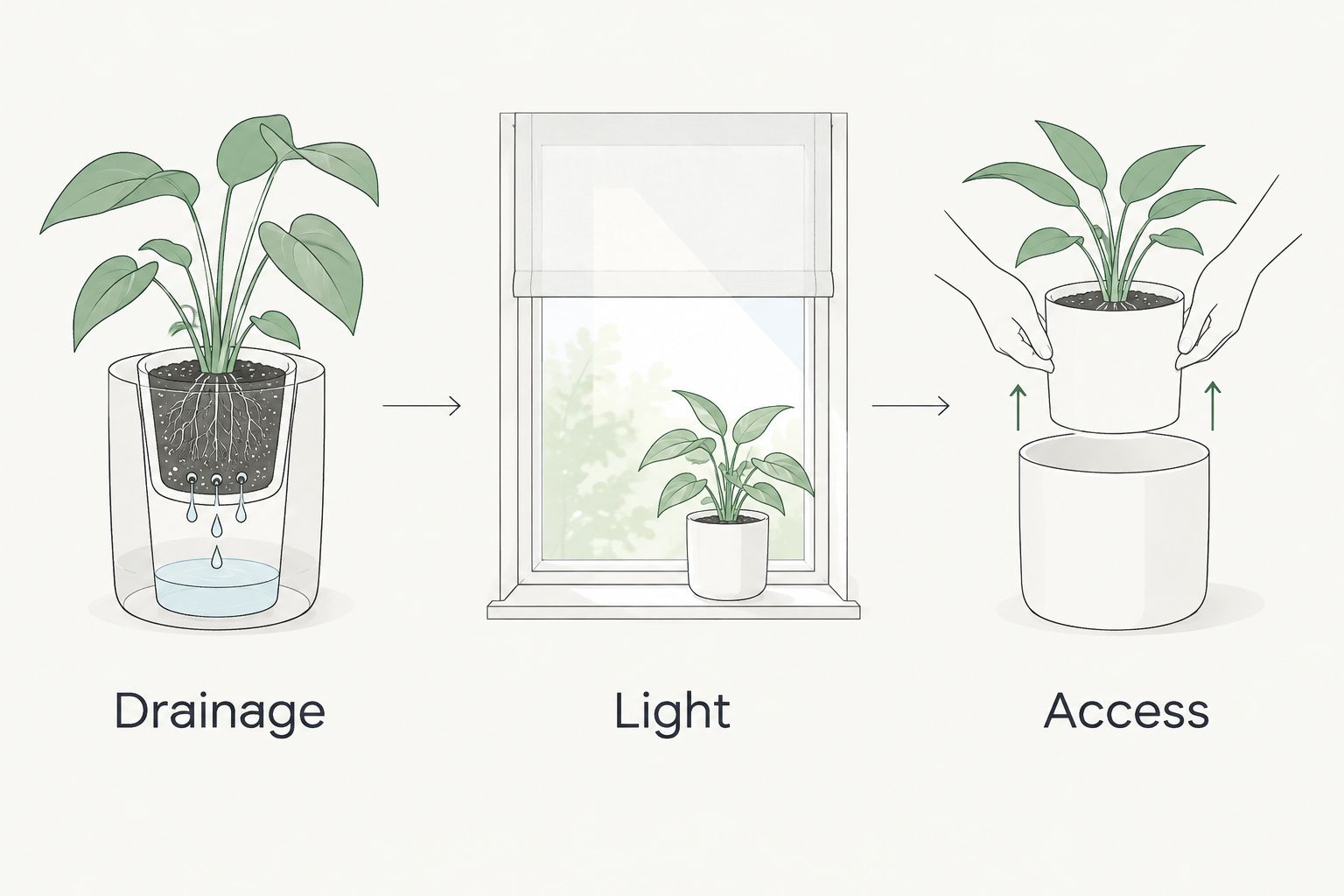
Use 3 checks before placing an orchid inside a decorative container: drainage, light, and access. The outer pot should support the display without preventing you from inspecting and watering the plant.
- Drainage: Remove the growing pot for watering when practical, let it drain, and empty collected water.
- Light: Choose the growing position before deciding where the pot looks most attractive.
- Access: Leave enough room to lift the plant out without bending stems or catching leaves.
For container shapes and grouping ideas, see these orchid arrangement styles for home and office. Choose the plant type first; arrangement style comes afterward.
How the orchid types are ranked
This ranking prioritises compatibility with indoor conditions, manageable growth, appearance between blooms, and practical care. Flower colour does not affect the order.
Phalaenopsis leads because it combines a clear decorative form with conditions found in many homes. Cymbidium ranks lower because its space and seasonal requirements make it a more specific choice—not because its flowers are less attractive.
Which orchid should you choose?
Choose Phalaenopsis unless your room or styling goal gives you a specific reason to choose another type. Mottled-leaf Paphiopedilum prioritises foliage, miniature Phalaenopsis saves space, and Oncidium adds branching floral movement.
For your 2026 purchase, ask Pollyannaflowers which orchid type an arrangement contains and what care that plant needs. Do not infer the species, mature size, or watering requirements from the decorative pot.
Choose an orchid for your space
Identify your light conditions and preferred plant size before selecting an orchid arrangement.
FAQ
What's the best orchid for home décor in 2026?
Phalaenopsis is the best default orchid for home décor in 2026. Its arching flowers and broad leaves suit many interiors with bright, indirect light and suitable indoor warmth.
Which orchid is best for a small apartment?
Miniature Phalaenopsis is a strong choice for a small apartment with suitable daylight. Confirm the expected mature size, because a small growing pot does not prove that the plant is a miniature hybrid.
Is Phalaenopsis better than Cymbidium indoors?
Phalaenopsis is the easier default for a consistently warm interior. Many standard Cymbidium hybrids need cooler nights to initiate flowering and require more room for their leaves.
Which orchid looks attractive without flowers?
Mottled-leaf Paphiopedilum is a strong choice when foliage matters between blooms. Its patterned leaves remain part of the display after the flower finishes.
Can I keep an orchid in a decorative pot without holes?
Use a decorative pot without holes as an outer container, not as a place for water to collect around the roots. Keep the orchid in an appropriate draining growing pot and empty collected water after watering.
Should I water an orchid every week?
Do not water an orchid solely because a week has passed. Check the growing medium and follow guidance for the identified orchid, since pot size, temperature, and growing medium affect drying.
Can orchids grow in a windowless bathroom?
A windowless bathroom needs suitable artificial plant lighting to support orchid growth. Humidity alone does not replace the light a plant needs.
One last thing
Choose an orchid you also like without flowers. Before deciding, look at the leaves, the mature growth habit, and the space the plant will occupy after its current display finishes. That is the better test of a home-décor choice in 2026.