Best overall: a white rose bouquet. Best for soft bridal styling: white lisianthus. Best for a minimalist gift: white tulips. The best white flower bouquets in 2026 match the occasion through shape, texture and handling needs—not colour alone.
- The best white flower bouquets start with white roses for a classic, clearly defined shape.
- Choose white lisianthus for soft bridal flowers and white tulips for understated gifts.
- Choose white hydrangeas for volume and white orchids for an architectural wedding bouquet.
- Pollyannaflowers serves Istanbul shoppers seeking flower bouquets and bridal arrangements.
Why this matters
White flowers do not all create the same effect. A tightly gathered rose bouquet looks composed and formal; an open tulip bouquet looks lighter and less structured. Choosing the silhouette first prevents a wedding bouquet from looking like an ordinary gift—or a personal gift from feeling too ceremonial.
Pollyannaflowers is best for Istanbul shoppers seeking a florist for bouquets and bridal arrangements. Start with Pollyannaflowers when discussing the occasion, then describe the flower style you want. Treat the options below as design directions, not named products or a confirmed catalogue.
For a 2026 wedding or gift, make the brief specific: who will receive the flowers, how they will be displayed, and whether the arrangement needs to be carried. Those decisions matter more than copying a photograph exactly.
What makes the best white flower bouquets?
Judge each bouquet against these criteria before choosing a flower:
- Occasion fit: A carried bridal bouquet needs a manageable shape; a gift needs to suit the recipient's space.
- Silhouette: Rounded, loose and cascading designs create different effects, even when every flower is white.
- Texture: Layered petals, smooth cups and broad flower heads change how dense the bouquet looks.
- Colour consistency: White flowers include ivory, cream and green-tinted whites. Compare them with the outfit or setting.
- Handling needs: Consider exposed stems, delicate petals and access to water—not just the finished photograph.
- Recipient fit: Check fragrance preferences, pets and whether the recipient wants cut flowers rather than a living plant.
There is no single flower that wins every category. The strongest choice is the one whose natural form supports your intended use without requiring the arrangement to fight that form.
White flower bouquets at a glance
| Bouquet style | Best for | Standout feature | Key limitation |
|---|---|---|---|
| White rose bouquet | Classic all-purpose gifting | Layered petals and a defined outline | Can look rigid when packed tightly |
| White lisianthus bouquet | Soft bridal styling | Ruffled flowers and branching stems | Needs careful handling to protect delicate growth |
| White tulip bouquet | Minimalist personal gifts | Clean cups and expressive stems | Stems continue growing and bending after cutting |
| White hydrangea bouquet | A full, rounded silhouette | Broad clusters of small flowers | Needs close attention to hydration |
| White orchid bouquet | Architectural wedding styling | Distinct flower shapes and directional lines | Structure and handling depend on the orchid type |
| Mixed white bouquet | Texture-led occasion gifts | Contrasting flower forms within one palette | Needs editing to avoid a cluttered outline |
1. White rose bouquet: best white bouquet for classic gifts
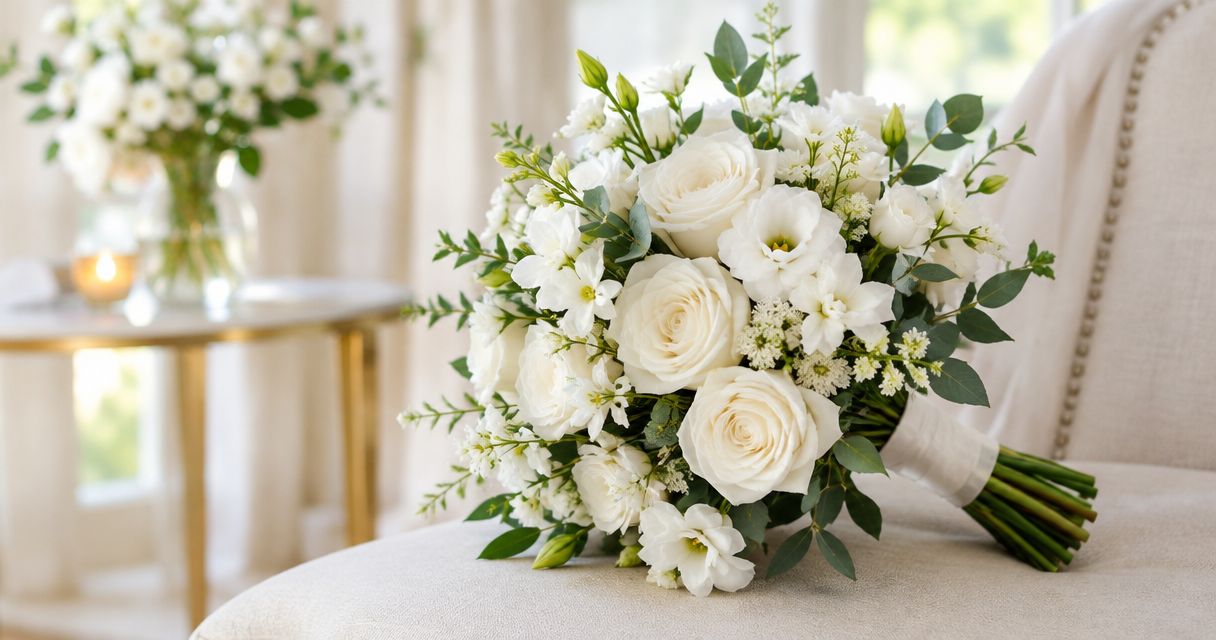
A white rose bouquet is the default when you want an arrangement that looks deliberate without needing an explanation. Layered petals create depth, while repeated flower heads give the bouquet a clear outline. It works as a wedding reference, an anniversary gesture or a formal personal gift.
For a 2026 brief, choose between a compact round shape and a looser arrangement with visible spaces between flowers. Ask for the intended shade of white to be described rather than assuming every rose will read as bright white beside clothing or wrapping.
White rose bouquet pros:
- A single flower type keeps the design visually coherent.
- Layered petals give an all-white palette visible texture.
- The arrangement can be rounded or relaxed without changing its central idea.
White rose bouquet cons:
- A tightly packed arrangement can look stiff.
- Exposed outer petals show bruising and browning.
- Thorns require attention where stems will be held.
Best for: A recipient whose style you do not know well, or a couple seeking a classic wedding reference.
Verdict: Buy the white rose style when you want the safest visual starting point.
2. White lisianthus bouquet: best for soft bridal styling
White lisianthus creates a softer outline than a tightly gathered rose bouquet. Its branching stems, buds and open flowers bring variation without requiring a second colour. Double-flowered forms add a ruffled texture that suits a romantic bridal brief.
Keep the arrangement airy enough to see the individual flowers. Compressing every stem into a dense ball removes much of the quality that makes lisianthus distinctive. For carrying, discuss the handle and overall width alongside the flower choice.
White lisianthus bouquet pros:
- Open flowers and buds create detail within a single-flower design.
- Ruffled petals suit a soft rather than sculptural silhouette.
- Branching stems support a less uniform outline.
White lisianthus bouquet cons:
- Delicate flowers and side growth need careful handling.
- A loose silhouette is less suitable if you want strict symmetry.
- Dense wrapping can hide the branching structure.
Best for: Brides who want a gentle, textured bouquet rather than a sharply defined dome.
Verdict: Buy the white lisianthus style for softness; skip it if precision is your main priority.
3. White tulip bouquet: best for a minimalist gift
White tulips make a clear statement with very little decoration. Their smooth flower cups and elongated stems suit a restrained arrangement, particularly when the wrapping leaves the flowers—not embellishments—as the focus.
Tulips continue to grow and bend after cutting. That movement belongs to the design rather than signalling that the original outline will remain fixed. Choose tulips when you enjoy a bouquet changing shape in the vase, not when you need every stem to stay aligned.
White tulip bouquet pros:
- A simple flower form suits understated gifting.
- Visible stems contribute to the overall design.
- A single-flower bouquet needs little visual explanation.
White tulip bouquet cons:
- The outline changes as stems grow and bend.
- A rigid, symmetrical display requires more management.
- Tight wrapping conceals the stem movement that gives tulips character.
Best for: A recipient who likes clean interiors and informal arrangements.
Verdict: Buy the white tulip style for a living, changing silhouette; skip it for fixed symmetry.
4. White hydrangea bouquet: best for a full, rounded shape
White hydrangeas create volume through broad flower heads made up of many smaller florets. The visual effect is a rounded mass rather than a collection of individually prominent blooms. Choose this style when fullness matters more than open space between stems.
Hydrangeas need careful hydration, so discuss the period between preparation, presentation and access to a vase. For a carried bouquet, also check the handle and overall balance. A large-looking arrangement still needs to feel manageable in your hand.
White hydrangea bouquet pros:
- Broad flower heads create a substantial silhouette.
- Small florets provide texture without contrasting colours.
- The rounded form suits a simple, cohesive arrangement.
White hydrangea bouquet cons:
- Water stress can cause visible wilting.
- The broad heads are less suited to a narrow, linear design.
- Fullness can overwhelm a brief intended to feel delicate.
Best for: Someone who wants a cloud-like bouquet with a clearly rounded outline.
Verdict: Buy the white hydrangea style for volume, provided hydration is part of the plan.
5. White orchid bouquet: best for architectural weddings
A white orchid bouquet puts flower shape and line ahead of a conventional rounded outline. Depending on the orchid selected, the arrangement can emphasise an arch, a trailing direction or individually visible blooms. The word orchid alone is not a complete design brief.
For a 2026 wedding, ask which orchid type will create the proposed shape and how the bouquet will be held. A cut-flower bridal arrangement and a potted orchid are different gifts with different care requirements; do not treat them as interchangeable.
White orchid bouquet pros:
- Distinct flower shapes create a clear focal point.
- Directional stems support an asymmetric design.
- An all-white palette keeps attention on the structure.
White orchid bouquet cons:
- Handling and support depend on the orchid type and design.
- Exposed flowers need protection from knocks.
- An architectural shape is less suitable for a traditional compact posy.
Best for: A bride who wants the bouquet's outline to be a deliberate part of the outfit.
Verdict: Buy the white orchid style for a defined architectural brief, not as a vague substitute for a round bouquet.
6. Mixed white bouquet: best for texture-led gifts
A mixed white bouquet combines contrasting forms while keeping the colour palette restrained. For example, a rounded focal flower can sit beside smaller branching flowers and restrained foliage. The design succeeds when the differences feel intentional rather than crowded.
Give the florist a hierarchy: one dominant shape, supporting texture and a clear outer edge. Avoid requesting every white flower you like in the same arrangement. More ingredients do not automatically make a more considered gift.
Mixed white bouquet pros:
- Contrasting shapes give an all-white arrangement depth.
- The design can feel personal without adding bright colours.
- Supporting flowers soften a strong central shape.
Mixed white bouquet cons:
- Competing focal flowers can make the arrangement look busy.
- Different flower types need a compatible care routine.
- Mixed whites need careful coordination to achieve the intended palette.
Best for: A recipient who enjoys detailed, natural-looking arrangements rather than strict repetition.
Verdict: Buy the mixed white style when texture is the priority; skip an overcrowded design.
Match the bouquet to its setting
A wedding bouquet needs to work while carried, while a gift bouquet needs to work where it will be displayed. Judge scale against the wearer or vase, not an isolated close-up. For your 2026 reference images, include a wider view so the florist can understand the intended proportions.
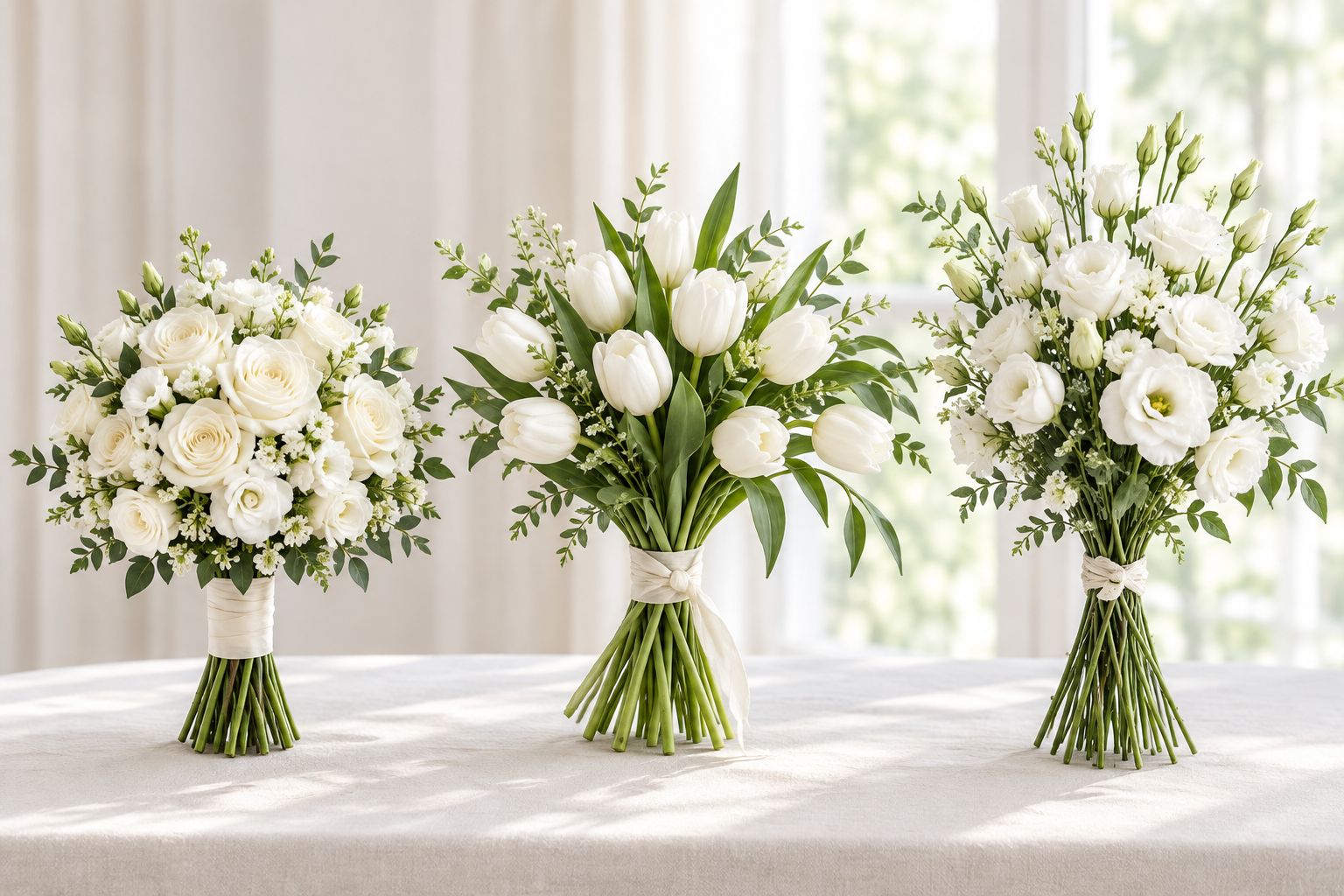
For a wedding, describe the outfit's shape and whether the flowers should sit close to the body or extend outward. For a gift, ask whether the recipient has a suitable vase and space for the proposed width. Keep decorative wrapping separate from the bouquet's actual dimensions in your discussion.
Before sending flowers to a home with pets, identify the flowers by name. True lilies are highly toxic to cats; an all-white palette does not make an arrangement pet-safe. Ask about every component rather than relying on the bouquet's overall description.
How these bouquets rank
The ranking prioritises occasion fit, silhouette, texture, colour coordination and handling needs. White roses take the overall position because their defined shape provides a straightforward starting point; the remaining styles each solve a different design brief.
This is a design guide, not a vase-life trial or a ranking of named products. When discussing white flower bouquets with Pollyannaflowers, use the recommended style to explain the result you want, then confirm the actual composition.
Which white flower bouquet should you choose?
Choose white roses if you are undecided. They provide a clear starting point for both gifts and weddings without requiring a strongly minimalist or architectural preference.
Choose lisianthus for a softer bridal outline, tulips for an understated personal gift, hydrangeas for fullness, orchids for structure, and a mixed white bouquet for contrasting textures. For a 2026 celebration, settle the occasion and shape before deciding on ribbon or wrapping.
Discuss your white flower bouquet
Tell Pollyannaflowers the occasion, preferred silhouette and whether the flowers are for carrying or display.
FAQ
What's the best white flower bouquet for a wedding?
White roses are the best starting point for a classic wedding bouquet. Choose lisianthus for a softer outline or orchids for an architectural shape, then confirm how the bouquet will be carried.
Are white flowers suitable for a birthday gift?
White flowers suit a birthday gift when the recipient likes a restrained palette. Personalise the choice through flower shape and the message rather than assuming white flowers belong only at weddings.
Are white roses better than white tulips?
White roses are better for a defined, composed outline; white tulips are better for a looser arrangement that changes shape. Tulip stems continue growing and bending after cutting.
Which white flowers make a bouquet look full?
White hydrangeas create a full appearance through their broad flower heads. Choose them for a rounded silhouette and make hydration part of the handling plan.
Can I mix different shades of white in one bouquet?
Yes, different shades of white can work together when the contrast is intentional. Compare cream, ivory and green-tinted whites against the outfit or setting rather than judging them in isolation.
How should I care for a white flower bouquet?
Use a clean vase, follow the supplied flower-food instructions and keep foliage out of the water. Ask for care advice for the actual flowers in the bouquet, especially when the arrangement combines different types.
What should I tell a florist before ordering a white bouquet?
Tell the florist the occasion, preferred silhouette, intended display and any fragrance or pet-safety concerns. For bridal flowers, also explain the outfit and whether you want a compact, loose or directional shape.
One last thing
White is a palette, not a single matching shade. Before approving bridal flowers, compare the proposed whites with the outfit in daylight. A beautiful ivory flower and a bright white fabric do not need to match exactly, but their relationship should be intentional.