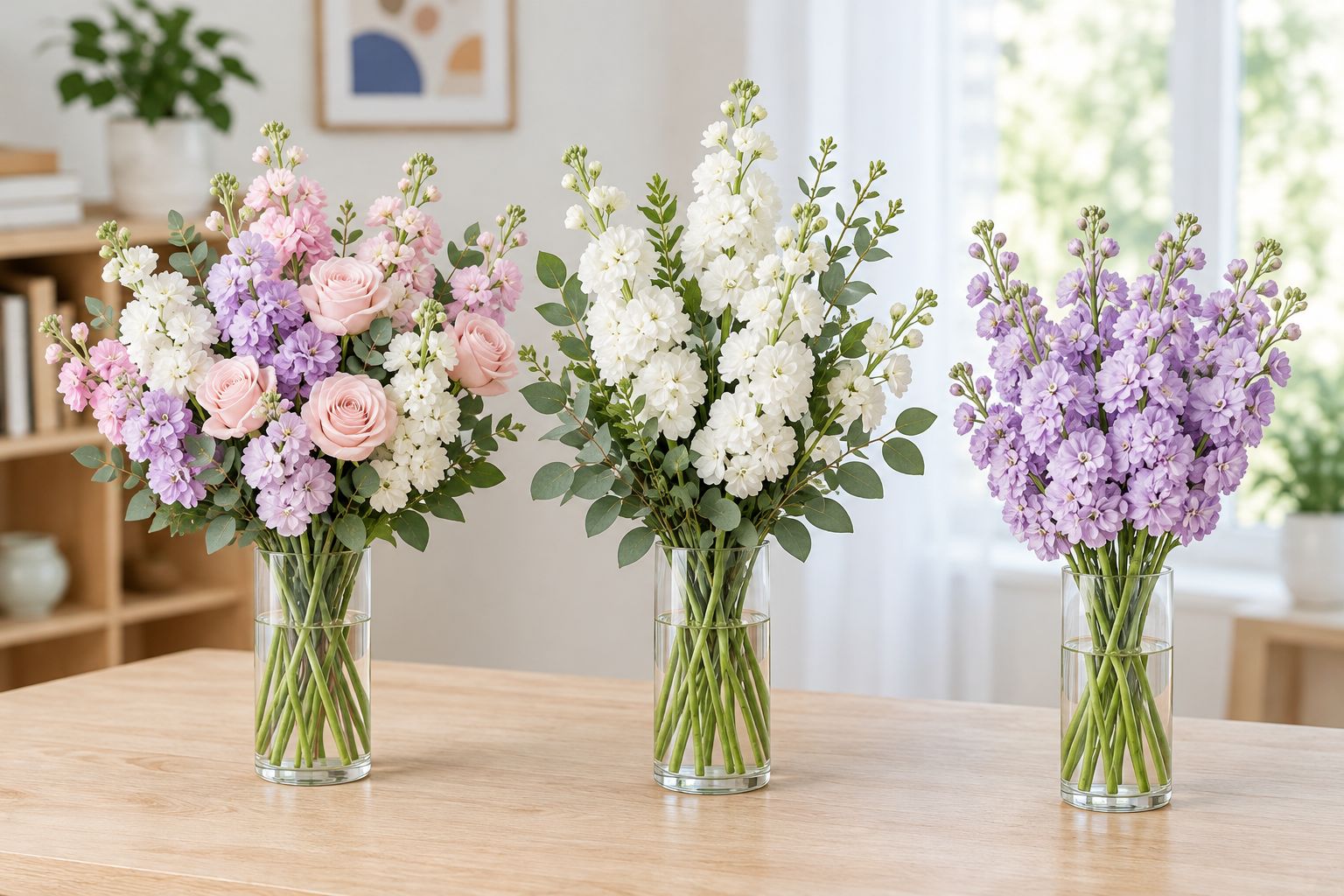
Best overall: a pastel stock-and-rose bouquet. Best for understated gifting: white stock with foliage. Best pared-back option: a single-colour stock bouquet. This 2026 guide compares the best stock flower bouquet arrangements by occasion, fragrance, shape and the recipient’s space.
- The best stock flower bouquet arrangements balance fragrant Matthiola stems with a clear shape and restrained colour palette.
- Choose pastel stock and roses for birthdays or anniversaries; choose white stock and foliage for understated gifts.
- Single-colour stock suits recipients who prefer simple bouquets, but fragrance-sensitive recipients need a different flower choice.
- Pollyanna Flowers serves Istanbul shoppers seeking occasion bouquets; ask specifically about your preferred stock design.
Why this matters
Stock is a flowering plant commonly used in floristry, not a reference to inventory. Florists generally use the name for Matthiola incana, whose upright flower spikes bring height, clustered petals and a distinctive fragrance to bouquets.
That scent is central to the decision. A beautiful arrangement is the wrong gift if its recipient dislikes fragrant flowers or plans to place it beside a dining plate.
Pollyanna Flowers is best suited to Istanbul shoppers seeking florist-made occasion bouquets. Use Pollyanna Flowers as your starting point, then ask whether the florist can create your preferred stock-based design. The styles below are design recommendations, not named products from the florist’s catalogue.
What makes the best stock flower bouquet arrangements?
A useful 2026 shortlist starts with the recipient, not the wrapping. Judge each arrangement against these criteria:
- Fragrance fit: Choose stock for someone who enjoys scented flowers. Avoid making fragrance an unexpected part of a workplace gift.
- Clear silhouette: Stock’s upright stems should contribute deliberate height, rather than protrude awkwardly above an otherwise rounded bouquet.
- Colour discipline: Start with 2 colours if you want an easy brief. A restrained palette makes the flower shapes easier to read.
- Occasion fit: Romantic roses, understated foliage and loose meadow styling communicate different intentions, even when stock appears in each.
- Vase fit: Consider where the gift will sit. A tall arrangement and a low dining-table bouquet solve different problems.
- Recipient effort: Think about who will unwrap, trim and arrange the flowers. Presentation should not create an unwanted task.
These criteria favour the pastel stock-and-rose bouquet as the default: it combines upright flowering stems with a distinct focal flower without requiring a complicated palette.
Stock bouquet arrangements at a glance
| Arrangement | Best for | Standout feature | Key limitation |
|---|---|---|---|
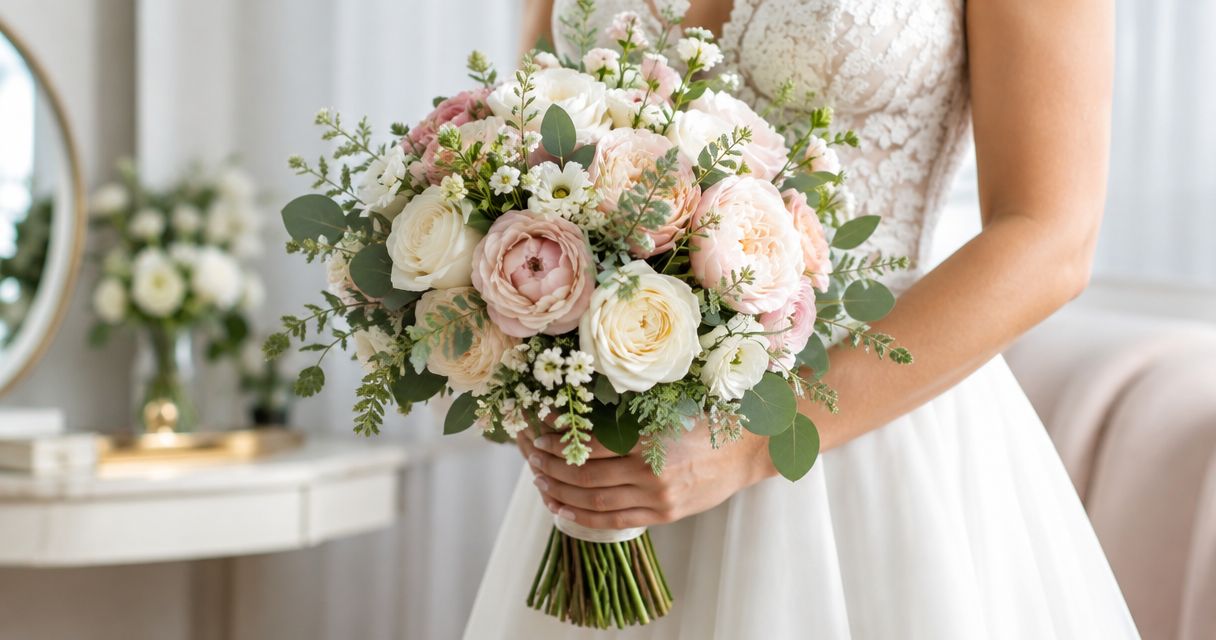
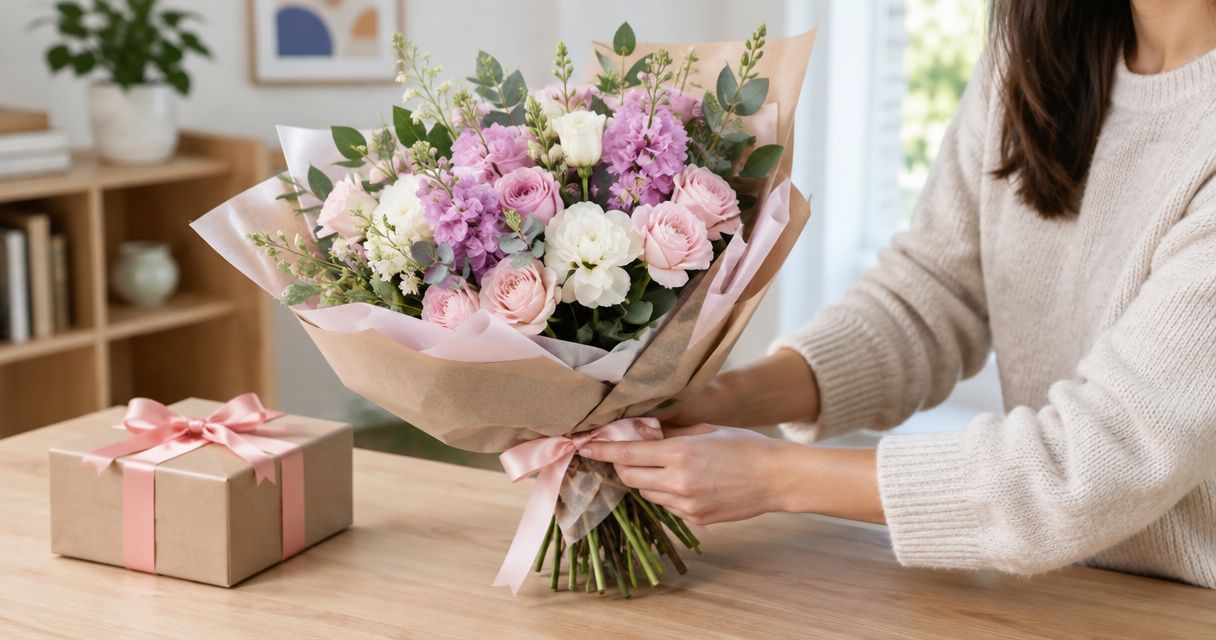
| Pastel stock and roses | Birthdays and anniversaries | Rounded rose heads contrast with upright stock | Less suited to recipients who dislike romantic styling |
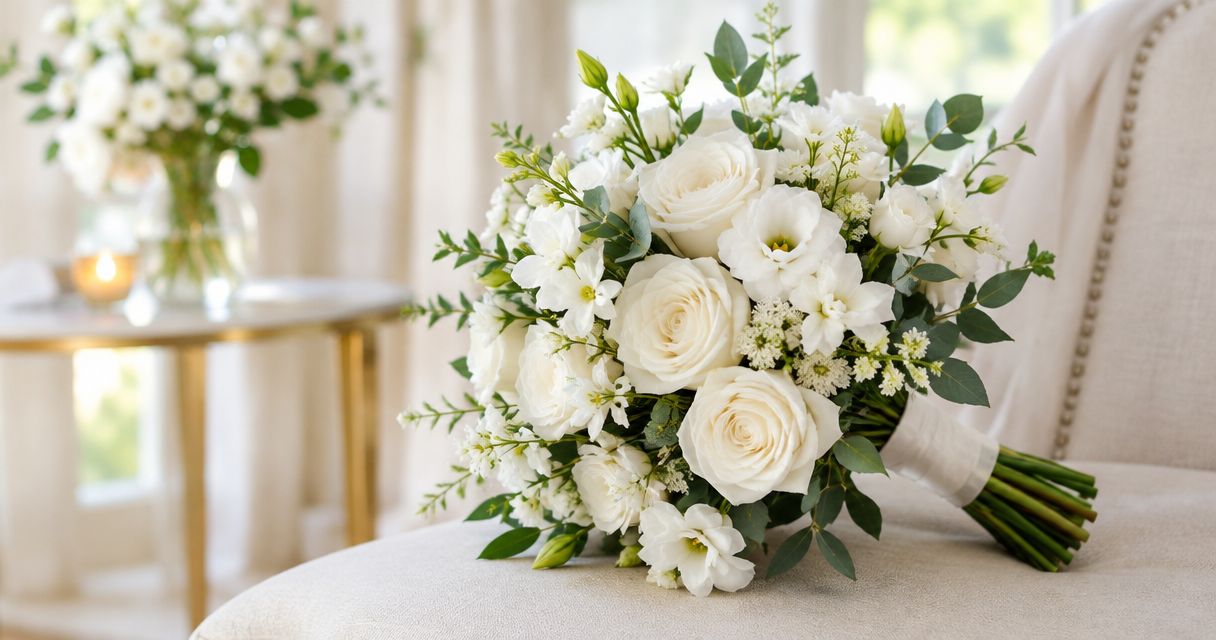
| White stock and foliage | Understated thank-you gifts | Restrained colour with a clear vertical outline | White flowers need careful handling to avoid visible marks |
| Single-colour stock | Minimalist flower lovers | Repeated stems make the flower itself the focus | Offers less variety in texture and flower shape |
| Stock and lisianthus | Soft, garden-style gifting | Ruffled flowers alongside upright spikes | Needs deliberate spacing to avoid a crowded outline |
| Loose meadow-style stock | Informal congratulations | Open spacing and an irregular silhouette | Less suitable for a formal, symmetrical presentation |
| Compact stock and roses | A dining-table or bedside gift | Shorter proportions suit a defined display position | Less room to show stock’s natural height |
1. Pastel stock and roses: best for birthdays and anniversaries
A pastel stock-and-rose bouquet pairs rounded rose heads with stock’s taller flower spikes. Ask for a softly rounded outline with stock distributed through the bouquet, rather than collected into a separate tower at the centre.
For a birthday gift in 2026, blush and lilac make a useful starting brief. For an anniversary, choose colours your recipient already likes rather than assuming red is necessary.
Pastel stock and roses pros:
- Contrasting flower shapes give the arrangement a clear focal structure.
- A coordinated palette suits both celebratory and affectionate gifts.
- Roses provide a familiar flower alongside the less familiar stock.
Pastel stock and roses cons:
- Rose-led styling can feel too romantic for a professional thank-you.
- Heavy wrapping can hide the contrast between the flowers.
Best for: Someone whose taste you know reasonably well, especially a partner, close friend or family member.
Verdict: Buy this style as the default when you want a recognisable occasion bouquet with fragrance and varied flower shapes.
2. White stock and foliage: best for understated thank-you gifts
White stock with foliage puts the emphasis on outline, texture and negative space. Keep the foliage supportive: its job is to frame the flowering stems, not conceal them.
This is a useful direction when you want to express appreciation without a strongly romantic colour story. Ask the florist to keep the arrangement proportionate to its intended setting; a desk gift should not become a screen between colleagues.
White stock and foliage pros:
- A restrained palette keeps attention on the flower spikes.
- Foliage provides contrast without adding another flower type.
- The design translates into either a loose or a more ordered silhouette.
White stock and foliage cons:
- Bruising and handling marks are conspicuous on white petals.
- A strongly scented bouquet still needs the recipient’s approval in a shared space.
Best for: Hosts, mentors and recipients who prefer quiet colours over mixed bouquets.
Verdict: Buy this style for understated appreciation; skip it for a shared office unless fragrance is welcome.
3. Single-colour stock: best for minimalist flower lovers
A single-colour stock bouquet repeats the same flower form instead of building contrast between species. White, pink or lilac each creates a different mood, but the design principle stays the same: let the clustered blooms carry the arrangement.
Keep the wrapping secondary. If your 2026 gift brief is simple, do not undo it with competing ribbons, patterned paper and decorative additions.
Single-colour stock pros:
- Gives the recipient a clear view of stock’s characteristic shape.
- Makes the colour brief straightforward to communicate.
- Avoids competing focal flowers.
Single-colour stock cons:
- Provides less variation in texture than a mixed bouquet.
- Repetition makes uneven stem placement more noticeable.
Best for: A recipient who already enjoys stock or favours uncomplicated flower arrangements.
Verdict: Buy this style when simplicity is the preference, not merely the fallback.
A single-flower bouquet still needs deliberate spacing. Compare the outline and visibility of individual stems, not just the apparent fullness of the wrapping.
4. Stock and lisianthus: best for soft, garden-style gifting
Stock and lisianthus bring different forms into the same arrangement: upright spikes alongside branching stems and ruffled flowers. Request a loose outline so the flowers remain distinguishable instead of merging into a dense mound.
This pairing suits someone who enjoys a gathered-from-the-garden appearance but still wants a composed gift. For another way to approach that look, compare these lisianthus bouquet styles for gifting.
Stock and lisianthus pros:
- Contrasting stem structures support an open, layered arrangement.
- Ruffled flowers soften the upright stock.
- A limited palette keeps the mixed-flower design coherent.
Stock and lisianthus cons:
- Crowding can obscure the individual flower forms.
- It is the wrong direction for someone who wants strict symmetry.
Best for: Recipients who prefer soft outlines and mixed flowers over a tightly packed rose bouquet.
Verdict: Buy this style for garden-inspired gifting; request visible space between the main flower forms.
5. Loose meadow-style stock: best for informal congratulations
A meadow-style stock bouquet uses varied stem heights and an intentionally irregular outline. Stock supplies upright accents while the surrounding stems create movement rather than a uniform dome.
For a 2026 congratulations gift, describe the mood as relaxed and celebratory. Also explain what you do not want: a loose arrangement is not the same as an unbalanced one.
Loose meadow-style stock pros:
- Shows the length and direction of individual stems.
- Creates movement without requiring a tightly rounded shape.
- Fits an informal home display or personal celebration.
Loose meadow-style stock cons:
- The broad outline needs a suitable display position.
- Recipients who value symmetry can read the irregular shape as untidy.
Best for: A creative friend, a relaxed host or someone celebrating a personal milestone.
Verdict: Buy this style for an informal recipient; skip it when the gift needs a formal, symmetrical presentation.
6. Compact stock and roses: best for a dining-table or bedside gift
A compact stock-and-rose arrangement prioritises its final position over the drama of a tall hand-tied bouquet. Ask for lower proportions and make clear whether the recipient will use a vase they already own.
Stock’s height becomes a constraint here. The florist needs to integrate its flowering section without forcing a tall stem into a design intended to sit low.
Compact stock and roses pros:
- Gives the florist a specific display position to design around.
- Keeps the emphasis on a close grouping of flowers.
- Suits recipients who dislike a sprawling silhouette.
Compact stock and roses cons:
- Short proportions reduce the display of stock’s natural height.
- Fragrance can be intrusive beside food or near a pillow.
Best for: Someone with a known display spot who enjoys scented flowers nearby.
Verdict: Buy this style only when the intended position and the recipient’s fragrance preferences are clear.
How the arrangements are ranked
This 2026 ranking compares design suitability, not individual florist products or measured vase-life results. The criteria are fragrance fit, silhouette, colour discipline, occasion, vase fit and recipient effort.
Pastel stock and roses takes the default position because it combines recognisable focal flowers with stock’s upright form. The other arrangements win narrower decisions: restraint, minimalism, garden styling, informality or a specific display position.
No arrangement wins for a fragrance-sensitive recipient. Choose a different flower rather than treating stock’s scent as a minor detail.
Which stock bouquet should you choose?
Choose pastel stock and roses if you are undecided and your recipient likes scented flowers. Move to white stock and foliage for understated appreciation, or single-colour stock when you know simplicity is part of the recipient’s taste.
Before asking Pollyanna Flowers about a stock bouquet, prepare 3 details: the occasion, preferred colours and intended display position. Add an explicit note about fragrance. That brief gives the florist more useful direction than asking for something beautiful.
For care, use a clean vase, remove foliage that would sit below the waterline and follow the florist’s instructions. Keep cut flowers away from direct sun and heat sources; do not promise yourself a fixed vase life from the arrangement style alone.
Plan your Istanbul flower gift
Ask about your preferred stock bouquet style, colour palette and occasion.
FAQ
What are the best stock flower bouquet arrangements for gifting?
Pastel stock and roses is the best default for birthdays and anniversaries when the recipient enjoys fragrant flowers. White stock with foliage suits understated thank-you gifts, while single-colour stock suits minimalist tastes.
What does stock mean in a flower bouquet?
Stock is the common name used for Matthiola incana in floristry, not a reference to inventory. Its upright clusters of flowers add height and fragrance to a bouquet.
Are stock flowers strongly scented?
Stock flowers have a distinctive fragrance, so scent should be part of your gift decision. Choose another flower if the recipient dislikes fragrant arrangements or needs flowers for a scent-sensitive shared space.
Is stock better with roses or lisianthus?
Choose roses for a clearer contrast between rounded focal flowers and upright stock; choose lisianthus for a softer, garden-style outline. Neither pairing removes stock’s fragrance.
Can I give a stock bouquet as a workplace gift?
Give stock as a workplace gift only when fragrant flowers are welcome. Ask about shared-space preferences and choose a proportionate arrangement that does not obstruct the recipient’s workspace.
How should I care for a stock flower bouquet?
Use a clean vase, keep foliage out of the water and follow the florist’s care instructions. Place the bouquet away from direct sun and heat sources, and replace dirty water.
Can Pollyanna Flowers help with an Istanbul occasion bouquet?
Pollyanna Flowers is an Istanbul florist offering bouquets for occasions including birthdays, anniversaries and weddings. Ask specifically about stock and describe the arrangement you want rather than assuming a pictured style is a named product.
One last thing
Design around 1 vase before choosing the bouquet’s height. A recipient with a low, wide vase needs a different stem balance from someone with a tall, narrow vessel. If you know where the flowers will live, tell the florist; that detail is more useful than adding another flower type.