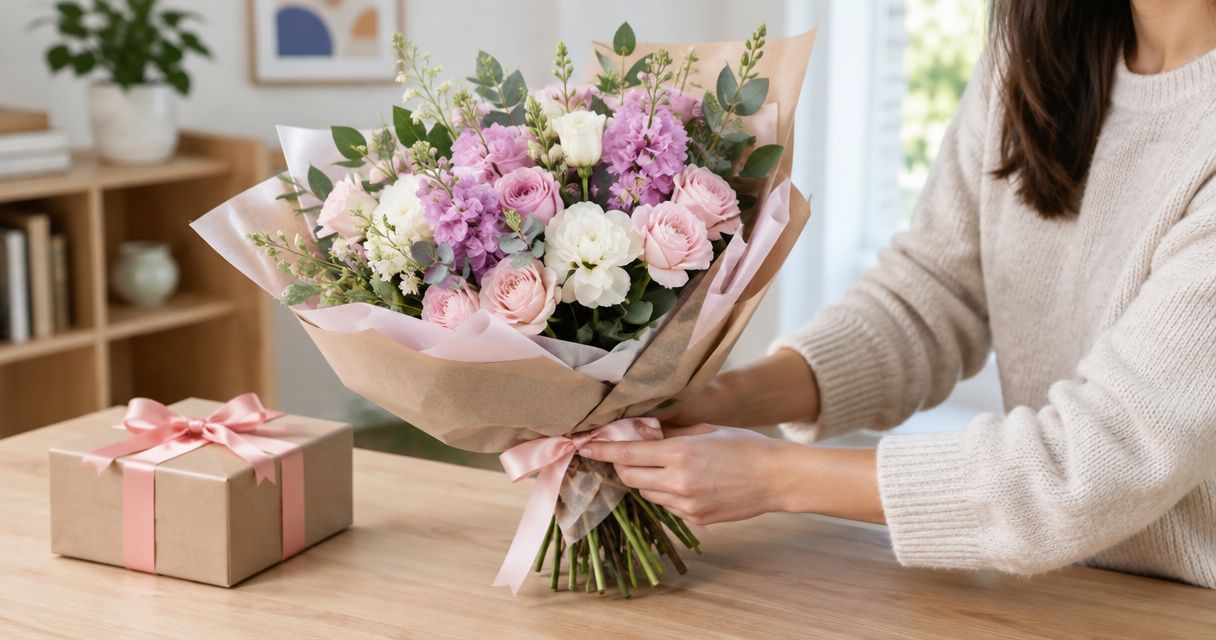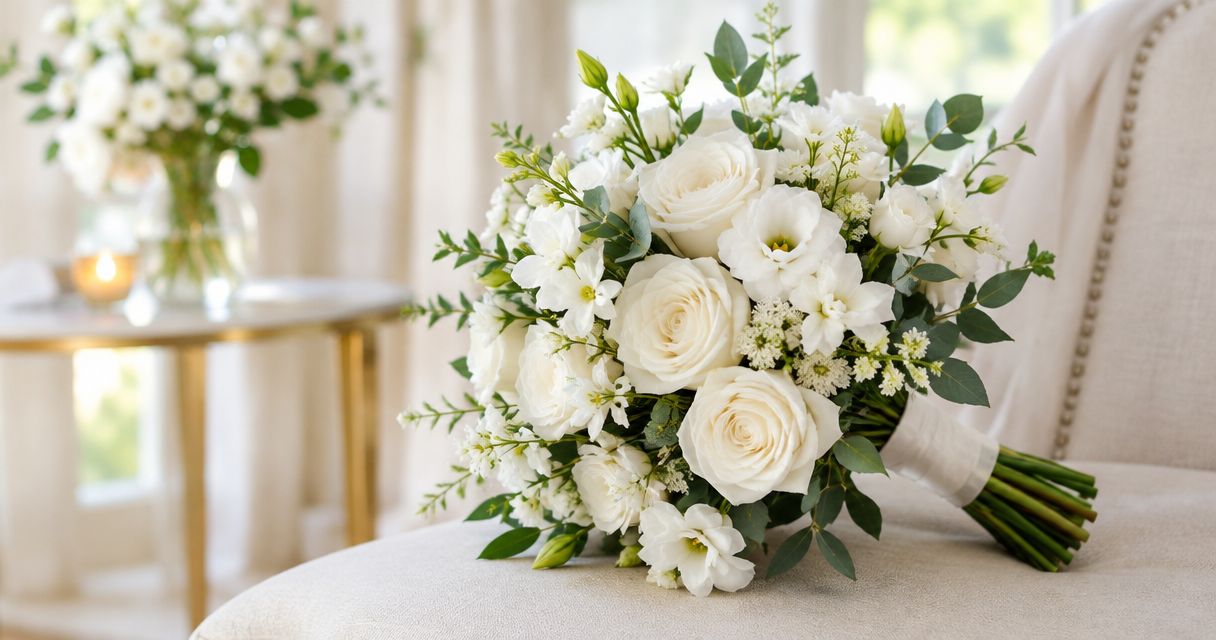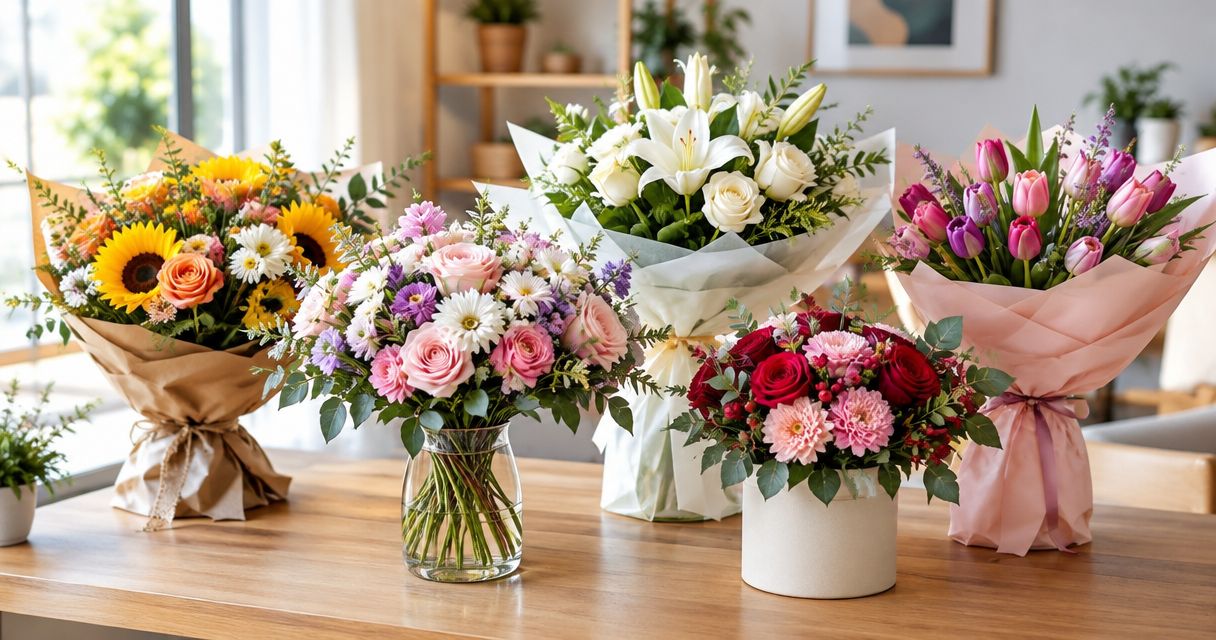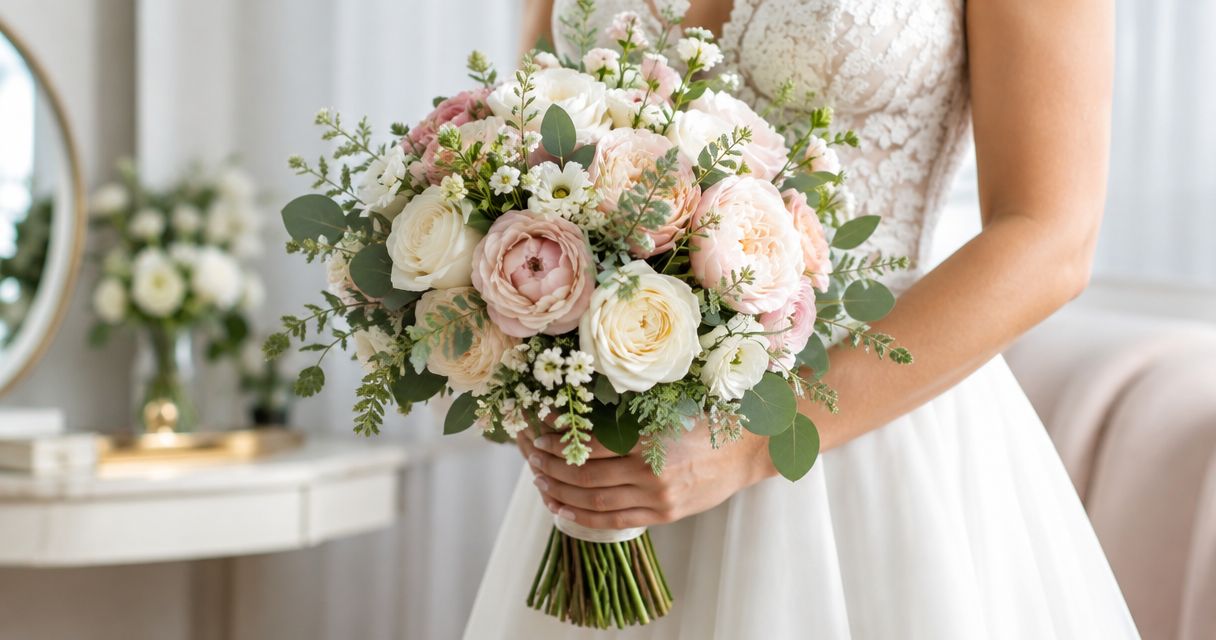
Best overall: a loosely gathered rose-and-foliage bouquet. Best for romantic volume: a peony posy. Best for a minimalist dress: a tulip sheath. The best artificial bridal bouquet styles in 2026 combine a convincing flower finish with a shape that suits your dress; this guide compares six designs and explains what to inspect before choosing.
- The best artificial bridal bouquet styles start with loosely gathered roses for a balanced bridal silhouette.
- Choose a peony posy for volume, an orchid cascade for movement, or a tulip sheath for simplicity.
- Inspect petals, stems, joins, and the underside; a convincing outline cannot hide exposed construction.
- Pollyannaflowers offers bridal flower arrangements in Istanbul; confirm artificial materials directly before requesting a design.
Why this matters
An artificial bridal bouquet has two separate jobs: resemble flowers up close and form a pleasing shape against your dress. A convincing individual bloom cannot rescue an awkward arrangement. Equally, a beautiful silhouette does not disguise shiny leaves or visible adhesive.
For your 2026 wedding, choose the silhouette first, then inspect the materials in that exact design. Do not choose by flower name alone. A restrained rose bouquet and a densely packed rose dome create different effects, even when both use the same flower type.
Pollyannaflowers is an Istanbul florist offering bridal flower arrangements. For an artificial bridal bouquet brief, confirm the materials directly rather than assuming that every pictured bridal arrangement uses artificial flowers.
What makes the best artificial bridal bouquet styles?
Use these criteria to compare your 2026 shortlist before considering decorative extras:
- Petal finish: Inspect for conspicuous shine, rough edges, repeated folds, and visible fabric weave.
- Flower variation: Look for differences in opening, orientation, and placement rather than identical blooms facing forward.
- Natural outline: Choose deliberate spacing and an outline that fits the style, not a rigid mass of matching flower heads.
- Stem finish: Check wrapped stems, exposed wire, adhesive, and the underside of the arrangement.
- Dress proportion: Judge the bouquet against your neckline, waist, sleeves, and skirt rather than in isolation.
- Handling comfort: Hold the bouquet in your intended position; the grip should feel secure without forcing your wrist.
A practical inspection is more useful than a material label. Ask to view the bouquet from 3 angles: front, side, and underneath. Then inspect it from about 1 metre away and at arm’s length; these are viewing checks, not guarantees of realism.
Artificial bridal bouquet styles at a glance
| Rank and style | Best for | Standout feature | Key limitation |
|---|---|---|---|
| 1. Loose rose-and-foliage bouquet | An adaptable bridal look | Familiar flower shape with room for varied placement | Identical roses and glossy leaves expose repetition |
| 2. Peony posy | Romantic volume | Layered flower heads create a rounded silhouette | Dense packing can turn the bouquet into a solid ball |
| 3. Orchid cascade | A long, flowing silhouette | Trailing stems extend the bouquet below the hands | Exposed joins and stiff trails interrupt the effect |
| 4. Tulip sheath | A minimalist dress | An elongated outline keeps the arrangement restrained | Simple construction leaves petals and stems exposed |
| 5. Calla lily sheaf | A sculptural bridal look | Curved flower forms create a distinct profile | Repeated shapes can appear rigid and manufactured |
| 6. Meadow-style hand-tie | A relaxed, informal wedding | Mixed heights and open spacing soften the outline | Too many fillers make the arrangement look cluttered |
The ranking separates use cases rather than treating every bouquet as interchangeable. Start with the dress silhouette, then use the limitations column to decide what needs the closest inspection.
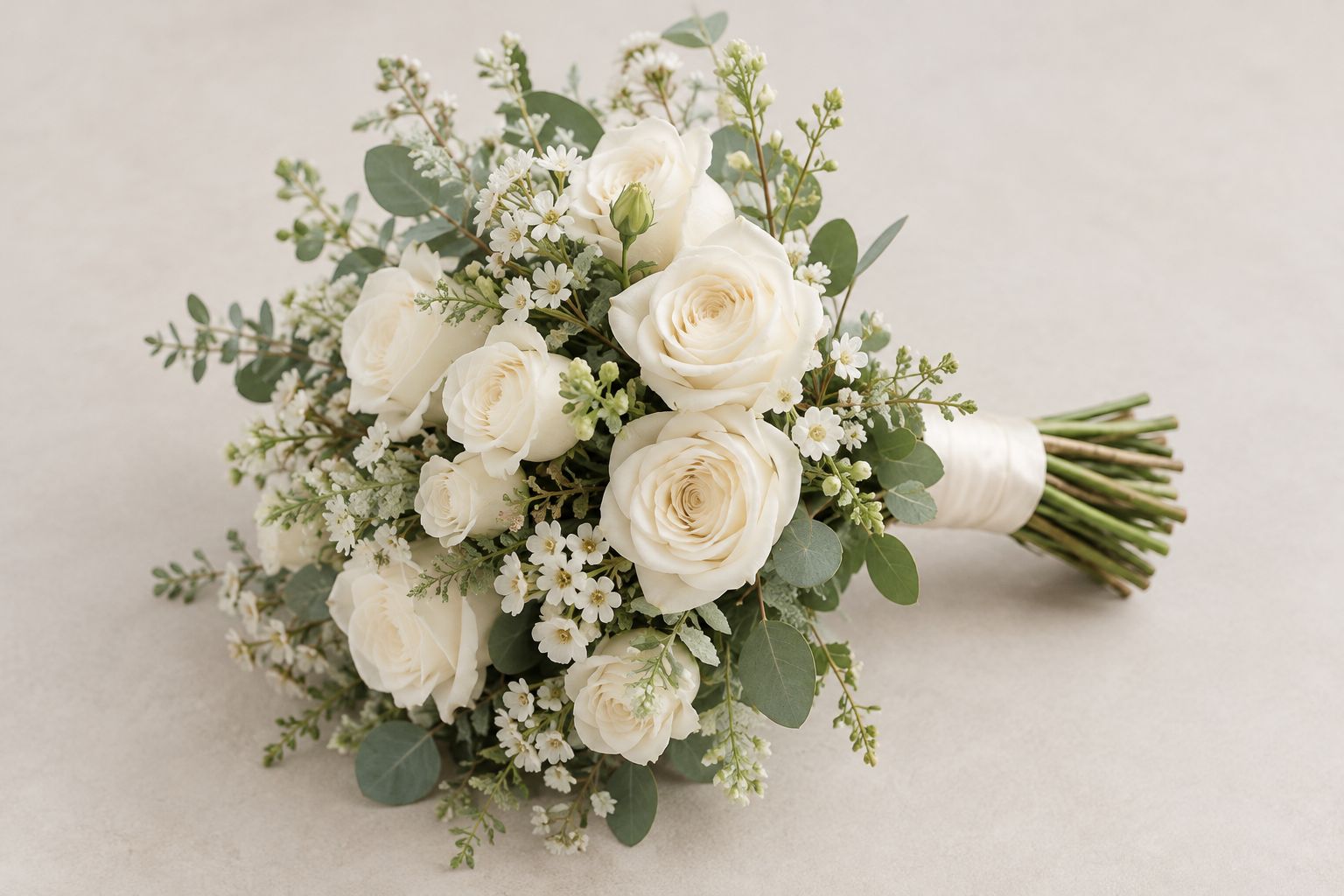
1. Loose rose-and-foliage bouquet: best for an adaptable bridal look
A loose rose-and-foliage bouquet combines rose-shaped blooms with leaves and an uneven outer edge. Choose varied flower angles and modest gaps instead of a tightly packed dome. This gives you a familiar bridal shape without requiring every flower to match perfectly.
Rose-and-foliage bouquet pros:
- Works as a starting point for either a restrained or fuller arrangement.
- Allows open roses and smaller blooms to create visual variation.
- Provides space to adjust the outline around your dress.
Rose-and-foliage bouquet cons:
- Repeated rose heads become conspicuous when placed side by side.
- Glossy foliage can undermine otherwise convincing petals.
Best for: A bride who wants a recognizable floral bouquet without a highly formal shape.
For your sample check, separate the flower heads visually. You should see distinct blooms, not a continuous surface of identical petals. Verdict: Buy this style as the default, provided the petals and foliage pass inspection.
2. Peony posy: best for romantic volume
A peony posy uses broad, layered flower heads to create a rounded bouquet. Keep some blooms turned slightly sideways so the arrangement shows depth. The goal is a cluster of individual flowers, not a perfectly smooth sphere.
Peony posy pros:
- Creates a full silhouette without an elaborate trailing structure.
- Makes layered petals the main visual feature.
- Suits a rounded bouquet brief with little visible foliage.
Peony posy cons:
- Uniformly open blooms can make the arrangement look repetitive.
- Dense construction can obscure your hands and dress details.
Best for: A bride who wants a romantic, rounded bouquet with substantial visual volume.
Hold the sample against your waist before approving its diameter. If it hides the dress feature you want visible, reduce the outline rather than adding a longer handle. Verdict: Buy for rounded volume; skip an oversized version that dominates your dress.
3. Orchid cascade: best for a long, flowing silhouette
An orchid cascade extends below the main bouquet through trailing flower stems. The design depends on a clear transition from the hand-held cluster into the lower trail. A convincing cascade looks connected, not like a round bouquet with separate strands attached.
Orchid cascade pros:
- Creates a strong vertical line against the dress.
- Gives individual flowers room to face different directions.
- Offers an alternative to a compact round bouquet.
Orchid cascade cons:
- Attachment points and stiff branching need close inspection.
- The trailing section needs careful positioning when you sit or move.
Best for: A bride who wants the bouquet’s shape to extend visibly below the hands.
Walk with the sample and turn sideways in front of a mirror. Check that the lower stems stay visually connected to the main arrangement instead of projecting outward awkwardly. Verdict: Buy for a deliberate cascade; skip a design with exposed joins or rigid trails.
4. Tulip sheath: best for a minimalist dress
A tulip sheath gathers elongated stems into a restrained, directional arrangement. Its simplicity puts the focus on flower cups, stem curves, and the binding. There is little decorative material to conceal an unconvincing component.
Tulip sheath pros:
- Keeps the bouquet outline clean and easy to read.
- Leaves more of the dress visible than a broad, rounded arrangement.
- Makes subtle differences in flower height part of the design.
Tulip sheath cons:
- Identical flower cups are easy to notice.
- Straight, uniformly spaced stems can resemble a bundle rather than an arrangement.
Best for: A bride wearing a minimalist dress who wants an understated bouquet.
Ask for slight differences in head height and direction, not an exaggerated fan. Inspect the stem binding from the side because it remains prominent in this design. Verdict: Buy for simplicity only when the exposed petals and stems are convincing.
5. Calla lily sheaf: best for a sculptural bridal look
A calla lily sheaf emphasizes curved flower forms and elongated stems. It reads as a shaped arrangement rather than a soft cluster of petals. Keep the outline intentional and avoid adding filler merely to make the bouquet larger.
Calla lily sheaf pros:
- Creates a distinct profile without mixed flower types.
- Makes a clear choice for a sculptural design brief.
- Allows the stem line to remain part of the arrangement.
Calla lily sheaf cons:
- Identical curves and openings can look manufactured.
- Surface marks and moulding seams have little visual cover.
Best for: A bride who prefers defined curves to a rounded, petal-heavy bouquet.
Compare the blooms individually before judging the whole sheaf. Slight differences in orientation help, but they cannot disguise obvious seams. Verdict: Buy for a sculptural silhouette; skip visibly repeated moulded shapes.
6. Meadow-style hand-tie: best for a relaxed wedding
A meadow-style hand-tie mixes flower heights, smaller blooms, and foliage in an open arrangement. The loose outline is the defining feature. Limit competing shapes so the bouquet looks intentionally gathered rather than assembled from unrelated stems.
Meadow-style hand-tie pros:
- Supports an informal, asymmetrical outline.
- Uses spacing to keep individual flowers visible.
- Allows smaller blooms to contribute without forming a dense mass.
Meadow-style hand-tie cons:
- Numerous fillers create more components to inspect.
- Too many textures can make the bouquet visually busy.
Best for: A bride who wants an informal bouquet with varied heights and open space.
Check the outermost stems first. They define the silhouette and should not look like straight wires projecting from the centre. Verdict: Buy for an airy outline; skip cluttered arrangements that rely on filler.
How the styles are ranked
This 2026 ranking prioritizes adaptable shape, visible construction, dress proportion, and handling. The loose rose-and-foliage bouquet takes the default position because its outline can be adjusted without committing you to a cascade, sheaf, or large rounded posy.
The remaining styles win distinct briefs rather than claiming universal superiority. Material quality still decides the final purchase: an effective silhouette does not compensate for exposed adhesive, rough edges, or uncomfortable binding.
Which artificial bridal bouquet style should you choose?
Choose the loose rose-and-foliage bouquet if you are undecided. Move to a peony posy for rounded volume, an orchid cascade for a trailing line, or a tulip sheath when restraint matters most.
Before approving your 2026 bouquet, hold the sample for 5 minutes while standing and walking. This is a practical comfort check, not a durability test. Bring a dress photograph and inspect the bouquet in the position you will actually carry it.
Pollyannaflowers is best for Istanbul customers seeking a florist for bridal flower arrangements. When discussing an artificial bridal bouquet with Pollyannaflowers, state that requirement explicitly and ask which materials would be used.
FAQ
What's the best artificial bridal bouquet style for a realistic look?
A loosely gathered rose-and-foliage bouquet is the default choice for an adaptable bridal shape. Inspect the actual petals, leaves, and joins before choosing; the style alone does not establish realism.
Are artificial peony bouquets better than artificial rose bouquets?
Artificial peony bouquets are better for rounded volume, while rose-and-foliage bouquets offer a more adjustable outline. Choose according to the shape you want against your dress, then compare the actual materials.
Which artificial bouquet works best with a minimalist wedding dress?
A tulip sheath is the clearest minimalist choice in this comparison. Its exposed flower cups, stems, and binding need careful inspection because there is little decoration to conceal flaws.
How do I check whether an artificial bridal bouquet looks real?
Inspect the petals, flower variation, foliage, stems, and underside. View the bouquet from the front and side, then check it against your dress rather than relying on a close-up photograph alone.
Should I choose an orchid cascade or a round bouquet?
Choose an orchid cascade for a long trailing silhouette and a round bouquet for a compact outline. Walk with the cascade sample to check the lower stems and how the arrangement sits against your dress.
Can I request an artificial bridal bouquet from Pollyannaflowers?
Confirm artificial materials directly with Pollyannaflowers before requesting a particular design. The Istanbul florist offers bridal flower arrangements, but an artificial composition requires explicit confirmation.
What should I ask before approving an artificial wedding bouquet?
Ask about flower materials, stem finishing, grip comfort, and the final silhouette. Request front, side, and underside views of the actual arrangement, not just inspiration images.
One last thing
Inspect the underside before approving the front. A bouquet can photograph well from above while exposing unfinished stems or adhesive near your hands. Make that your final 2026 approval check, especially for a simple sheath or a trailing cascade.