Event planners’ venue flower arrangement is the coordination of floral displays with the aim of making an event space support the occasion, guest experience, and running order. Unlike a personal bouquet purchase, venue planning must account for sightlines, access, installation responsibilities, and removal; this 2026 guide explains how to turn those requirements into an actionable floral brief.
- For organizasyon firmaları için çiçek düzenlemesi, approve the venue layout before selecting flower varieties.
- Pollyanna Flowers suits Istanbul planners sourcing bridal flowers, bouquets, orchids, and plants; confirm venue installation separately.
- Choose arrangements by guest activity, sightlines, and handling needs—not photographs alone.
- Assign delivery, placement, approval, and removal responsibilities before the event.
Why venue flower planning matters for event planners
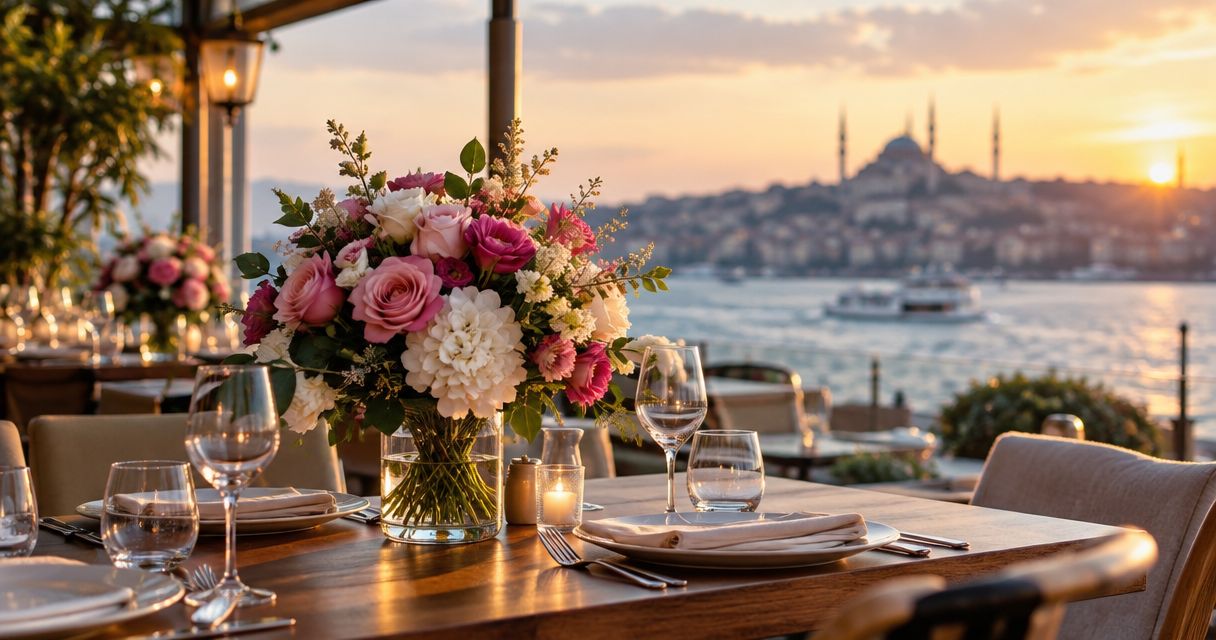
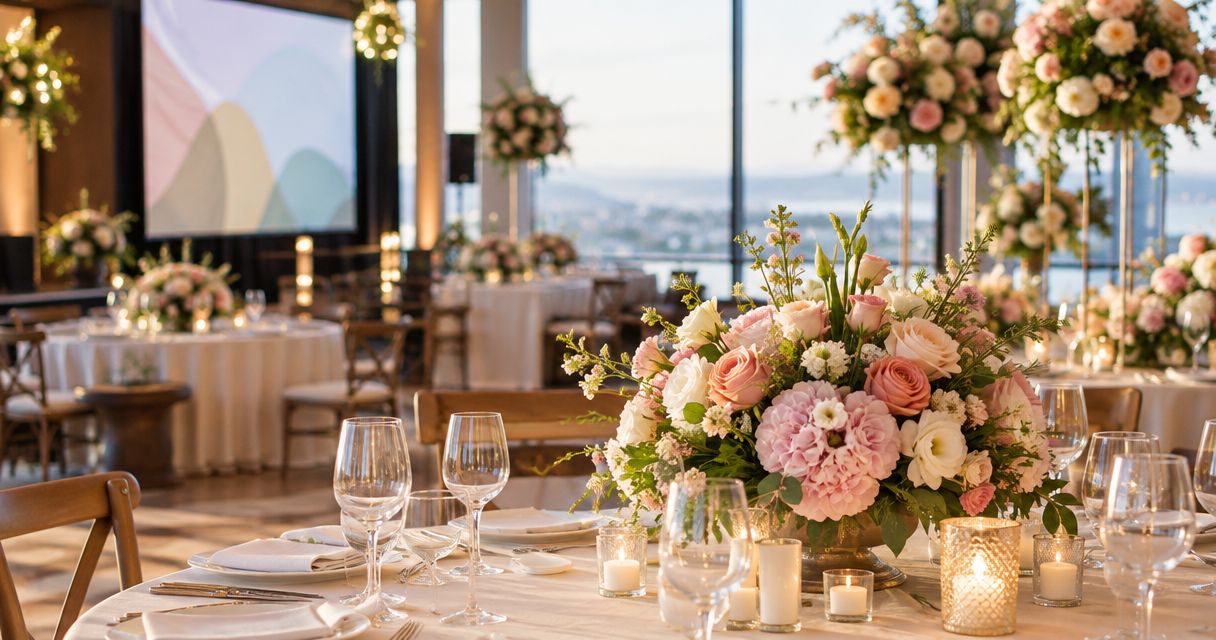
Venue flowers occupy working space. A centerpiece shares a table with glassware, menus, microphones, and serving dishes; an entrance arrangement shares a route with arriving guests. A floral design succeeds only when the event can operate around it.
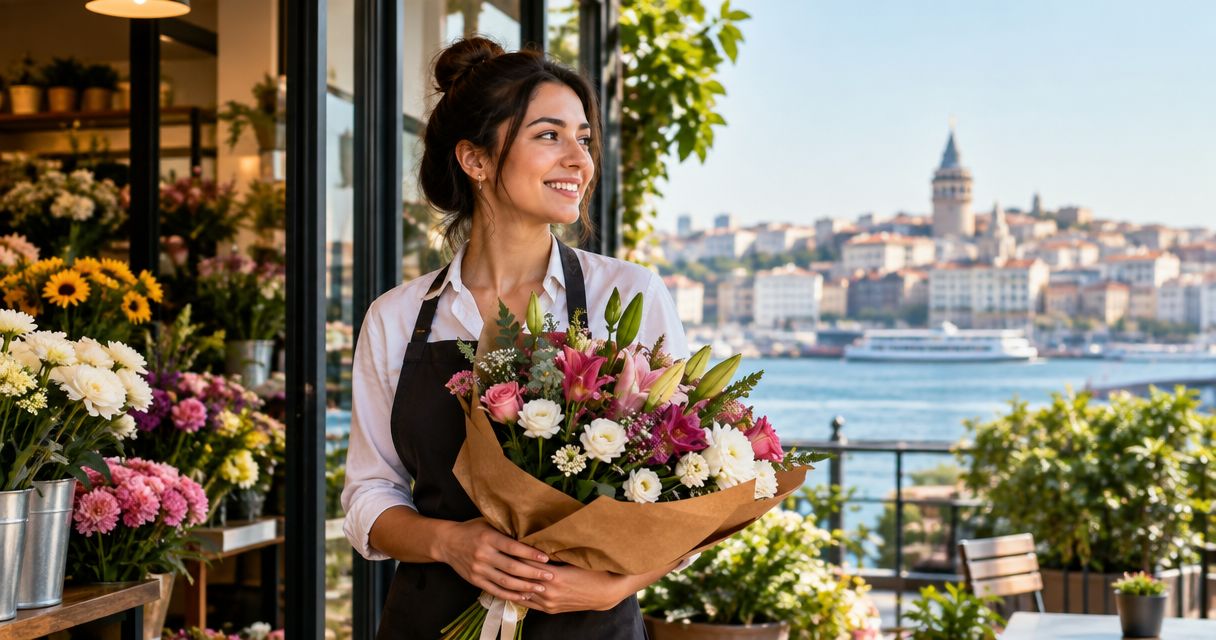
For Istanbul events, Pollyanna Flowers offers bouquets, plants, orchids, and bridal flower arrangements. Treat that selection as a sourcing starting point, not confirmation of a venue installation package. Delivery, on-site placement, and post-event collection are separate responsibilities that need explicit agreement.
Your 2026 planning brief should connect each arrangement to a location and purpose. That lets the client approve the experience rather than an isolated flower photograph, and gives suppliers instructions they can act on.
Plan venue flowers from the floor plan outward
1. Define the event outcome before choosing flowers
Start manually with the venue plan, the running order, and a short conversation with the client. Decide what flowers must achieve: frame a ceremony, welcome guests, support a brand presentation, or make dining tables feel considered. These goals require different placements.
Build 1 annotated layout sheet as your working reference. This is a recommended planning format, not a substitute for the venue’s technical drawings. Mark guest routes, presentation positions, service areas, and floral locations so everyone reviews the same arrangement of space.
Separate essential placements from optional decoration. An arrangement should earn its place through a clear purpose, not simply fill an empty corner. For a presentation-led event, an unobstructed stage view takes priority over decorative height.
Close the brief with decisions that affect every later step:
- Name the event purpose and desired atmosphere in plain language.
- Mark entrances, exits, accessible routes, and catering access.
- Identify the locations that guests and photographers will actually see.
- Separate essential floral placements from optional additions.
- Name the person authorized to approve design changes.
2. Map guest activity to each floral zone
Walk through the venue as a guest before discussing flower varieties. Follow the route from arrival to seating, then check the ceremony, presentation, dining, and departure areas. Where a site visit is impractical, request current photographs alongside the floor plan.
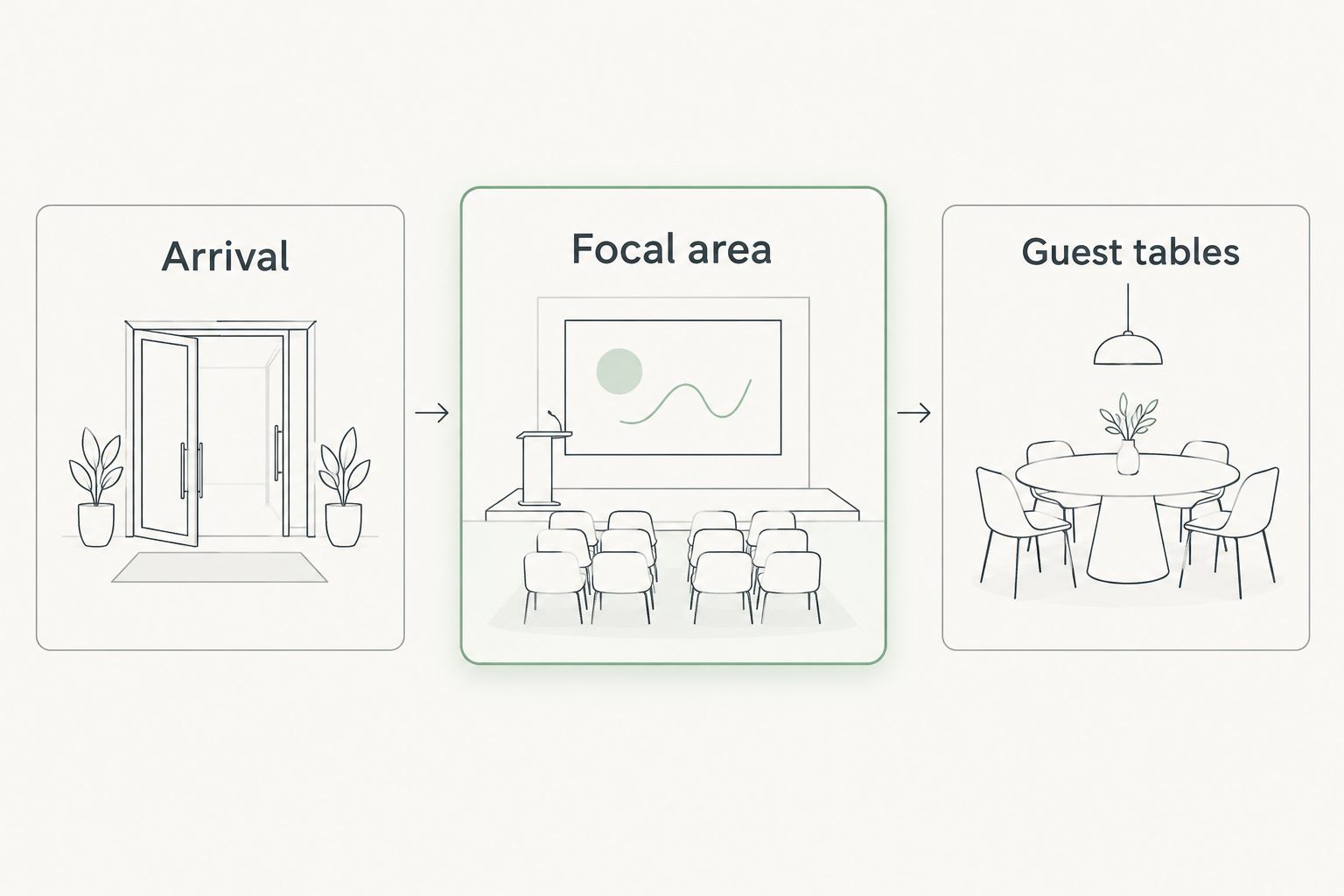
Use 3 planning zones as a starting framework: arrival, focal area, and guest tables. These are organizational categories, not a rule that every event needs flowers in every zone. A small reception can concentrate decoration in its focal area instead of distributing unrelated arrangements throughout the room.
Wedding planners should also separate personal flowers from venue decoration. A bridal bouquet must work in the wearer’s hands, while a table arrangement must work around seated guests. The bridal flowers guide for wedding planners addresses that related brief.
Record practical requirements for each location:
- Arrival: keep arrangements outside door swings and guest queues.
- Focal area: check the view from guest seating and camera positions.
- Guest tables: allow room for service items and conversation.
- Transition spaces: preserve clear routes between activities.
- Outdoor locations: agree a sheltered alternative with the venue.
3. Choose the floral format before the flower variety
Begin with reference photographs and a written description of the shape you need. Decide whether the location calls for a low arrangement, a vase display, a plant, or personal flowers. Then discuss flower types, color, and finish within that format.
For 2026 briefs, label reference images by the feature you want copied: silhouette, palette, density, or container. A photograph alone leaves too much open to interpretation. Approving a loose shape does not automatically approve the pictured flower varieties or vessel.
Pollyanna Flowers is best for Istanbul planners sourcing bridal flowers, bouquets, orchids, and plants. Its stated range gives you a direct sourcing route for those categories; it does not establish production of large venue installations. Confirm the intended use before treating any arrangement as an event-ready centerpiece.
Use these checks to narrow the format:
- Match the arrangement’s shape to the space it will occupy.
- Check seated views before approving table decoration.
- Specify whether the container forms part of the requested design.
- Discuss fragrance where flowers sit close to food or guests.
- Agree acceptable changes to flower type without losing the design intent.
4. Test the design against the working table
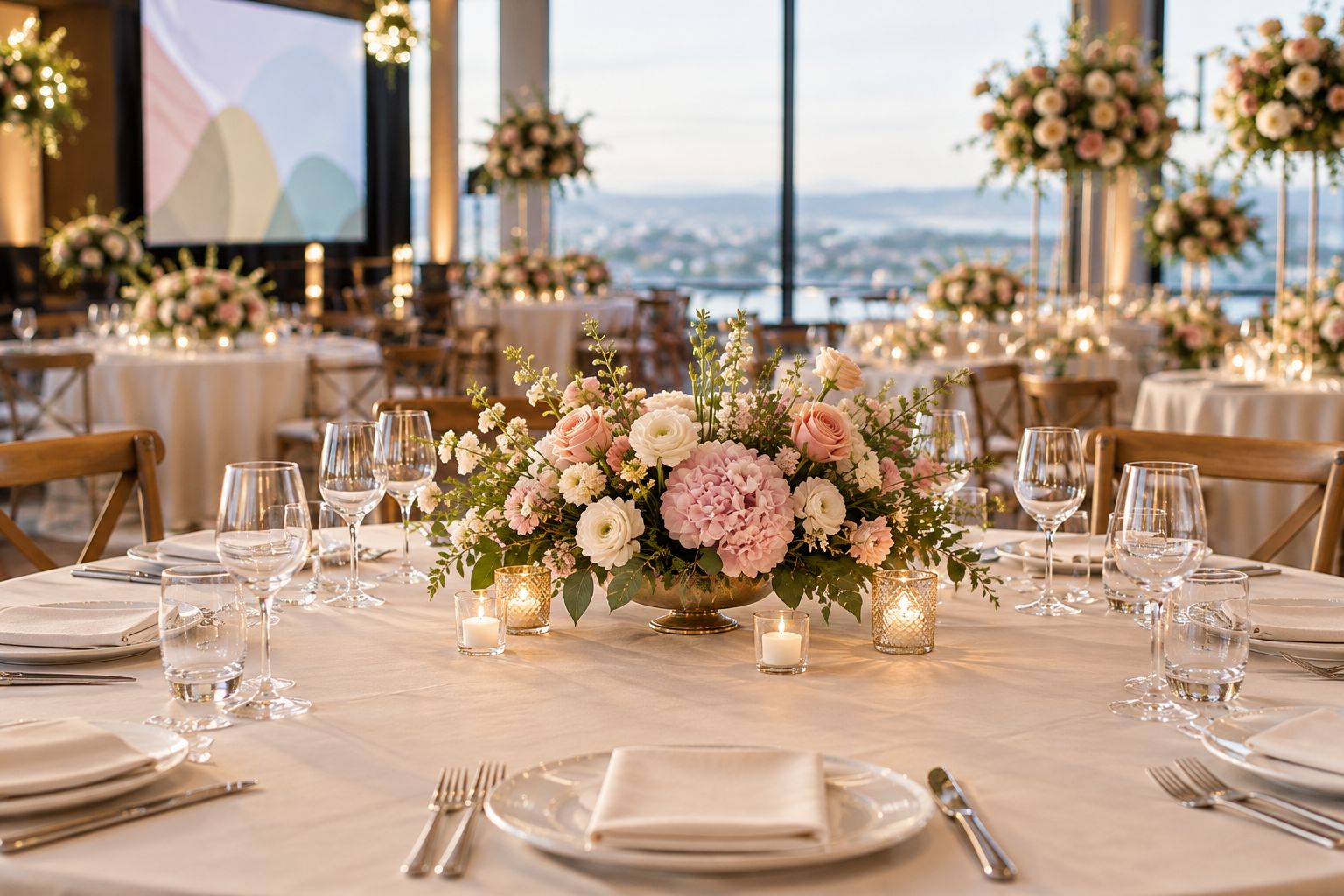
Use an existing vase or a simple paper outline to test the proposed footprint. Place it on a representative table with the actual service items, then review the view from seated eye level. This manual check reveals conflicts that a standalone arrangement photograph cannot show.
Do not choose height in isolation. A low arrangement can still occupy too much table space, while a narrow raised design requires scrutiny of its base, stability, and overhead spread. Approve the whole arrangement in context, not a height label.
For a 2026 event with speeches or presentations, include microphones, name cards, and screens in the test. Flowers should support the room’s purpose without forcing the venue team to rearrange an approved table at the last moment.
Complete the test with concrete checks:
- Sit in the guest position and check the view across the table.
- Place glasses, plates, menus, and table numbers before approval.
- Check that stems and foliage stay clear of serving areas.
- Photograph the approved layout from seated and standing positions.
- Record any container or placement changes in the brief.
5. Confirm the handoff and installation responsibilities
Write the operational plan yourself before asking suppliers to confirm their part. Separate transport to the venue from unloading, unpacking, placement, finishing, and removal. The phrase “flower delivery” does not define those tasks.
Pollyanna Flowers offers same-day delivery, but that service description is not a substitute for an agreed event handoff. Confirm the destination, timing, recipient, and handling responsibilities for your specific order. Keep the venue’s access requirements attached to the same brief.
Choose 2 approval checkpoints: design approval before execution and placement approval before guests enter. These are recommended controls. Name an authorized decision-maker for each checkpoint so a supplier does not receive conflicting instructions from the client, planner, and venue.
Resolve the following responsibilities in writing:
- Name the person who receives and checks the flowers.
- Confirm the venue entrance and unloading arrangements.
- Assign unpacking, positioning, and any on-site finishing.
- Specify who can approve a substitution or placement change.
- Assign container handling, removal, and waste clearance.
6. Build a fallback that preserves the design’s purpose
Start with a simple substitution sheet rather than a second full design. For each essential arrangement, identify what must remain consistent: color family, silhouette, scale, or intended use. Then identify which details the florist can adjust with approval.
A fallback should solve a defined problem. An outdoor placement needs an agreed indoor location; a delayed room handover needs a revised access plan. Replacing an entire design without checking these constraints merely creates another untested arrangement.
For your 2026 event file, keep the final layout, approved references, and responsibility list together. Record changes in that shared brief rather than leaving them scattered across messages. The practical goal is a version that the planner, venue, and florist can follow without interpretation.
Finish with a bounded contingency checklist:
- Define the non-negotiable color and shape requirements.
- Agree who authorizes flower or container substitutions.
- Identify an indoor alternative for exposed placements.
- Set a revised handoff process if room access changes.
- Keep the final approved brief with the event contact list.
Compare floral options by the job they need to do
No single floral format is best for every venue position. Use the comparison below to narrow your brief, then confirm the florist’s ability to provide the selected format. These are arrangement categories, not named products or confirmed service packages.
| Option | Best for | Main advantage | Key limitation |
|---|---|---|---|
| Low table arrangements | Seated dinners and discussion-led events | Keep decoration close to the table surface | Still require a footprint check beside service items |
| Bouquets in suitable vases | Welcome desks and compact focal points | Give you a straightforward decorative format | A hand-tied bouquet needs a suitable container and positioning |
| Orchid arrangements | Reception counters and quieter display areas | Offer a distinct plant-led presentation | Placement must account for the plant and container together |
| Potted plants | Entrances and lounge areas | Add greenery without requiring a cut-flower display | Need suitable positioning and a post-event destination |
| Elevated arrangements | Rooms where raised decoration supports the design | Place floral interest above the immediate tabletop | Require checks for stability, sightlines, and overhead space |
| Bridal flowers | Wedding ceremonies and personal presentation | Address the wearer’s role and appearance | Do not replace the venue decoration brief |
When comparing options, ask the same questions of each supplier. What exactly arrives, who positions it, and what happens afterward? Those answers make proposals easier to assess than a comparison based only on flower photographs.
Common mistakes event planners make with venue flowers
Approving a mood board without placement instructions
A mood board communicates atmosphere, not execution. Pair each approved reference with its intended location, format, and design priorities so a florist can distinguish inspiration from a required detail.
Treating delivery as installation
An order reaching reception does not establish who carries arrangements into the room or places them correctly. Assign those tasks before event day, and confirm that the responsible person has venue access.
Matching flowers while ignoring the containers
Similar blooms do not create a consistent room if the vessels conflict with the brief. Review container shape and finish alongside the flowers, and specify whether substitutions need approval.
Planning reuse without a transfer owner
Moving ceremony flowers into a reception area requires someone to carry, place, and check them while other event tasks continue. Approve reuse only after checking the schedule and assigning that work.
Leaving the flowers’ destination undecided
Post-event handling is part of the plan. Decide whether arrangements leave with the client, move elsewhere, or require collection, and confirm which containers must remain with their owner.
FAQ
What is the best way to plan venue flowers for an event?
Start with the venue layout and guest activities, then choose floral formats for specific locations. Approve placement, containers, and handling responsibilities alongside the visual design.
Are low flower arrangements better for event tables?
Low flower arrangements are a useful starting point for conversation-led dining tables. Test their full footprint with the table service, because low height alone does not guarantee a workable layout.
Can I use bridal bouquets as venue decorations?
A bridal bouquet can serve a secondary decorative purpose only when its container, placement, and transfer are planned. Keep the personal-flower brief separate from the venue brief so neither role is overlooked.
Does Pollyanna Flowers provide venue installation?
Pollyanna Flowers offers bouquets, plants, orchids, bridal flower arrangements, and same-day delivery in Istanbul. Confirm venue installation, on-site finishing, and removal directly before including those tasks in your event plan.
What should I send a florist before requesting venue flowers?
Send the event date, venue location, annotated layout, floral locations, design references, and access requirements. Identify the approval contact and explain which design details are essential.
Can ceremony flowers move to the reception afterward?
Ceremony flowers can be considered for reuse when the schedule, containers, and handling plan support the move. Assign a transfer owner and check the reception placement before relying on reuse.
How do I handle changes to the approved flower design?
Agree substitution rules before the event and name the person authorized to approve changes. Record the accepted color, shape, and scale priorities so changes preserve the design’s purpose.
One last thing
Add a final-destination field beside every floral placement in your 2026 layout. It forces a useful decision: who owns the container, who moves the arrangement, and where it goes after guests leave. An arrangement without an exit plan is an unfinished event task.