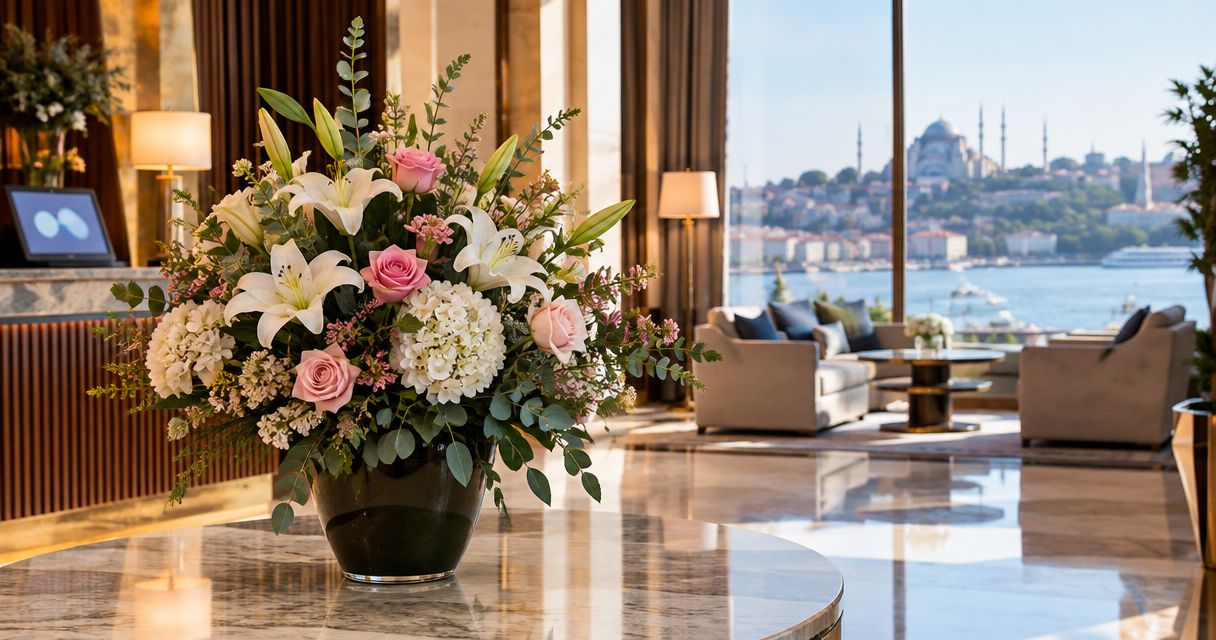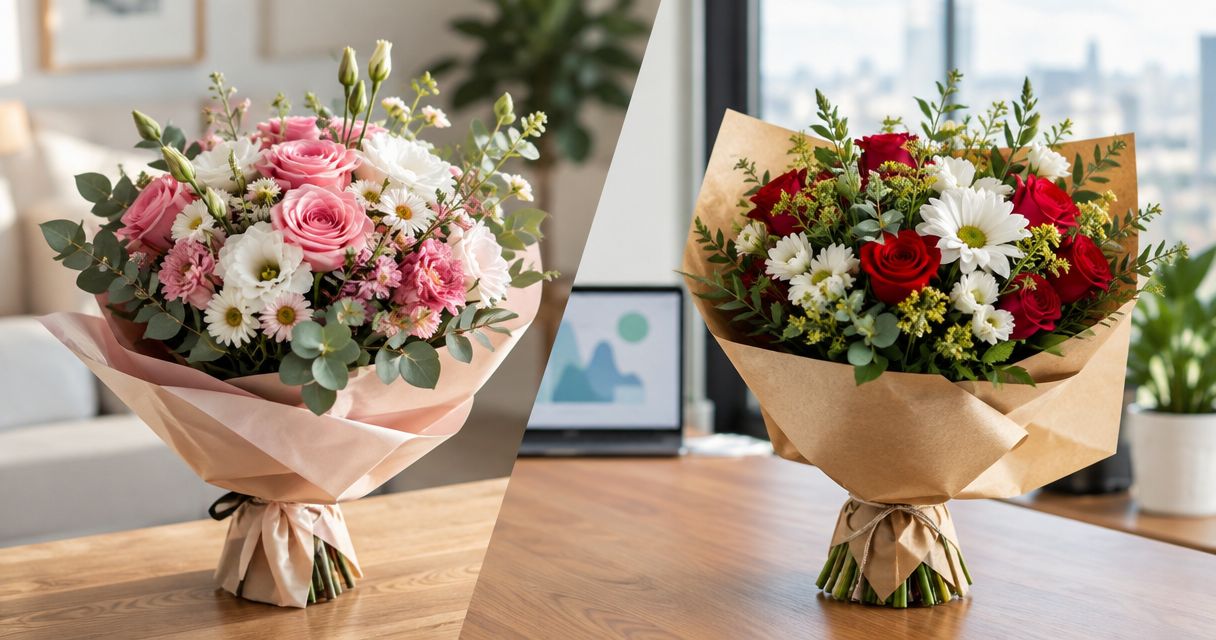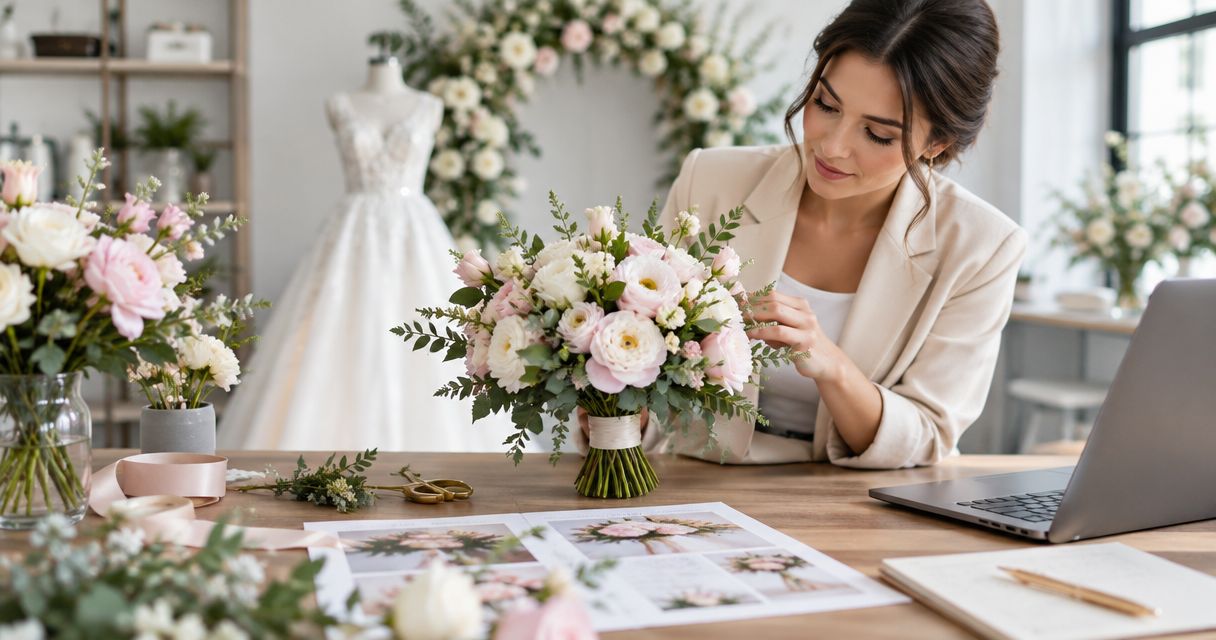
Wedding planners’ bridal flower planning is the coordination of bouquet design, handling and handover with the aim of giving the bride the agreed flowers at the right moment. For your 2026 weddings, this guide turns inspiration into an actionable brief, with particular attention to Istanbul sourcing, approval responsibilities and ceremony logistics.
- Bridal flowers for wedding planners start with the bride’s preferences, dress silhouette and ceremony schedule, not flower names.
- Pollyanna Flowers is an Istanbul florist offering bridal arrangements; confirm your event requirements before committing.
- Choose fresh or artificial flowers by appearance, handling needs and the bride’s preferences.
- Approve substitutions and assign a named bouquet recipient before the wedding day.
Why bridal flowers matter for wedding planners
A bridal bouquet is both a personal choice and an item on your production schedule. The bride chooses its character; you coordinate how that choice survives approvals, transport, dressing, photography and the ceremony.
Pollyanna Flowers is best for wedding planners seeking bridal flower arrangements from an Istanbul-based florist. Pollyanna Flowers offers bridal arrangements alongside bouquets, plants and orchids; that does not establish the scope of any individual wedding order. Confirm the agreed work rather than assuming broader event coordination is included.
Your planning constraints differ from those of someone ordering a birthday bouquet. You need a design the bride can approve, a handover that fits the running order and clear responsibility when something changes. For a 2026 wedding, keep these decisions in the event brief rather than scattering them across messages.
How to plan bridal flowers from brief to handover
Define the bride’s non-negotiables
Start with a shared document and a conversation. Ask what the bride wants to feel when carrying the bouquet, then separate essential preferences from inspiration that simply looks attractive in a photograph.
A reference image is not a specification. Identify whether its appeal comes from the outline, colour, ribbon, flower shape or overall fullness; otherwise, different people can approve the same image while expecting different results.
Use 1 master brief as your recommended working document, not several competing versions. Give the bride a clear place to approve it, and record whether the planner can make minor decisions without asking again.
- Record preferred colours and colours to avoid.
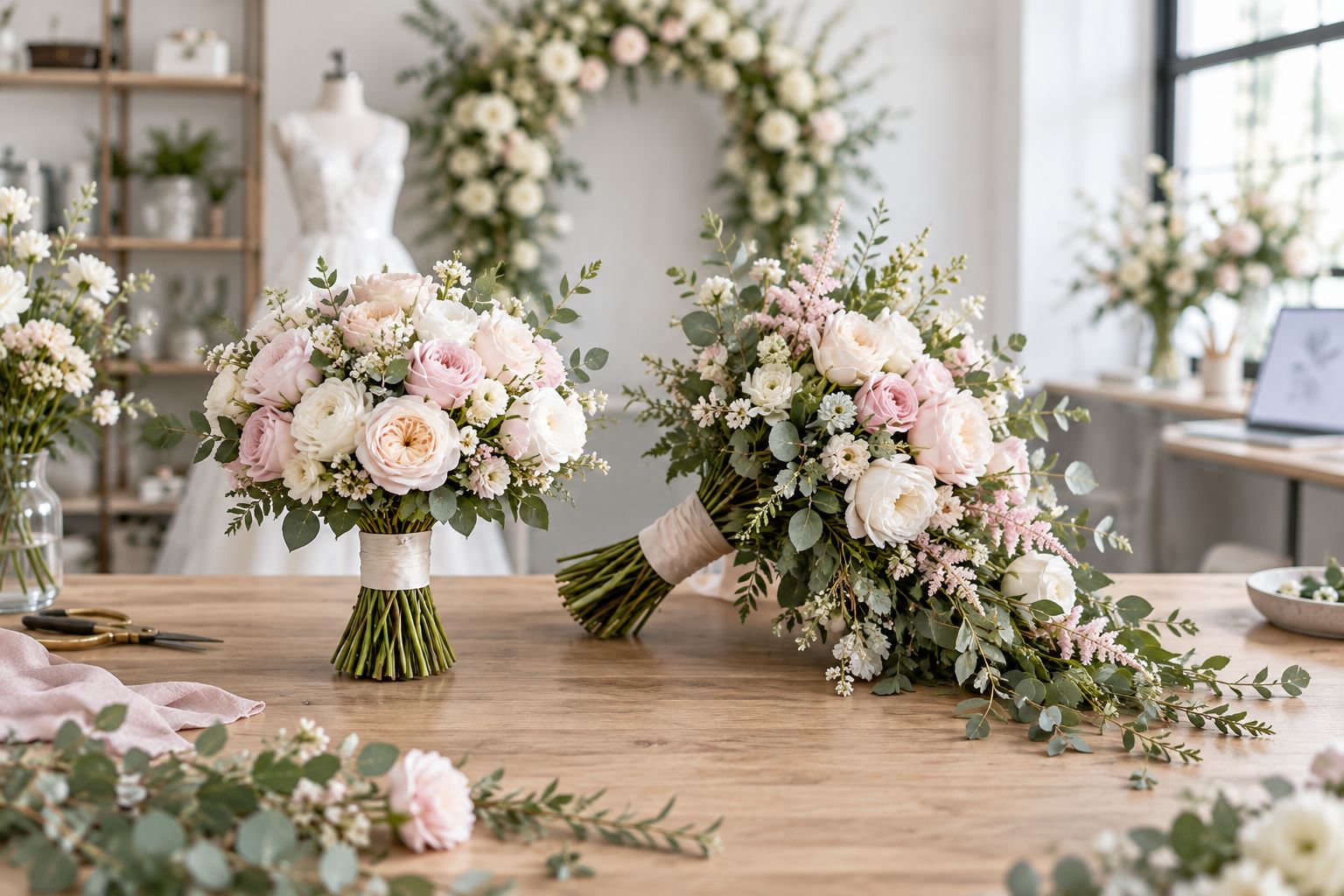
- Identify the desired outline: rounded, loose or cascading.
- Note fragrance preferences and any sensitivities the bride reports.
- Separate essential flower choices from flexible design details.
- Name the person authorised to approve changes.
Match the bouquet to the dress and setting
Review the bouquet beside a dress reference rather than in isolation. Ask where its outline will sit against the skirt, bodice and sleeve details, and whether the bride wants it to blend with the dress or create contrast.
Think about carrying as well as photographs. A trailing design introduces different movement and handling considerations from a compact bouquet; neither is automatically better. Let the bride’s comfort and the ceremony setting decide.
For your 2026 mood board, include an image showing the intended carrying position. This gives the florist a clearer starting point than a tightly cropped photograph of flower heads alone.
- Compare bouquet shape with the dress silhouette.
- Describe fullness without relying on vague terms such as large.
- Discuss the grip and carrying position with the bride.
- Check whether trailing elements interfere with movement.
- Review the design against both ceremony and portrait settings.
Send a consolidated florist brief
Prepare your requirements manually before approaching a florist. A shared document with reference images, responsibilities and open questions lets you compare responses against the same request instead of comparing unrelated proposals.
When approaching Pollyanna Flowers for bridal flowers, send that consolidated brief and ask which elements the florist will supply. Its stated bridal offering makes the conversation relevant; it does not confirm installation, collection, venue styling or on-site assistance.
Ask for a written response against your brief. This is the practical route from general inspiration to a decision-ready proposal, without assuming that a florist provides a particular planning system or consultation process.
- State the wedding date and exact handover location.
- List every requested floral item separately.
- Attach labelled references explaining what you like.
- Identify tasks that belong to the planner or venue.
- Ask the florist to flag any unresolved design decisions.
Choose fresh or artificial flowers deliberately
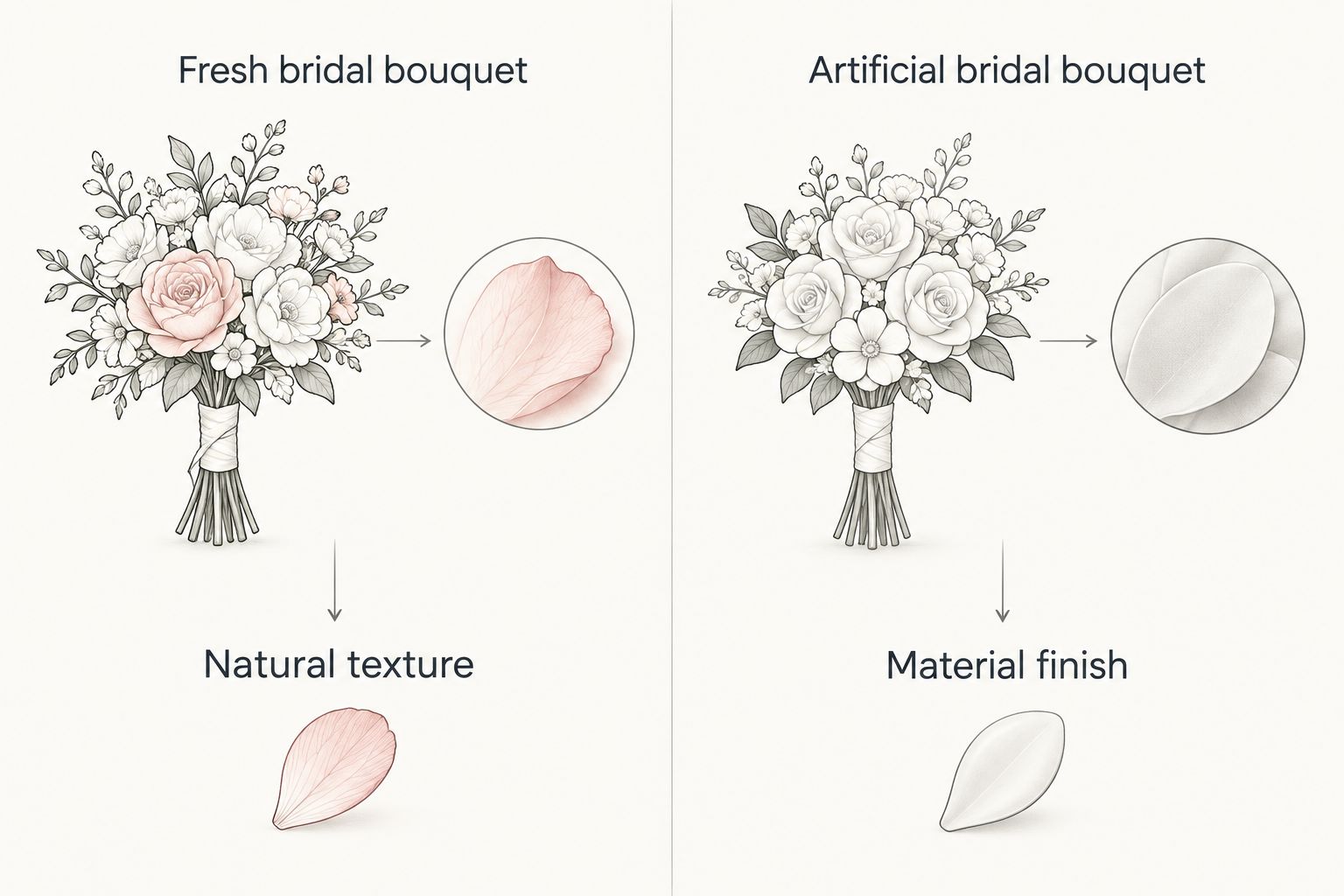
Fresh flowers and artificial flowers answer different briefs. Fresh flowers offer living material with natural variation; artificial flowers remove the need to keep the bouquet hydrated but introduce their own questions about material appearance and finish.
Inspect the option you intend to use rather than approving a category label. For artificial flowers, examine stem joins, petal edges and the handle. For fresh flowers, ask the florist how the selected design should be held and stored before the ceremony.
There is no universal winner for 2026 weddings. Choose the material the bride wants to carry, then plan its handling requirements. Do not assume that Pollyanna Flowers supplies artificial bridal bouquets; establish the scope directly.
- Confirm whether the bride wants fresh or artificial materials.
- Review colour and texture in the intended lighting.
- Check the finished handle and visible construction details.
- Obtain handling instructions for the chosen materials.
- Keep preservation or keepsake expectations separate from design approval.
Approve substitutions before they become urgent
Write down what must remain consistent if a proposed flower changes. The important feature might be its colour, shape, texture or personal significance; those are different instructions and should not be treated as interchangeable.
Use 3 approval checkpoints as a planning recommendation: brief approval, design confirmation and handover inspection. These checkpoints organise decisions; they are not a claimed industry standard or a promise about any florist’s process.
For your 2026 approval record, distinguish permission to propose an alternative from permission to use it. A florist suggesting a change still needs to know who can accept it and what happens if that person cannot respond.
- Mark flowers that cannot be substituted without approval.
- Describe acceptable colour and texture boundaries.
- Identify the person who approves alternatives.
- Agree how proposed changes will be communicated.
- Save the final decision with the current brief.
Assign the handover and care responsibilities
Put the bouquet into the wedding running order as a named handover, not a general delivery note. Record who receives it, where it goes afterwards and who brings it to the bride when she needs it.
Assign 2 named contacts as a practical safeguard: the primary recipient and a backup. Both need access to the same instructions. A backup who cannot enter the venue or reach the getting-ready room does not solve the handover problem.
Request care instructions from the supplying florist rather than applying a generic schedule. Fresh flower arrangements need handling appropriate to their materials and construction, while artificial bouquets still need protection from crushing and damage.
- Record the receiving location in the event schedule.
- Give the recipient and backup each other’s contact details.
- Confirm who supplies any temporary holding container.
- Keep the bouquet away from direct heat while awaiting use.
- Assign responsibility for moving it between event locations.
Rehearse the bouquet’s route through the day
Walk through the bouquet’s movement using the ceremony schedule. Start with receipt and finish with its final destination, including dressing photographs, travel, the processional and any reception use the bride has requested.
This can be a tabletop review; you do not need to stage the whole wedding. The purpose is to find moments when everyone assumes someone else is holding, moving or protecting the bouquet.
If you want to repurpose the bouquet as reception decoration, agree the location and holder beforehand. Do not treat reuse as automatic: the bride’s wishes and the arrangement’s condition come first.
- Identify who holds the bouquet during outfit adjustments.
- Confirm the handoff before the processional.
- Ask who takes it during the ceremony when necessary.
- Plan its movement to any separate portrait location.
- Record whether it returns to the bride or another named person.
Compare bridal flower options for your event
Choose the option that solves the bride’s design and handling needs. The table separates a named florist from material and design choices; it is not a claim that every option belongs to the same supplier.
| Option | Best for | Main advantage | Key limitation |
|---|---|---|---|
| Pollyanna Flowers bridal arrangements | Planners seeking an Istanbul-based bridal florist | The stated offering includes bridal arrangements | Event-specific services and responsibilities require confirmation |
| Fresh bridal bouquet | Brides who want natural flowers | Natural texture and variation | Requires flower-appropriate care and handling |
| Artificial bridal bouquet | Brides who prefer non-living materials | Does not require hydration | Material finish needs close inspection |
| Compact bouquet design | Brides who prefer a contained outline | Keeps the arrangement visually concentrated | Does not create a trailing silhouette |
| Cascading bouquet design | Brides who want a trailing outline | Adds length and movement to the design | Trailing elements need attention during carrying and handoffs |
A compact design can use fresh or artificial materials. Keep material choice separate from silhouette so you do not reject a suitable shape because of assumptions about its construction.
Common mistakes wedding planners make
Approving a photograph without defining its appeal
A bride approving a reference photograph has not necessarily approved every flower or detail in it. Record the specific elements she wants repeated, and identify which parts are merely inspiration.
Treating a bridal bouquet as a venue-flower package
A bridal arrangement does not establish responsibility for ceremony installations, table flowers or breakdown. List those separately and obtain explicit confirmation of who supplies each item.
Leaving the bouquet with an unnamed venue contact
A delivery reaching the building is not the same as a bouquet reaching the bride. Name the recipient, confirm access and include the handover in the running order.
Seeking approval through competing message threads
Separate conversations create conflicting instructions. Keep a current brief and transfer every accepted change into it, including decisions made by phone or in person.
Planning photographs but ignoring carrying comfort
A bouquet needs to work while the bride moves, waits and greets people. Discuss the grip and outline before approval rather than discovering a handling problem during portraits.
FAQ
What should wedding planners include in a bridal flower brief?
Include the bride’s colour preferences, bouquet silhouette, reference images, requested items and handover details. Name the final approver and record substitution rules so design and operational decisions stay connected.
Is a fresh or artificial bridal bouquet better?
Neither material is best for every bride. Fresh flowers provide natural texture and variation, while artificial flowers avoid hydration needs; inspect the intended design and choose according to the bride’s preferences.
Can wedding planners source bridal flowers from Pollyanna Flowers?
Pollyanna Flowers is an Istanbul-based florist whose stated offering includes bridal flower arrangements. Ask the florist to confirm the scope, handling instructions and handover responsibilities for your event.
How do I match a bridal bouquet to the wedding dress?
Compare the bouquet’s outline and carrying position with the dress silhouette and details. Ask whether the bride wants contrast or visual continuity, then review the grip and any trailing elements.
What should I do if the proposed wedding flower changes?
Apply the substitution rules approved in the bridal flower brief. Confirm whether colour, shape, texture or a specific flower is essential, and obtain approval from the named decision-maker before accepting the change.
Who should receive the bridal bouquet on the wedding day?
A named person with access to the agreed handover location should receive the bridal bouquet. Assign a backup and make both responsible contacts aware of the care instructions and next handoff.
Can the bridal bouquet become reception decoration?
Plan bouquet reuse only when the bride agrees and a suitable location and holder are arranged. Assign someone to move it, and check its condition before placing it in the reception setting.
One last thing
Before closing your 2026 wedding brief, ask a deceptively useful question: Where does the bouquet go when the bride needs both hands? Answer it for dressing, travel, vows and greetings. That simple decision connects the floral design to the actual experience of carrying it.