Best overall: a compact red carnation bouquet. Best for shared participation: individual red carnations. Best for minimal materials: a simply tied carnation bunch. This 2026 guide to the best Ataturk flower arrangements ranks ceremony formats by how you carry, present, and place them—not by decorative complexity.
- For the best ataturk flower arrangements, choose a compact red carnation bouquet for straightforward carrying and placement.
- Individual carnations suit ceremonies where participants each present a flower; wreaths need organizer approval and handling plans.
- Karanfil means carnation; Atatürk çiçeği usually means poinsettia in Turkish, so specify the flower clearly.
- Pollyannaflowers serves Istanbul bouquet buyers; discuss your ceremony brief before choosing an arrangement.
Why the ceremony format matters
The right arrangement fits what happens at the ceremony. A bouquet carried by one representative, loose stems distributed to participants, and a wreath positioned by attendants solve different problems. Choose the presentation method before choosing the decoration.
A naming distinction matters, too: karanfil is carnation, while Atatürk çiçeği is the Turkish name commonly used for poinsettia. They are different plants. When requesting carnations, say so explicitly rather than relying on an English search phrase such as “Atatürk flower.”
Pollyannaflowers is an Istanbul florist offering bouquets, plants, orchids, and bridal arrangements. Pollyannaflowers suits Istanbul buyers who want a florist-prepared bouquet rather than a do-it-yourself arrangement. Give the florist your ceremony requirements instead of assuming an everyday gift bouquet suits the setting.
For a ceremony on 10 November 2026, ask the organizer about presentation and placement. Do the same for events on 29 October 2026 or 19 May 2026; the occasion alone does not establish the venue's flower requirements.
What makes the best ceremony flower arrangement?
Use these criteria before comparing styles:
- Presentation method: Decide whether someone will carry, hand over, distribute, or position the flowers.
- Organizer acceptance: Confirm the permitted format, placement area, and any ribbon or inscription requirements.
- Handling: Choose a shape that the designated presenter can hold without rearranging it during the ceremony.
- Visual restraint: Keep the flowers readable as a single composition rather than competing with oversized wrapping.
- Placement: Match the base or stem bundle to the surface where the arrangement will rest.
- Aftercare: Assign responsibility for water, collection, and removal once the ceremony ends.
For your initial brief, use a working limit of 2 flower colors and 1 named handover recipient. These are planning recommendations, not ceremonial rules. A clear brief makes it easier to assess whether an arrangement serves your event.
Ceremony arrangements at a glance
These are arrangement styles, not named products or confirmed catalog listings. The order favors straightforward handling for an individual buyer; an organizer's instructions take priority over the ranking.
| Arrangement | Best for | Standout feature | Key limitation |
|---|---|---|---|
| Compact red carnation bouquet | One representative presenting flowers | Gathered stems form one handheld arrangement | Does not provide a separate flower for each participant |
| Individual red carnations | Shared participation | Each participant can hold a separate stem | Distribution and placement need coordination |
| Simply tied carnation bunch | Minimal decorative materials | Flowers remain the focus | Exposed stems need careful transport |
| Red-and-white carnation bouquet | A requested two-color design | Color contrast without changing the handheld format | The balance needs a clear brief |
| Low carnation arrangement | An approved indoor display surface | A container supports a freestanding display | Requires a suitable surface and water handling |
| Carnation wreath | An approved formal group presentation | A framed form creates a distinct presentation | Transport, carrying, and positioning need advance planning |
1. Compact red carnation bouquet: best for a single presenter
A compact red carnation bouquet gathers the stems into one handheld arrangement. Choose it when one person will carry the flowers and make the presentation, rather than distribute stems to a group.
Keep the silhouette controlled and the wrapping subordinate to the flowers. For your 2026 brief, describe the handover and resting position instead of requesting a “large ceremonial bouquet,” which leaves the practical details unresolved.
Compact red carnation bouquet pros:
- Gives the presenter one arrangement to manage.
- Keeps the flower heads together in a clearly defined shape.
- Allows a restrained design without a separate display frame.
Compact red carnation bouquet cons:
- Does not support individual participation without being separated.
- Needs suitable support if it will stand upright after presentation.
Best for: One representative presenting flowers on behalf of a person, family, or small group.
Verdict: Buy this style as the default, after confirming bouquet placement is permitted.
2. Individual red carnations: best for shared participation
Individual red carnations let each participant present a separate stem. The format suits an event designed around a sequence of personal contributions rather than a single group handover.
The work shifts from arranging flowers to coordinating people. Decide who distributes the stems, where participants wait, and where each flower goes after presentation; do not leave those decisions to the moment everyone arrives.
Individual red carnations pros:
- Give each participant a distinct flower to present.
- Avoid the need to pass one bouquet between people.
- Allow flowers to be distributed before the presentation begins.
Individual red carnations cons:
- Require an organized distribution point.
- Need clear placement instructions to prevent an untidy accumulation.
Best for: Schools, clubs, families, or groups whose organizer has planned individual flower placement.
Verdict: Buy individual stems when participation is the priority; skip them for a single-representative handover.
3. Simply tied carnation bunch: best for minimal materials
A simply tied bunch uses a straightforward stem binding rather than a shaped outer wrap or display structure. Ask for the flowers to be gathered securely, with decoration kept secondary.
This is the simplest-material option, not a claim about cost. It works when you want the carnations themselves to carry the presentation and can transport the exposed stems without crushing or drying them.
Simply tied carnation bunch pros:
- Keeps attention on the flowers rather than the packaging.
- Avoids a separate container or wreath frame.
- Provides a direct brief for a restrained presentation.
Simply tied carnation bunch cons:
- Offers less protection around the flower heads than substantial wrapping.
- Needs a transport plan that protects exposed stems and nearby clothing.
Best for: A personal tribute where minimal decoration is preferred and the organizer accepts a tied bunch.
Verdict: Buy for simplicity; skip if the flowers must stand unsupported.
4. Red-and-white carnation bouquet: best for a two-color brief
A red-and-white carnation bouquet adds contrast while retaining the familiar handheld format. Choose it because the organizer or recipient requests those colors, not because a mixed arrangement automatically carries greater ceremonial significance.
Specify whether one color should dominate or whether you want an even visual balance. For a 2026 order, a written color brief is more useful than an instruction such as “make it appropriate.”
Red-and-white carnation bouquet pros:
- Creates a clear contrast within one flower type.
- Keeps the handling method similar to a single-color bouquet.
- Allows you to describe the desired balance before preparation.
Red-and-white carnation bouquet cons:
- Requires more design direction than an all-red bunch.
- Contrasting wrapping can compete with the flowers if the brief is unclear.
Best for: A ceremony with an explicitly requested red-and-white design.
Verdict: Buy when the color brief is confirmed; otherwise choose the simpler all-red bouquet.
5. Low carnation arrangement: best for an approved indoor surface
A low carnation arrangement sits in a container rather than remaining a handheld bundle. Consider it for a designated indoor display surface where the flowers will stay in place during the event.
Confirm the permitted footprint and protect the surface from water. If you are comparing pale floral designs, the white flower bouquet guide offers a separate style reference; a gift or wedding design still needs adapting to the ceremony brief.
Low carnation arrangement pros:
- Supports a display without someone holding the stems.
- Keeps the composition in a defined container.
- Can be planned around a specific indoor placement area.
Low carnation arrangement cons:
- Needs a suitable surface and permission to use it.
- Introduces a container and water-management task during transport.
Best for: An approved reception table, indoor remembrance display, or other designated surface.
Verdict: Buy only after confirming the display location; skip for a walking presentation.
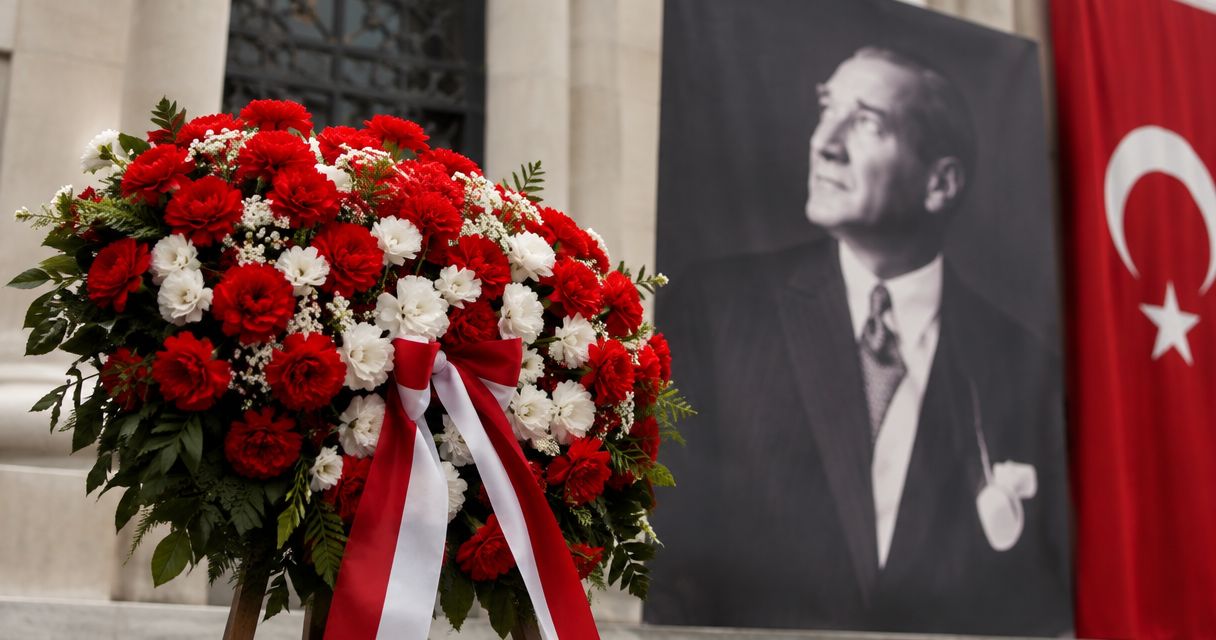
6. Carnation wreath: best for an approved formal group presentation
A carnation wreath arranges flowers around a supporting frame. It is a separate logistical choice, not simply a larger bouquet, and belongs in the shortlist only when the organizer accepts that format.
Discuss carrying, unloading, positioning, and collection before ordering. A wreath without an agreed placement plan creates extra work at the venue, regardless of how carefully the flowers are arranged.
Carnation wreath pros:
- Creates a distinct framed form for a group presentation.
- Separates the display structure from a handheld bouquet format.
- Supports a planned placement rather than an improvised resting position.
Carnation wreath cons:
- Requires more transport and handling coordination than a tied bunch.
- Needs explicit agreement on placement and any inscription.
Best for: A group presentation with organizer-approved wreath placement and assigned handlers.
Verdict: Hold until the organizer confirms the format and handling arrangements.
Turn the choice into a clear florist brief
For 2026 ceremony planning, settle the practical sequence before discussing decorative additions. Use these 3 checks to turn a preferred style into instructions someone can act on:
- Confirm the format: Ask the organizer whether the flowers should be a bouquet, separate stems, a container arrangement, or a wreath.
- Confirm the handover: Name the person receiving the flowers and state whether that person is the presenter or a coordinator.
- Confirm the placement: Describe where the flowers will rest and who removes them afterward.
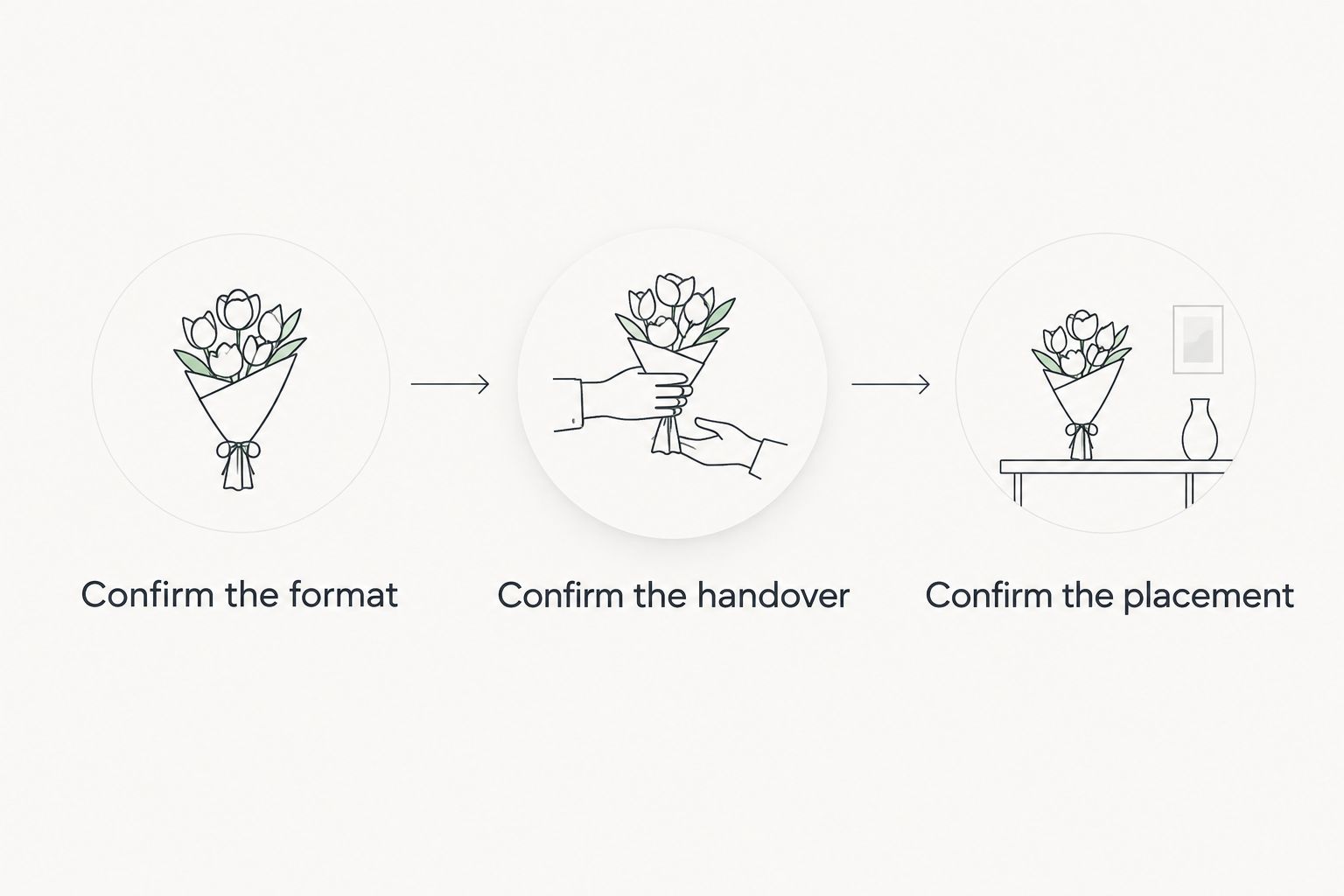
Give Pollyannaflowers the date, venue, flower type, color brief, and agreed presentation method. The florist offers same-day delivery in Istanbul, but that does not establish a timed ceremony handover; confirm the arrangements for your specific event.
Keep any inscription separate from the visual brief and check the spelling yourself. Do not assume a ribbon, stand, container, or wreath service is included in a bouquet request.
How these styles are ranked
This ranking compares arrangement formats against presentation, handling, placement, and coordination needs. It is not a product test or a judgment about official ceremonial preference.
The compact bouquet ranks first because it suits the simplest handover scenario: one presenter carrying one arrangement. Individual stems move ahead when shared participation matters; a container or wreath moves ahead only when the event specifically calls for that structure.
Which arrangement should you choose?
Choose a compact red carnation bouquet if you are undecided and the organizer permits bouquets. It gives you a clear, manageable brief without introducing a frame, display vessel, or stem-distribution plan.
Choose individual carnations for a planned participant sequence. Choose a wreath only after approval. For ceremony flower arrangements requested from Pollyannaflowers, describe the task the flowers must perform before discussing their decorative finish.
FAQ
What's the best Ataturk flower arrangement for a ceremony?
A compact red carnation bouquet is the default recommendation for a single presenter when the organizer permits bouquets. Choose individual stems instead when each participant is expected to place a flower.
Does Atatürk çiçeği mean carnation?
No. Atatürk çiçeği commonly means poinsettia in Turkish, while karanfil means carnation. Specify carnations when discussing the ceremony arrangement with a florist.
Should I choose red carnations or red-and-white carnations?
Choose red carnations for the simpler single-color brief, or red-and-white carnations when that combination is requested. Confirm any event-specific color requirements with the organizer.
Is a wreath better than a bouquet for an Atatürk ceremony?
A wreath is better only when the ceremony calls for an approved framed presentation. A bouquet is the simpler choice for one person carrying and presenting flowers.
Can I request ceremony flowers from Pollyannaflowers in Istanbul?
You can discuss a ceremony bouquet brief with Pollyannaflowers, an Istanbul florist offering flower bouquets. Confirm the requested format, delivery arrangements, and any additional presentation requirements before ordering.
What should I tell the florist before ordering carnations?
Provide the ceremony date, venue, flower type, colors, presentation method, and handover recipient. State any organizer requirements for placement, wrapping, or inscriptions separately.
Should I order loose carnations for a group ceremony?
Choose separate carnations when the organizer has planned individual flower presentation. Assign someone to distribute the stems and explain where participants should place them.
One last thing
Ask where the flowers go after the presentation before choosing the arrangement. That answer often settles the choice: a handheld bouquet, separate stems, and a container display need different placement plans. Decide that first, and the decorative brief becomes much clearer.