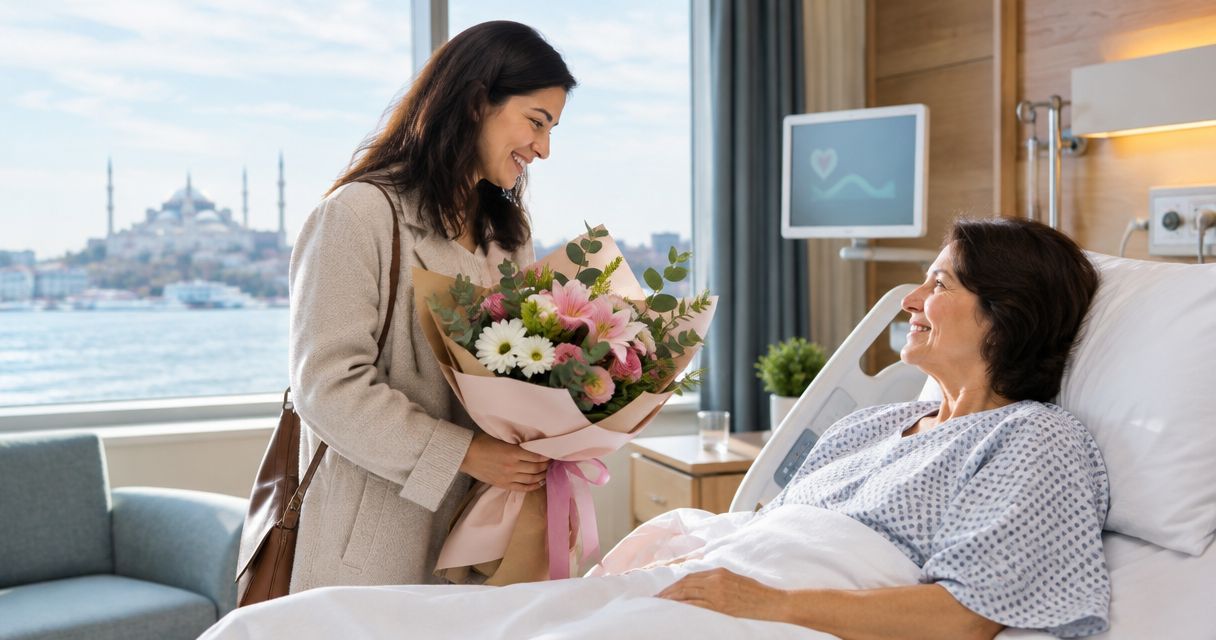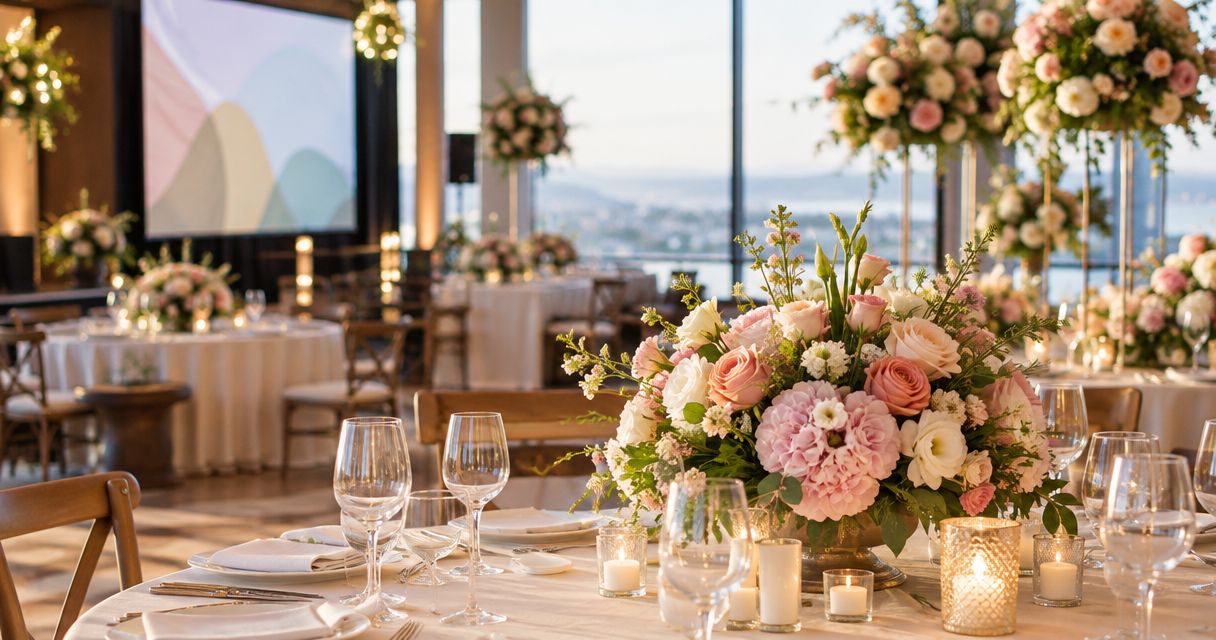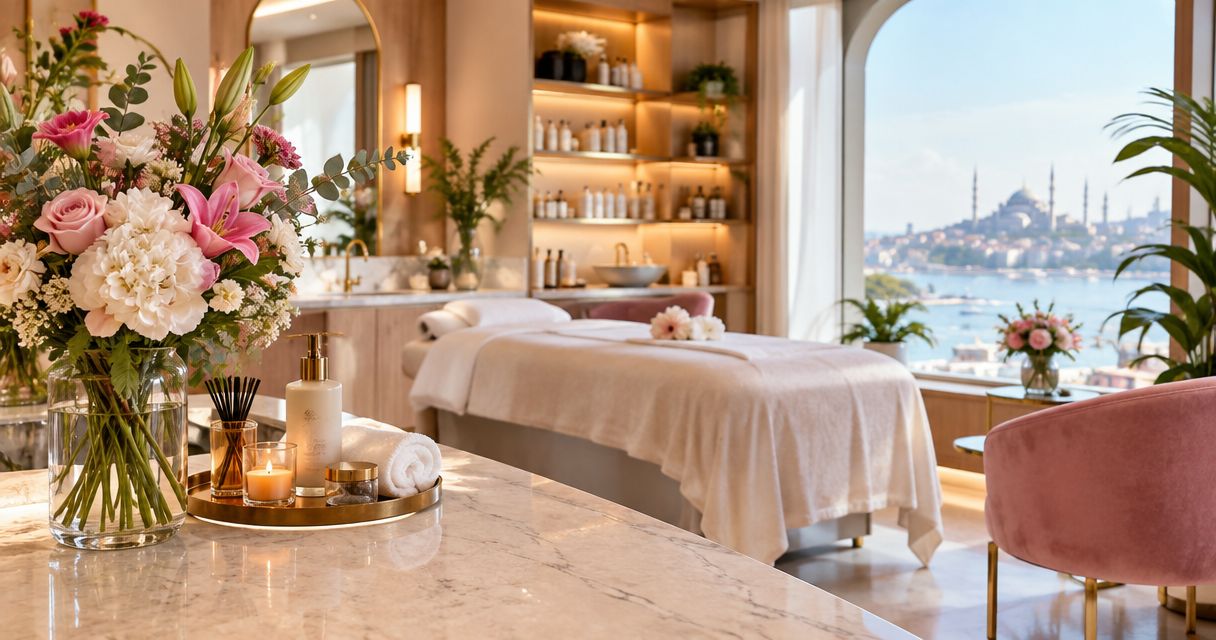
Beauty salon flower decoration is the placement of bouquets, plants and orchids in client-facing spaces to create a welcoming setting without disrupting treatments. For Istanbul salons and spas, successful güzellik salonu çiçek dekorasyonu starts with clear counters, suitable light and a care routine—not the largest arrangement.
- For güzellik salonu çiçek dekorasyonu, choose placement and maintenance before flower colour or arrangement size.
- Pollyanna Flowers offers bouquets, plants and orchids in Istanbul; confirm your chosen arrangement’s suitability for the salon.
- Keep salon flowers away from treatment tools, splashes and frequently handled surfaces.
- Choose spa flowers around client comfort, scent preferences and the actual light available.
Why flower decoration matters for Istanbul salons and spas
A salon reception desk must handle bookings, payments and conversations. Treatment areas have different priorities: accessible tools, clean working surfaces and comfortable movement. Flowers belong where they support these activities, not where staff must repeatedly move them.
Pollyanna Flowers is best for Istanbul salon owners seeking bouquets, plants or orchids from a local florist. Pollyanna Flowers offers these categories, but choosing a florist does not replace checking the room conditions and assigning daily care.
For your 2026 decoration plan, separate the desire for a welcoming entrance from the practical requirements of a working salon. A bouquet that suits a reception photograph is not automatically suitable beside a manicure station or inside a treatment room.
The goal is straightforward: clients should notice a considered space, while your team can work without negotiating around the display.
Plan salon flowers around the workday
Map the spaces clients actually use
Start with a manual walkthrough before browsing arrangements. Follow the route from the entrance to reception, seating, consultation and treatment, noting every surface used for belongings, paperwork or equipment.
Give each potential flower position a clear purpose. Reception flowers welcome clients; a waiting-area plant fills a visual gap; a consultation-room arrangement provides a decorative detail. You do not need to put flowers in every zone.
Check the proposed position while the salon operates, not only before opening. An empty counter can look suitable until appointment books, payment equipment and client bags return to it. Reject any position that creates extra handling during a normal appointment.
For spas, also check whether staff dim the room during treatments. A decorative position must work under the room’s actual operating conditions rather than its brightest presentation setting.
- Mark entrance, reception, waiting and treatment zones on a simple floor plan.
- Identify the surfaces staff need throughout an appointment.
- Keep flowers outside door swings and walking routes.
- Check the view from both the client chair and the staff position.
- Remove any proposed display that obstructs work.
Match the arrangement to light, water and care
Assess each location yourself before selecting a flower category. Observe daylight, nearby heating or cooling outlets, splashes and the practical route to a sink. A place that looks attractive is not necessarily suitable for a living plant.
A cut-flower bouquet requires vase care and removal of deteriorating material. A potted plant requires care suited to its species and growing conditions. An orchid is also a living plant, not a maintenance-free substitute for a bouquet.
For your 2026 shortlist, choose the category only after checking the location. Use the orchid arrangement styles for home and office guide for visual direction, then ask about the care requirements of the specific orchid you select.
Choose a bouquet when your team can maintain a vase; choose a plant when the location supports that plant’s needs. Neither choice solves an unsuitable position.
- Observe the actual daylight at the proposed location.
- Identify direct airflow from heating and cooling equipment.
- Ask for species-specific care instructions before choosing a plant.
- Check how staff will move water without crossing treatment work.
- Select a container that protects the underlying surface.
Write a clear florist brief
Create the brief manually with photographs and plain-language requirements. Include the intended position, surrounding colours, nearby activities and who will handle care. Describe what the arrangement must avoid as clearly as what it should look like.
Pollyanna Flowers offers bouquets, plants and orchids in Istanbul. Once you have a usable brief, asking the florist to suggest an appropriate option provides a more direct route than comparing unrelated gift bouquets by appearance alone. Confirm the proposed arrangement rather than assuming the catalogue image establishes its suitability.
For a 2026 salon refresh, distinguish an everyday reception display from flowers for an opening or launch event. They serve different purposes, and your instructions should reflect that difference.
Do not assume a flower purchase includes installation, recurring replacement, container collection or plant maintenance. Ask about each service you need before making it part of your operating plan.
- Send photographs of the proposed position and surrounding workspace.
- State whether the display is for everyday use or a specific event.
- Describe preferred colours without demanding unconfirmed flower varieties.
- Explain any client-comfort or scent requirements.
- Confirm the container, care instructions and services included.
Protect treatment space and client comfort
Test placement with an existing vase or another stable object before ordering. Sit in the client chair, open drawers, reach for tools and check the mirror. This simple rehearsal exposes conflicts that a mood board cannot show.
Keep floral decoration separate from the surfaces used for treatment supplies. At nail stations, consider the interaction between the display, hand movements and frequently cleaned equipment. In spa rooms, check the position against treatment beds, trolleys and staff movement.
Do not describe any bouquet as allergy-safe or fragrance-free without specific confirmation. Ask about scent characteristics, and give clients a straightforward way to request that flowers be moved. Decorative fragrance should not become an unavoidable part of a treatment.
Use the same placement test after delivery because the finished arrangement’s shape can differ from the space you imagined.
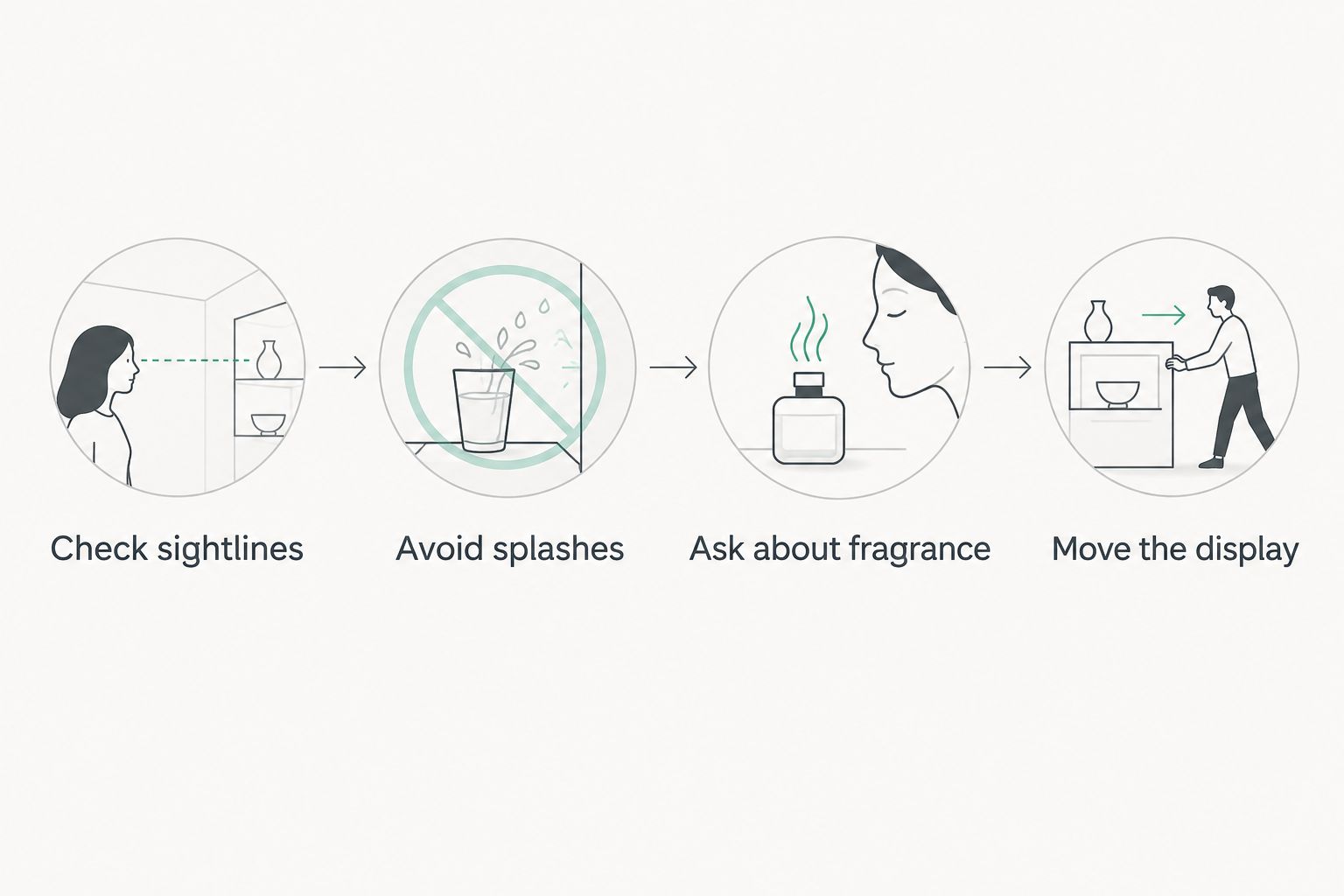
- Keep stems, leaves and containers away from treatment tools.
- Check sightlines across reception and consultation desks.
- Avoid locations exposed to product splashes or frequent knocks.
- Ask about fragrance before placing flowers in enclosed rooms.
- Move the display if a client reports discomfort.
Assign ownership of flower care
Write a short care checklist using the instructions supplied for the actual flowers or plant. Place it where the responsible team member will see it. A decorative display without an owner becomes an extra task that everyone assumes someone else has handled.
For bouquets, inspect the water, vase and condition of the stems according to the florist’s guidance. For plants and orchids, follow the specific care instructions rather than applying the same watering routine to every container.
Your 2026 salon checklist should include a cover arrangement for staff absence. It should also state who can remove a declining display without waiting for the owner’s approval. Keeping deteriorating flowers on reception does not preserve the original design.
A florist can advise on the purchased item, but daily observation remains an on-site responsibility unless you have explicitly agreed otherwise.
- Name the person responsible for checking the display.
- Keep the supplied care instructions accessible.
- Inspect the container and surrounding surface for leaks or marks.
- Assign cover when the responsible person is absent.
- Remove deteriorating material and clean the position as needed.
Review the display during normal appointments
Assess the arrangement while clients and staff use the space. You can do this with a simple note on your phone: record whether the display blocks a task, creates extra cleaning or repeatedly needs moving.
Take photographs from the entrance and seated client positions. Use them to check scale, sightlines and visual clutter—not to infer that flowers increase bookings. A better-looking photograph is not evidence of a commercial result.
For your 2026 review, separate appearance from effort. A display can suit the room visually while demanding more care than the team can provide. Change the position or category rather than expecting staff to maintain an unsuitable choice indefinitely.
Keep the arrangement only if it works in the occupied salon. The most useful review question is whether it stays attractive without obstructing the work around it.
- Ask reception staff whether the arrangement interrupts desk tasks.
- Check the display from seated and standing positions.
- Record repeated moves, spills or care problems.
- Ask treatment staff about scent and access concerns.
- Adjust the position before adding more flowers.
Compare flower options for salons and spas
Choose by location and staff capacity, not by appearance alone. This comparison describes general uses; the suitability of an individual bouquet or plant depends on its design and care requirements.
| Option | Best for | Main advantage | Key limitation |
|---|---|---|---|
| Cut-flower bouquet | A staffed reception with space for vase care | Lets you change the floral composition when replacing the display | Requires water management and removal of deteriorating material |
| Potted orchid | A visible position with conditions suited to the selected orchid | Combines flowers and a living plant in a container | Needs orchid-specific care and a suitable location |
| Foliage plant | A waiting area with conditions suited to the selected species | Provides a non-bouquet decorative option | Plant choice must match light and care capacity |
| Temporary event arrangement | A salon opening, launch or special occasion | Can be planned around a defined event and position | Does not automatically work as an everyday display |
Pollyanna Flowers supplies bouquets, plants and orchids, making those categories relevant to your shortlist. The limitation is operational: purchasing flowers does not establish that the salon can care for them or that additional services are included. Confirm the details of the arrangement you intend to use.
If your team cannot maintain a living display in the proposed position, leave that surface clear while you reconsider the plan. An empty, usable counter is better than an arrangement staff must constantly relocate.
Common mistakes salon and spa owners make
Choosing for the mirror photograph alone
A tall or wide arrangement can appear attractive in a photograph while interrupting the view between a stylist and client. Check the reflection from the seated position, including the space needed for consultation and styling. Keep the working view clear.
Putting flowers beside treatment supplies
A convenient spare corner is not necessarily a suitable decorative position. If staff regularly reach across the vase for tools, towels or products, relocate it. Flower decoration should not share the space your team needs to deliver the treatment.
Treating orchids as care-free decorations
An orchid’s appearance does not tell you whether the room meets its needs. Ask about the selected plant and check the intended location before purchase. Do not use a generic watering instruction as a substitute for species-specific guidance.
Confusing event flowers with an everyday plan
Opening flowers serve an occasion; everyday flowers must fit the working routine. Reassess any event arrangement before keeping it permanently on reception. The original position can become impractical once normal appointments resume.
Ordering without naming a care owner
A care instruction is ineffective when nobody owns the task. Assign responsibility before delivery, including absence cover and permission to remove deteriorating material. This avoids leaving the decision until the display already needs attention.
FAQ
What is the best flower decoration for an Istanbul beauty salon?
The best flower decoration fits the salon’s working space, room conditions and care capacity. Start with a suitable reception position, then choose a bouquet, orchid or plant that your team can maintain without obstructing appointments.
Are orchids better than bouquets for a spa reception?
Orchids are better only when the reception position and staff care suit the selected orchid. Bouquets suit teams prepared to manage vase care and replace deteriorating flowers; neither option is maintenance-free.
Can I put flowers inside a facial treatment room?
Use flowers in a facial treatment room only where they remain separate from supplies and do not interfere with treatment or client comfort. Confirm scent characteristics and move the display if a client reports discomfort.
Does Pollyanna Flowers sell flowers suitable for a salon shortlist?
Pollyanna Flowers offers bouquets, plants and orchids in Istanbul, which are relevant categories for a salon shortlist. Confirm the specific arrangement’s dimensions, care requirements and suitability for your intended position before ordering.
How often should a salon water its orchids?
Follow the care instructions for the specific orchid rather than a fixed salon-wide watering schedule. Plant type, growing medium and room conditions affect care, so ask for guidance for the plant you select.
What should I include in a salon flower brief?
Include photographs of the position, the display’s purpose, surrounding activities, colour preferences and any scent concerns. Confirm the container, care instructions and any additional services separately.
How do I plan güzellik salonu çiçek dekorasyonu for a small salon?
Plan güzellik salonu çiçek dekorasyonu around usable workspace first. Test a single suitable position before adding displays elsewhere, and leave counters clear wherever staff need them for appointments.
One last thing
Ask the person who closes the salon to approve the flower position. That person sees what must be moved for cleaning, which surfaces become crowded and whether the care task fits the end-of-day routine. Use that feedback before approving the display—not after buying another arrangement.