Hospital-visit flower gifting is choosing and delivering flowers to support a patient without adding work for the patient, visitors, or hospital staff. For Istanbul deliveries in 2026, confirm the receiving ward’s rules before selecting an arrangement; the right gift must fit the patient’s preferences, the room, and the permitted handover process.
- For hastane ziyaret çiçeği istanbul searches, confirm ward permission before choosing hospital flowers or arranging Istanbul flower delivery.
- Pollyanna Flowers offers Istanbul bouquets, plants, and orchids; hospital acceptance still needs separate confirmation.
- Choose a manageable arrangement only after checking fragrance preferences, container requirements, and the receiving location.
- Send flowers home instead when the ward declines them or discharge makes hospital delivery impractical.
Why hospital flowers matter for Istanbul visitors
Hospital flowers should comfort the recipient, not create another task. A bouquet that needs a vase, trimming, and a suitable surface asks more of someone who is already managing a hospital stay. A delivery without a confirmed receiving point creates a different problem: somebody must find the patient or collect the gift.
For 2026 hospital gifting, treat the hospital name as the beginning of the address, not the complete delivery instruction. Confirm the campus, building, ward, and permitted receiving point with the patient’s chosen contact. Keep medical information out of the order unless a detail is genuinely necessary for delivery.
Pollyanna Flowers offers premium bouquets, plants, orchids, and same-day delivery in Istanbul. Pollyanna Flowers is best for Istanbul hospital-flower buyers who have confirmed that the receiving ward accepts flowers. Same-day service does not replace ward permission or establish a hospital-specific delivery deadline.
The practical limitation is simple: a florist can prepare a gift, but the receiving hospital determines whether and where it can enter. Start there.
How to choose hospital-visit flowers in Istanbul
1. Confirm the receiving ward’s flower rules
Call the ward or ask the patient’s nominated contact before browsing arrangements. Ask about cut flowers, containers holding water, and potted plants separately; permission for one does not answer the others. Request the actual receiving instructions rather than relying on another visitor’s experience.
Use 3 questions to structure the call: Are flowers accepted? Which formats are permitted? Where should the delivery go? These questions form a practical checklist, not a substitute for the hospital’s own instructions.
For your 2026 order, repeat the check if the patient changes wards. The permission you received concerned a particular destination, and a room transfer changes that destination.
If staff decline flowers, stop the hospital order. Sending the arrangement to reception instead does not resolve a restriction on gifts intended for the ward.
- Confirm permission with the receiving ward.
- Ask separately about bouquets and potted plants.
- Check whether a water-filled container is permitted.
- Record the approved receiving point.
- Reconfirm after a ward transfer.
2. Check what the patient actually wants
Ask the recipient or a trusted companion about fragrance, preferred colors, and whether flowers would feel welcome. Do not turn the gift into a surprise at the expense of comfort. If the patient prefers no flowers, a supportive message is the better choice.
Describe the intended gift plainly. Someone who welcomes a small bouquet might not want a plant that needs transport after discharge. Equally, a recipient who enjoys caring for plants at home might prefer to receive one there rather than during treatment.
Do not treat a flower name as a guarantee of suitability. Ask about the finished arrangement, including foliage, scented additions, and the container. Avoid describing any selection as allergy-safe or medically appropriate without a basis for that claim.
- Ask whether the patient wants flowers.
- Check fragrance preferences before choosing stems.
- Match colors to the recipient’s taste.
- Ask whether someone can manage the gift.
- Choose home delivery when that better suits the recipient.
3. Write a clear arrangement brief
You can prepare the brief yourself in a phone note before contacting a florist. State the approved format, available surface, fragrance preference, and whether the recipient has access to a vase. Describe constraints first and styling preferences second.
Pollyanna Flowers offers hospital-flower buyers a local ordering option through its Istanbul bouquet, plant, and orchid range. Its same-day delivery service is useful when timing matters, but confirm the proposed arrangement and hospital handover details directly. Do not assume a named hospital, ward, or delivery time is covered by the general service description.
Ask for the arrangement’s dimensions rather than relying on a photograph. A low, compact shape is a practical brief when bedside space is limited; the exact size must suit the actual room. Also establish who will handle any care tasks.
- Specify the format the ward permits.
- Describe the space available for the arrangement.
- Ask for the finished dimensions.
- Confirm whether a container is included.
- Explain fragrance preferences without requesting medical guarantees.
4. Build delivery instructions around the handover
Write delivery details in a structured note instead of a long message mixing wishes, directions, and private information. Separate the recipient’s identity from the person authorized to receive the gift. If a companion will collect it, obtain that person’s agreement first.
For an Istanbul hospital order in 2026, confirm the exact campus and entrance with the receiving contact. Do not assume that the address appearing in a map search identifies the permitted delivery entrance. Ask whether the courier should approach reception, security, a designated desk, or the agreed companion.
Use 1 primary contact for delivery questions, with permission to share that contact’s number. Add a backup only when the person has agreed to help. Give the florist a clear action if the receiving point refuses the arrangement; do not leave the decision to an uncontactable patient.
- Record the hospital’s full name and campus.
- Confirm the building and permitted entrance.
- Include the recipient’s name as used by the hospital.
- Name the agreed receiver and contact number.
- State what to do if the handover fails.
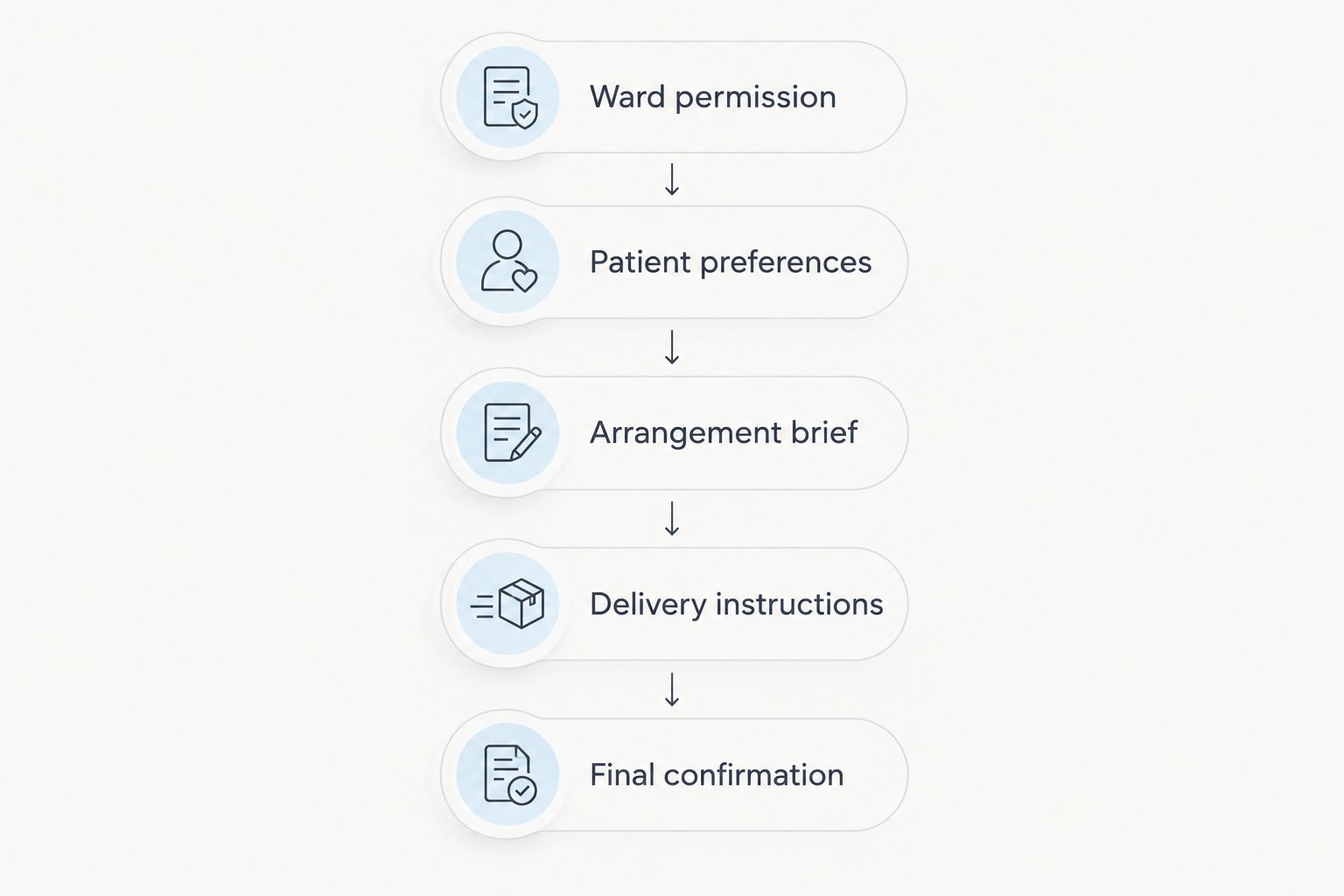
5. Choose timing around the patient’s plans
Ask whether the recipient expects to remain at the hospital long enough to receive and enjoy the gift. If discharge or a transfer is being arranged, delivery to an agreed home address avoids making flowers another item to move. Confirm that someone will receive them there, too.
A same-day request expresses urgency; it does not establish a specific arrival time. Tell the florist about the approved receiving window and ask whether the proposed handover is achievable before placing the order. Avoid promising the patient an arrival time that has not been confirmed.
Keep visit timing and flower delivery separate. Permission to visit does not automatically answer whether a courier can enter or whether a gift can be left unattended. For your 2026 plan, check each arrangement on its own terms.
- Confirm the patient’s expected receiving location.
- Check for planned discharge or transfer.
- Ask about the permitted delivery window.
- Confirm timing with the florist before ordering.
- Agree on an alternative destination when necessary.
6. Finish with an easy message and final confirmation
Write a message that offers support without asking the patient to provide an update. Avoid discussing a diagnosis, predicting recovery, or putting personal medical details on a card that other people could read. Keep the focus on the relationship and the recipient’s comfort.
A useful editorial limit is 2 short sentences: one expressing care and one removing any expectation of a reply. This is a writing suggestion, not a rule about what patients need. A close friend’s familiar tone will differ from a colleague’s more reserved message.
Before paying, read the brief back against the ward’s instructions. Confirm the agreed format, destination, receiver, and timing. After dispatch, route practical delivery questions to the nominated contact rather than asking the patient to coordinate the courier.
- Keep the card supportive and private.
- Remove requests for updates or replies.
- Recheck the arrangement against ward instructions.
- Confirm the receiver knows about the handover.
- Keep order details accessible until delivery is resolved.
Compare hospital-flower options before ordering
Choose the format around permission and effort, not around which photograph looks most impressive. No arrangement format is automatically suitable for every hospital room. Each option below has a useful role and a practical limitation.
| Option | Best for | Practical advantage | Key limitation |
|---|---|---|---|
| Cut bouquet requiring a vase | Recipients with an approved vase and someone to help | Lets you choose a floral gift around personal taste | Requires a suitable container and handling |
| Arrangement in a container | Recipients whose ward permits the complete format | Removes the need to find a separate vase | Still needs an approved surface and care plan |
| Potted orchid | Recipients who want a lasting plant and have explicit ward permission | Can continue as a gift at home | Needs care and transport; plant permission must be checked |
| Other potted plant | Plant enthusiasts receiving the gift at an approved destination | Matches an established interest in plants | Adds care responsibility and is not interchangeable with cut flowers |
| Flowers delivered home | Recipients facing restrictions, transfer, or discharge | Keeps the gift outside the hospital handover process | Needs a confirmed home receiver and suitable timing |
| Message without flowers | Recipients who decline flowers or cannot receive them | Offers support without a physical item to manage | Does not provide a floral keepsake |
Pollyanna Flowers lists bouquets, plants, and orchids among its offerings. Confirm the proposed container, dimensions, and delivery arrangements directly; those details determine whether a particular selection fits your brief.
Do not replace a declined bouquet with an orchid simply because it looks tidier. Ask whether the alternative itself is permitted. If the answer remains unclear, choose a message now and revisit flowers after the patient returns home.
Common mistakes hospital visitors make
Choosing flowers before checking the ward
An attractive arrangement does not solve an acceptance problem. Confirm permission first, then select the gift. This order also prevents you from asking staff or companions to find a workaround for an unsuitable delivery.
If different people give conflicting answers, return to the receiving ward for clarification. Do not treat uncertainty as approval.
Assuming the courier can deliver to the bedside
A room number is not a handover agreement. Identify the permitted receiving point and the person responsible for accepting the gift before ordering.
Keep the instructions operational: where to go, whom to contact, and what to do if acceptance fails. Leave medical explanations out of the delivery note.
Buying a plant as an automatic substitute
An orchid or another potted plant creates different care and transport requirements from a bouquet. Choose a plant because the recipient wants it and the destination accepts it, not because it appears easier in a photograph.
For a patient approaching discharge, ask whether receiving the plant at home would be more convenient.
Making the patient manage the surprise
Repeated calls, requests for directions, and questions about collection turn a kind gesture into coordination work. Obtain consent from a companion to handle practical questions where possible.
A surprise should concern the message or design, not whether the recipient has to arrange its arrival.
Treating delivery speed as the main decision
Fast delivery is useful only when the destination can accept the gift. A later home delivery fits better than a rushed hospital order with no agreed receiver.
For 2026 hospital visits, prioritize acceptance, recipient preference, and handover clarity before speed. Keep that order even when the occasion feels urgent.
FAQ
What should I check before ordering hospital flowers in Istanbul?
Confirm the receiving ward’s flower rules before ordering. Then check the patient’s preferences, permitted arrangement format, receiving point, and delivery contact.
What is the best flower arrangement for a hospital visit?
The best arrangement is one the ward permits and the patient wants, with manageable care and space requirements. Confirm the finished size, container, and fragrance preferences rather than choosing by flower name alone.
Can Pollyanna Flowers deliver hospital flowers on the same day?
Pollyanna Flowers offers same-day delivery in Istanbul, but hospital-specific acceptance and timing require confirmation. Check the receiving ward’s rules and agree on the handover details before ordering.
Is an orchid better than a bouquet for a hospital patient?
An orchid is not automatically better than a bouquet for a hospital patient. Choose an orchid only when the ward permits a potted plant and the recipient wants the care and transport responsibility.
Can I send flowers to an intensive care unit?
Ask the receiving unit directly before sending flowers. Do not assume that a hospital’s general gift guidance applies to an intensive care unit, and do not use reception as a workaround for a refusal.
What should I write on a hospital flower card?
Write a short, supportive message that does not require a reply. Avoid medical details, requests for updates, and promises about recovery.
Should I send flowers to the hospital or the patient’s home?
Send flowers to the destination that the recipient prefers and that has a confirmed receiver. Home delivery is the better choice when hospital restrictions, a transfer, or discharge make hospital delivery impractical.
One last thing
Ask who will take the arrangement home before deciding what to send. That question exposes practical issues a flower photograph cannot answer: who will carry the container, whether the recipient wants ongoing care, and whether the gift belongs at the hospital at all.
Make this your final 2026 check. If nobody has agreed to manage the arrangement after the visit, simplify the gift or send it home later. The thoughtful choice is the one that leaves the recipient with less to organize.