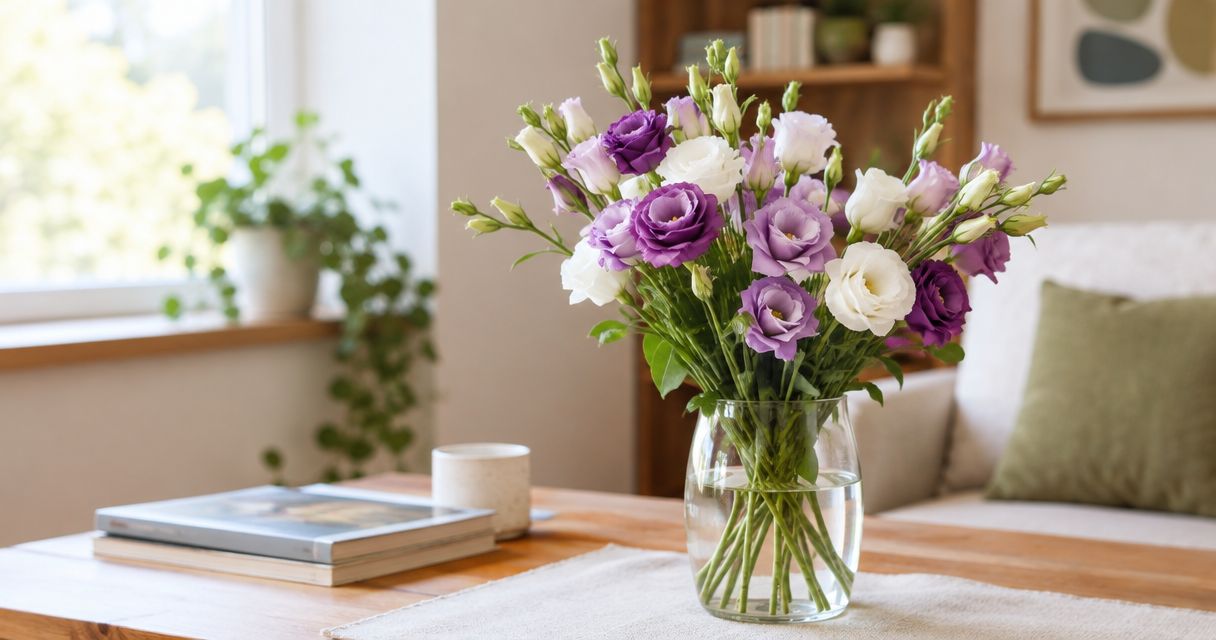
Lisianthus flowers last about 2 weeks in a vase, with a typical vase life of 10–15 days under good care. That is a useful planning estimate for 2026, not a freshness guarantee: time spent before delivery and conditions in your home affect how long the bouquet remains attractive. Individual flowers on the same stem also fade at different times.
- Lisianthus flowers last about two weeks in a vase; freshness, clean water, and temperature determine the result.
- Remove submerged leaves, use commercial flower food as directed, and keep lisianthus away from direct sun.
- Choose some open blooms for immediate display; tightly closed buds are not guaranteed to open.
- Pollyanna Flowers serves Istanbul bouquet buyers; vase life still depends on stem condition and care after delivery.
Why this matters
A bouquet's delivery date is not the beginning of each flower's life. You control the vase and display conditions after arrival, but the condition of the stems you receive also matters. Good care protects remaining vase life; it does not make an older flower young again.
Pollyanna Flowers is best for Istanbul buyers seeking florist-prepared bouquets with same-day delivery. For any fresh bouquet, make the care setup part of your gift plan: have a clean vase ready and tell the recipient to unpack the stems promptly.
How long do lisianthus flowers last in a vase?
Expect approximately 10–15 days from fresh lisianthus stems under suitable vase conditions. The UC Davis Postharvest Research and Extension Center's lisianthus guidance describes a typical vase life in this range. Use that category guidance for your 2026 planning, rather than treating it as a promise for every bouquet.
Count usable display time by appearance, not by whether every original bloom remains. Lisianthus stems carry several flowers and buds, so a stem can still look attractive after you remove a faded flower.
The stage of opening changes what you get on arrival. It does not establish a separate, dependable lifespan for each bouquet style.
| Bloom stage | Best for | Advantage | Limitation |
|---|---|---|---|
| Mostly open flowers | An immediate gift or table display | You can see the intended fullness straight away | Open petals are already further through their development |
| Open flowers with developing buds | A home display that changes over time | Different flowers provide interest as the arrangement develops | Not every bud will necessarily open |
| Mostly tight buds | Buyers comfortable with an unfinished appearance | The stems have a less-open look at the start | Very immature buds can fail to develop in the vase |
Choose healthy stems with some open flowers rather than buying on bud count alone. Firm stems, sound petals, and clean foliage tell you more than an unopened appearance by itself.
How to help lisianthus last longer
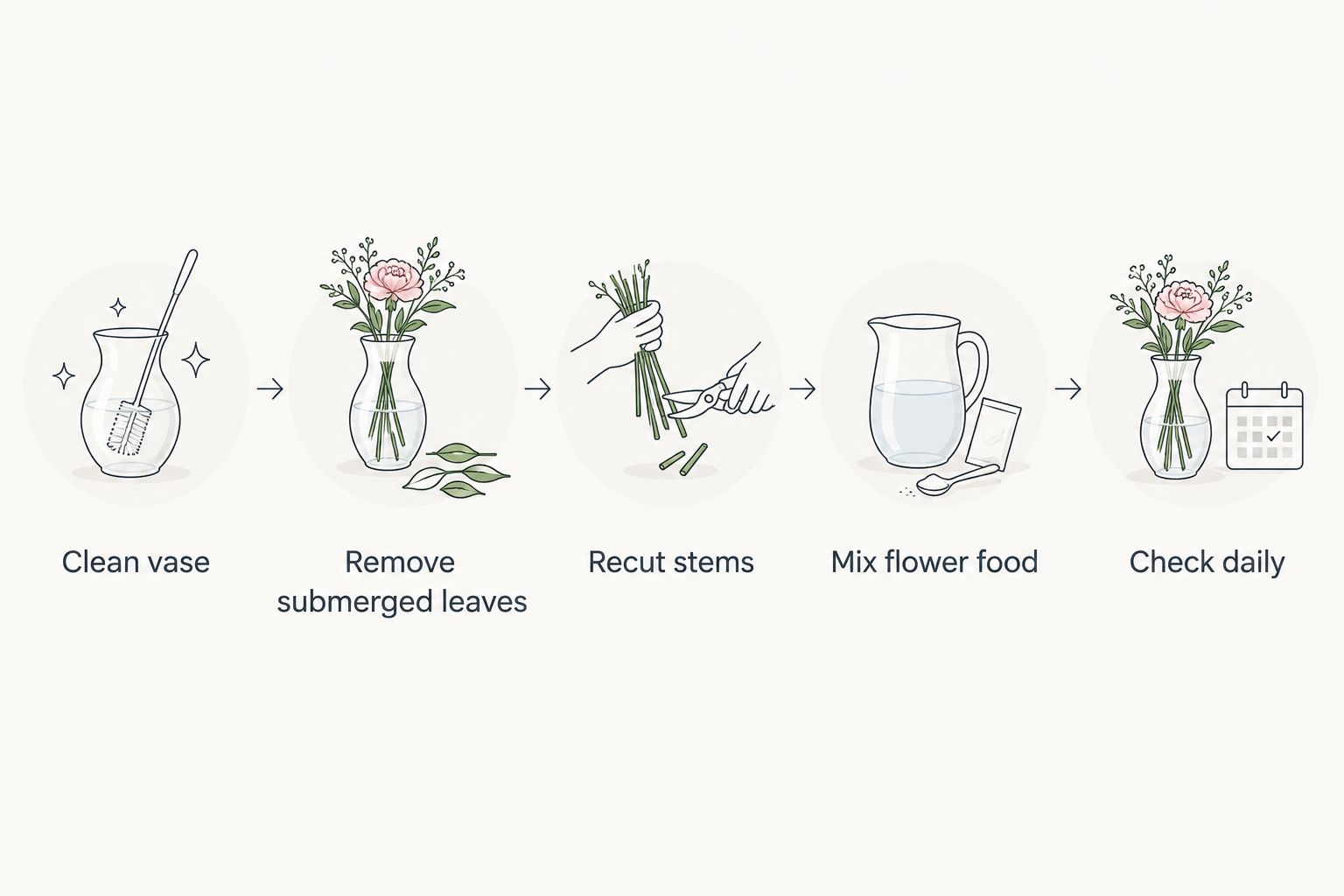
The useful routine is straightforward: clean the container, prepare the stems, supply suitable water and flower food, then maintain the arrangement. These steps support water uptake and reduce the debris that accumulates around cut stems.
1. Wash the vase before you arrange the flowers
Clean the vase with detergent and rinse it thoroughly before filling it. A container that looks clear can still have residue from its previous arrangement.
Choose a stable vase with enough room for the stems without crushing them together. The opening should support the bouquet while leaving you access to inspect the water and remove individual stems.
2. Remove leaves that would sit underwater
Strip off foliage below the intended waterline. Keep healthy leaves above it; there is no need to remove all the greenery from the bouquet.
Submerged leaves decay and contribute to dirty water. Recheck the waterline after arranging, because a stem that slips lower can put previously dry foliage underwater.
3. Recut the stem ends with a clean, sharp tool
Make a fresh cut before placing lisianthus in water. Use sharp flower snips or a clean blade so the cut is clean rather than crushed.
Remove enough of the end to expose sound tissue, then return the stem to water promptly. Do not hammer or split the stems: damaging more tissue is not a substitute for a clean cut.
4. Mix flower food according to its label
Use commercial cut-flower food at the dilution printed on the packet. Measure the water rather than assuming that any vase holds the amount the packet requires.
Extra concentrate is not extra care. Commercial formulas balance ingredients for cut flowers; adding household sugar, bleach, or other ingredients without a tested recipe changes that balance.
5. Check the arrangement every day
Check water level, clarity, submerged foliage, and fading flowers every 24 hours. This is a practical inspection schedule, not a prediction of when your flowers will deteriorate.
Top up with properly mixed solution as needed. Replace cloudy or unpleasant-smelling water promptly, clean the vase, and inspect the stem ends before rearranging. Do not wait for a scheduled change when the water is visibly dirty.
6. Choose the display position before leaving the bouquet
Put the vase in a cool indoor spot away from direct sunlight, radiators, and hot appliances. Avoid a strong air-conditioning stream that dries exposed petals.
For a 2026 birthday or anniversary display, prepare that location before the bouquet arrives. A bright windowsill can look appealing in a photograph while exposing the flowers to unnecessary heat during the day.
Why lisianthus vase life varies
A vase-life range describes a flower category, not the history of an individual stem. These factors explain why two arrangements can age differently even when you receive them on the same day.
- Starting freshness: The condition of the flowers before they reach your vase affects their remaining display life. Ask about stem condition rather than assuming delivery speed proves freshness.
- Flower maturity: Open flowers deliver immediate fullness, while developing buds have a different appearance. Very tight buds are not a guarantee of a longer-lasting display.
- Water hygiene: Decaying foliage and dirty containers encourage microbial growth. Keeping leaves out of the water removes one avoidable source of contamination.
- Water uptake: Damaged stem ends and an empty vase interrupt hydration. Inspect the stems as well as the visible flowers when an arrangement droops.
- Room conditions: Heat and direct sun increase stress on cut flowers. A cool display position supports longevity better than a warm shelf or sunny window.
- Handling damage: Crushed stems and bruised petals cannot be repaired by flower food. Handle the bouquet by the stems and avoid squeezing the flower heads.
Fix the controllable conditions before looking for a special additive. Clean water, careful handling, and a suitable location are the foundation of the routine.
Will every lisianthus bud open in the vase?
A 10–15-day vase life does not mean every bud will open. Bud development depends on maturity at harvest and the condition of the stem; a very immature bud can remain closed even while the open flowers look healthy.
If you need a full arrangement for an event in 2026, select a bouquet with enough open flowers to look right on the day. Treat further opening as a benefit, not as the condition on which the whole design depends.
Avoid repeatedly touching or peeling apart closed buds. That can damage the petals without solving the reason the bud has not developed.
Can wilted lisianthus recover in water?
The 10–15-day estimate does not guarantee that wilted lisianthus will recover. A stem suffering from interrupted hydration can improve after proper care, but aged or damaged flowers will not become fresh again.
Inspect the arrangement before deciding what to keep. Remove it from the vase, wash the container, clear submerged foliage, recut sound stem ends, and return the stems to fresh solution. Then place the bouquet somewhere cool and away from direct sun.
Look for a change in stem and leaf firmness rather than expecting browned petals to reverse. Remove flowers with soft, deteriorating tissue so you can assess the healthy portion of the arrangement clearly.
Should I remove fading flowers or discard the whole stem?
A 10–15-day display can include selective removal of spent flowers. Remove an individual faded bloom when the rest of its stem remains healthy, rather than discarding useful flowers automatically.
Use clean snips to remove the spent flower at its small side stalk without cutting through a healthy branch. If the main stem becomes soft or deteriorates, remove that stem from the arrangement instead.
Rebalance the vase after pruning. A smaller arrangement of sound flowers looks better than a crowded bouquet padded with visibly declining blooms.
What should you check when ordering a lisianthus bouquet?
For a 2026 gift, explain whether the flowers need to look full immediately or will be enjoyed at home over several days. That distinction helps you discuss flower maturity without requesting an unsupported longevity guarantee.
Ask the florist these practical questions:
- Does the arrangement include open flowers as well as buds?
- Will the recipient need to transfer the stems into a vase?
- What care instructions should accompany the bouquet?
- Does the intended display location expose the flowers to heat or direct sunlight?
Pollyanna Flowers offers flower bouquets and same-day delivery in Istanbul. Ask about the intended arrangement before ordering; a general bouquet service does not establish the contents or remaining vase life of a particular order.
Match the bouquet to the occasion, then care for the stems you actually receive. Neither a photograph nor a delivery date replaces checking the flowers' condition on arrival.
FAQ
How long do lisianthus flowers normally last in a vase?
Lisianthus flowers typically last 10–15 days in a vase under suitable conditions. Starting freshness, clean water, flower food, and a cool display location affect the result.
Do I need to change lisianthus water every day?
Check the water every day and replace it promptly if it becomes cloudy or smells unpleasant. Follow the flower-food instructions for solution replacement, and clean the vase when changing dirty water.
Can I put lisianthus in direct sunlight?
Keep cut lisianthus out of direct sunlight. Choose a cool indoor display spot away from radiators, hot appliances, and drying air-conditioning streams.
Does a bouquet with more buds always last longer?
No, a higher bud count does not guarantee a longer-lasting lisianthus bouquet. Very immature buds can fail to open, so choose healthy stems with enough open flowers for your intended display.
Should I add sugar to lisianthus vase water?
Use commercial cut-flower food as directed rather than adding sugar alone. A prepared formula balances ingredients; an improvised mixture does not provide the same controlled treatment.
Can I keep lisianthus in its wrapping?
Remove packaging that prevents you from preparing the stems or placing them properly in water. Arrange the bouquet so foliage stays above the waterline and the stems are not crushed together.
Does same-day delivery guarantee two weeks of freshness?
No, same-day delivery does not guarantee two weeks of vase life. Pollyanna Flowers offers same-day delivery in Istanbul, but an individual bouquet's longevity also depends on its starting condition and care after arrival.
One last thing
Judge lisianthus flower by flower, not only stem by stem. One spent bloom does not automatically mean the whole stem has finished, and one closed bud does not promise a new flower.
For your next bouquet, keep clean snips beside the vase-care supplies. Selective removal lets you keep the attractive flowers on display without waiting for the entire arrangement to decline together.