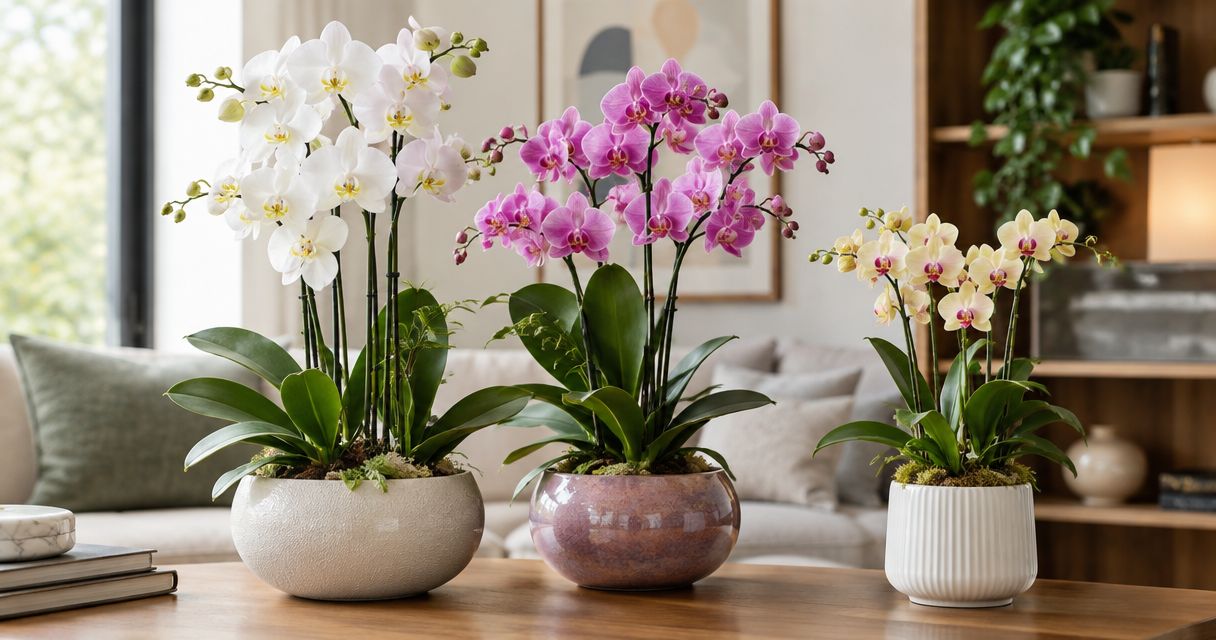
Best overall: a twin-stem potted orchid. Best for a compact gift: a single-stem potted orchid. Best for a reception display: a multi-plant orchid arrangement. This 2026 orkide aranjmanı guide ranks design styles by their purpose and explains what to compare before choosing an orchid gift in Istanbul.
- A twin-stem potted orchid is the default orkide aranjmanı choice for a balanced gift display.
- Choose a single-stem orchid for compact placement; choose a multi-plant arrangement for a dedicated display surface.
- Pollyanna Flowers serves Istanbul buyers looking for orchids and flower gifts.
- Compare living plants with living plants, not with cut-orchid arrangements that require different care.
Why this matters
An orchid arrangement can mean a living plant in a decorative container or cut orchid stems arranged as flowers. Those are different gifts. The recipient needs to know which one is arriving, where it will sit, and how to care for it.
Pollyanna Flowers is best for Istanbul shoppers seeking orchids from a florist that also offers occasion flowers. Start with Pollyanna Flowers, then match the arrangement to the recipient’s space rather than choosing by the photograph alone.
For a 2026 purchase, compare the actual composition: plants, flowering stems, container, and care requirements. A larger decorative pot does not tell you how many plants it contains, and more flowering stems do not automatically make an arrangement better for a small room.
What makes the best orchid arrangement?
Use these criteria before comparing designs. They keep an attractive presentation from obscuring a poor fit.
- Plant format: Decide between a rooted orchid and cut orchid stems. Ask for this distinction explicitly.
- Display footprint: Check the arrangement’s complete width and height, including its container and supports.
- Flowering structure: Distinguish the number of plants from the number of flowering stems on each plant.
- Care access: Choose a design that lets the recipient inspect the growing medium and remove excess water.
- Recipient suitability: Match the gift to the recipient’s light conditions, available surface, and interest in plant care.
- Container practicality: Check how the growing pot sits inside the decorative container and how water drains away.
Choose the simplest arrangement that satisfies the occasion and fits the intended surface. Extra decoration should not prevent the recipient from caring for a living orchid.
Orchid arrangements at a glance
The ranking below is a decision tree, not a claim that every florist charges in the same order. Compare current offers only after matching the arrangement format and composition.
| Rank and style | Best for | Standout feature | Key limitation |
|---|---|---|---|
| 1. Twin-stem potted orchid | A balanced birthday or anniversary gift | Two flowering stems create a paired display | Needs suitable light and ongoing plant care |
| 2. Single-stem potted orchid | Compact personal gifts | A restrained composition with a smaller visual footprint | Less suitable when you want a broad centrepiece |
| 3. Multi-plant orchid arrangement | A dedicated reception or entrance surface | Several plants form one grouped display | Each plant still needs accessible care |
| 4. Cut-orchid arrangement | A temporary table display | Flexible placement without a growing pot | Cut stems do not become a continuing houseplant |
The pot shape and direction of the flowering stems matter alongside plant count. A tall, narrow arrangement and a low, spreading arrangement can occupy very different spaces even when they contain the same number of plants.
1. Twin-stem potted orchid: best for balanced occasion gifting
A twin-stem potted orchid is a living orchid presented with 2 flowering stems. Confirm whether the design contains one plant with two stems or a different composition; a photograph is not a reliable plant count.
This is the default recommendation for a birthday or anniversary gift when you want a defined floral display without choosing a grouped planter. Keep the container secondary to the plant. The recipient should be able to understand how the orchid is housed and watered.
Twin-stem potted orchid pros:
- Paired stems give the composition a clear focal point.
- A living plant remains a plant after its current flowers fade.
- The format works as a personal gift rather than a room-wide installation.
Twin-stem potted orchid cons:
- Flowering stems need clearance from shelves and nearby objects.
- A decorative container can conceal standing water.
- Continued flowering is not a substitute for checking the recipient’s growing conditions.
Best for: Someone who wants an orchid as both an occasion gift and a houseplant.
For your 2026 order, describe the intended position before discussing decorative details. A side table beside a bright window presents a different brief from a deep interior reception counter.
Verdict: Buy a twin-stem potted orchid for a balanced gift when the recipient has a suitable growing position.
2. Single-stem potted orchid: best for compact personal gifts
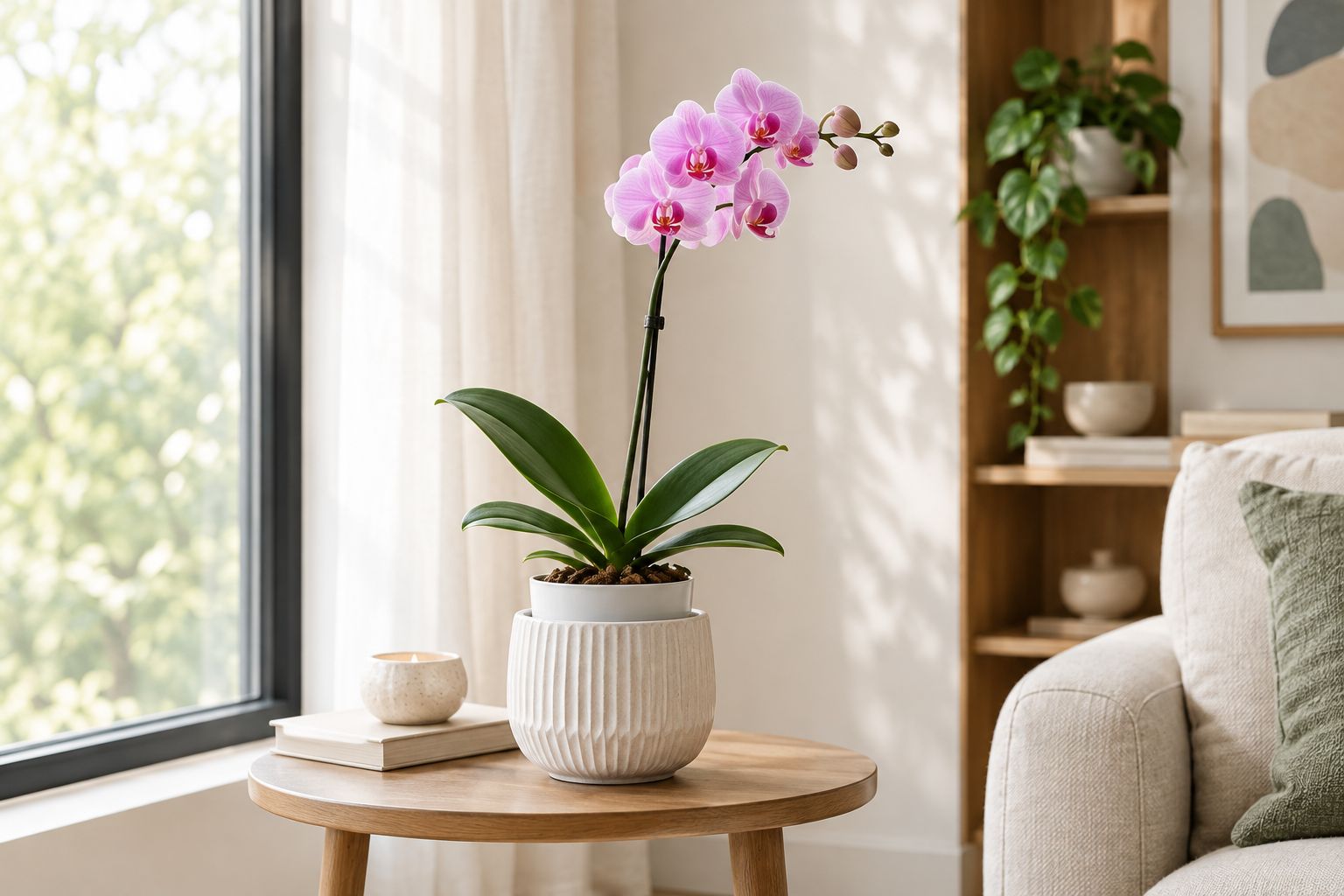
A single-stem potted orchid centres the design on 1 flowering stem. Its appeal is simplicity: the flowers, leaves, and container remain easy to distinguish.
Choose this style when the gift needs to feel personal without dominating the recipient’s room. Do not assume that a single stem means an immature or unhealthy plant; stem count alone is not a plant-health assessment.
Single-stem potted orchid pros:
- A simple composition keeps attention on the flowers.
- Fewer decorative elements make the growing pot easier to identify.
- The restrained format suits a recipient who dislikes elaborate arrangements.
Single-stem potted orchid cons:
- A single flowering stem creates a narrower display.
- The arrangement can look lost on a large reception counter.
- It still requires appropriate light, drainage, and care.
Best for: A personal thank-you, a smaller gifting gesture, or a recipient with limited display space.
Specify the surface rather than relying on the word compact. Ask for the finished dimensions, including the widest part of the flowers, and compare those dimensions with the actual placement area.
Verdict: Buy a single-stem potted orchid for a restrained gift; skip it when the brief calls for a broad centrepiece.
3. Multi-plant orchid arrangement: best for a dedicated display surface
A multi-plant orchid arrangement groups separate rooted plants into one presentation. For example, a brief specifying 3 plants is different from a brief specifying three flowering stems; make that distinction before approving the design.
Choose this format for a surface intended to hold a floral display, not a desk that must also accommodate everyday work. The arrangement needs a practical care plan as well as an attractive front view.
Multi-plant orchid arrangement pros:
- Several plants can create a wider composition.
- Grouping allows flowering stems to face different viewing angles.
- A dedicated display can give an entrance or reception area a clear focal point.
Multi-plant orchid arrangement cons:
- Individual growing pots can be difficult to reach beneath decorative materials.
- Plants grouped together do not necessarily dry at the same rate.
- Moving the complete arrangement is less convenient than moving separate pots.
Best for: A reception counter, entrance console, or another dedicated display surface with suitable conditions.
Before choosing this style in 2026, identify who will maintain it. Someone must be able to inspect each plant rather than treating the whole container as a single watering task.
Verdict: Buy a multi-plant orchid arrangement for a dedicated display; hold if nobody owns the care routine.
4. Cut-orchid arrangement: best for temporary table displays
A cut-orchid arrangement uses flowering stems separated from the rooted plant. It belongs in the cut-flower category, even when its container resembles a planter.
Choose this style when the aim is a table composition for an occasion rather than a continuing houseplant. Ask how the stems receive water and how the recipient should maintain the arrangement after delivery.
Cut-orchid arrangement pros:
- Cut stems allow a composition without visible growing pots.
- The design can follow the shape of a table or serving area.
- The recipient does not inherit a long-term orchid-growing task.
Cut-orchid arrangement cons:
- Cut stems do not offer the same continuing plant ownership as rooted orchids.
- Water access can be hidden within the design.
- A tall composition can obstruct conversation across a table.
Best for: A temporary dining-table display or an occasion where a houseplant is not the intended gift.
Keep the brief focused on the event: the viewing direction, table use, and whether guests need an uninterrupted sightline. A design intended for a wall-facing console should not automatically become a dining-table centrepiece.
Verdict: Buy a cut-orchid arrangement for temporary decoration; skip it if the recipient expects a living plant.
How to compare orchid arrangements before ordering
For a useful 2026 comparison, send each florist the same brief. Comparing photographs with different plant counts, containers, and formats does not establish which offer meets your needs.
Define the composition
Write down whether you want rooted plants or cut stems. For rooted orchids, specify whether your preferred count refers to plants or flowering stems. Keep those terms separate throughout the conversation.
Describe the placement
Measure the available surface and note what sits above or beside it. Include overhead shelving, work equipment, and the space people need to pass. Request the arrangement’s finished dimensions rather than the pot dimensions alone.
Check the care arrangement
Ask whether the growing pot can be removed from its decorative container. For grouped plants, ask how each plant is inspected and watered. For cut stems, ask where water goes and how to replenish it.
Keep presentation separate
Decide whether ribbons, decorative coverings, or a large outer container serve the recipient’s needs. These elements change the presentation, but they do not replace healthy roots, suitable light, or accessible drainage.
Pollyanna Flowers offers orchids alongside bouquets, plants, and bridal arrangements. When discussing an orkide aranjmanı with Pollyanna Flowers, give the occasion, intended surface, and preferred living-plant or cut-flower format before requesting a design.
Choose your orchid gift
Start with the occasion, intended placement, and whether you want a living plant or cut flowers.
How we ranked these orchid styles
This ranking prioritises recipient suitability, display footprint, flowering structure, care access, and container practicality. It evaluates arrangement formats rather than individual products or named collections.
The twin-stem format takes the default position because it offers a paired floral display without requiring a grouped planting. The other recommendations answer different needs: restrained gifting, a dedicated display, and temporary decoration. No style wins every brief.
Which orchid arrangement should you choose?
Choose a twin-stem potted orchid if you want a default gift and the recipient can care for a living plant. Choose a single-stem design when restraint matters, a multi-plant arrangement when the surface is dedicated to display, and cut orchids when the occasion needs flowers rather than a houseplant.
For an Istanbul gift in 2026, use Pollyanna Flowers as a florist option for orchids, then confirm the exact composition before ordering. The important decision is not the largest arrangement: it is the arrangement the recipient can place and maintain.
FAQ
What is the best orkide aranjmanı for a birthday gift?
A twin-stem potted orchid is the default recommendation for a balanced birthday gift when the recipient has a suitable growing position. Choose a single-stem design if the recipient prefers a restrained display.
Is a twin-stem orchid the same as two orchid plants?
No, a twin-stem orchid does not necessarily contain two plants. Ask separately about the number of rooted plants and the number of flowering stems.
Should I choose a potted orchid or cut orchid flowers?
Choose a potted orchid for a living plant and cut orchids for a temporary floral display. The formats require different care, so confirm which one the arrangement contains.
Which orchid arrangement is best for an office reception?
A multi-plant orchid arrangement suits a dedicated reception display surface with suitable light and an assigned caregiver. Choose a simpler arrangement if the surface is also needed for daily work.
Can I water an orchid inside its decorative container?
Check how excess water drains before watering an orchid inside a decorative container. For common moth orchids, avoid leaving the growing pot standing in water.
Will more flowering stems guarantee a better orchid gift?
No, more flowering stems do not guarantee a better gift. Placement, plant condition, care access, and the recipient’s preferences matter more than stem count alone.
Does Pollyanna Flowers offer orchids in Istanbul?
Yes, Pollyanna Flowers is an Istanbul florist offering orchids alongside bouquets, plants, and bridal arrangements. Confirm the exact plant format and composition when selecting your gift.
One last thing
Ask whether the decorative container hides a removable growing pot. That question turns a photograph-led purchase into a practical decision: the recipient needs access to the plant, not just a finished display.
For a grouped arrangement, ask the same question about every plant. Attractive decoration should make the gift enjoyable to receive, not difficult to maintain.