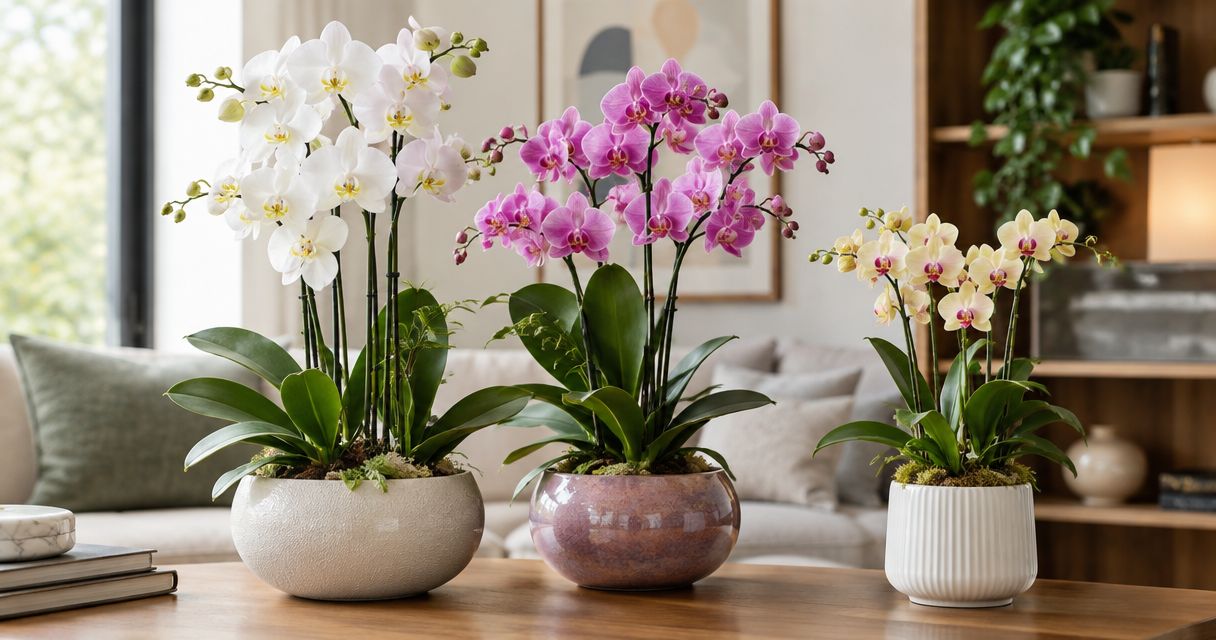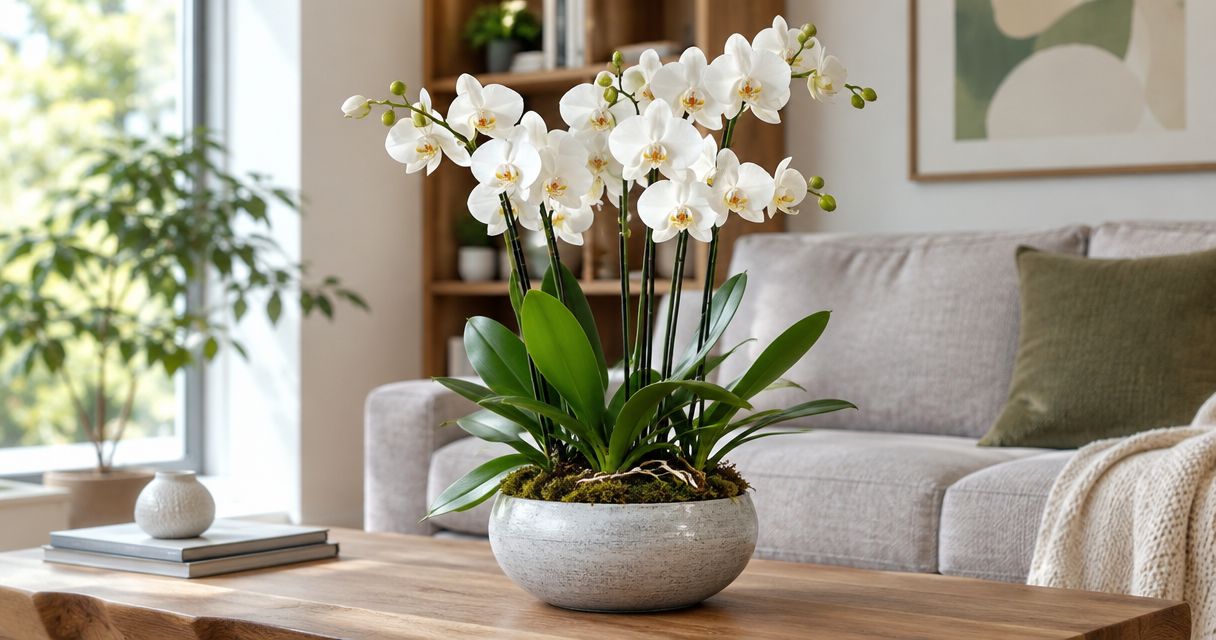
A living orchid arrangement can stay in flower for weeks to months indoors, while a cut-orchid arrangement has a shorter display life that depends on the orchid and its condition when delivered. For an orkide aranjmanı, the key distinction is whether you are caring for a rooted plant or cut stems: flowers eventually fade in either case, but a healthy rooted orchid can grow and flower again.
- An orkide aranjmanı with living roots offers a longer-term display than cut orchid stems.
- Phalaenopsis flowers last for weeks to months, but flowers already open at purchase have less time remaining.
- Pollyanna Flowers offers orchids for Istanbul gifting; confirm the arrangement format before choosing your care routine.
- Bright indirect light, drainage, and protection from heat help preserve an indoor orchid display.
Why this matters
An orchid losing a flower is not necessarily dying. The mistake is treating the end of flowering as a reason to add more water, fertilizer, or direct sunlight. Those changes do not restore an aging bloom and can damage a healthy plant.
For your 2026 purchase, separate flowering life from plant life. A rooted orchid can remain a houseplant after its current flowers finish; a cut stem cannot continue as a rooted plant simply because its flowers still look fresh.
When choosing orchids from Pollyanna Flowers, ask whether the display contains living plants, cut stems, or a mixture. That answer determines the care routine more reliably than the decorative container does.
How long do orchid arrangements stay fresh indoors?
Rooted Phalaenopsis orchids can hold their flowers for weeks to months under suitable indoor conditions. That is a flowering period, not a guarantee of how much display time remains after delivery. An arrangement with flowers that have already been open for some time starts further along that cycle.
The American Orchid Society's Phalaenopsis culture guidance supports bright, indirect light and a watering routine that allows the growing medium to approach dryness between waterings. Its guidance concerns living plants, not cut-flower vase life. Use that distinction when reading orchid-care advice in 2026.
| Arrangement format | Expected display pattern | Best for | Main advantage | Main limitation |
|---|---|---|---|---|
| Rooted Phalaenopsis | Flowers can remain attractive for weeks to months | A gift that can continue as a houseplant | The plant survives after flowering with appropriate care | Roots need drainage and access for inspection |
| Cut orchid stems | A temporary floral display; longevity depends on orchid type and handling | A vase arrangement without ongoing plant care | No potting medium or long-term plant maintenance | Cut stems cannot produce another flowering cycle as a houseplant |
| Mixed arrangement | Each component fades on its own schedule | A decorative display combining different flowers or plants | Different shapes and textures in one container | The orchid and surrounding flowers can need different care |
Do not judge longevity from stem count or container size alone. Look at the actual flowers, unopened buds, roots where visible, and the way the arrangement receives water.
Rooted Phalaenopsis: weeks to months in flower
A rooted Phalaenopsis is the strongest choice when you want the gift to continue beyond its first display. Its broad leaves and living roots remain after the flowers fall. With suitable ongoing care, the plant can flower again, although reblooming is not immediate or guaranteed.
Best for: someone who wants a flowering houseplant rather than a disposable display. The trade-off is responsibility: decorative packaging must not prevent drainage, and the recipient needs access to the growing medium.
Check whether the orchid sits in a nursery pot inside a decorative outer container. Water collecting between those containers can leave roots standing in water even when the surface looks dry. Empty the outer container after watering rather than assuming it drains itself.
An orchid with both open flowers and developing buds offers different stages to enjoy. However, buds are not a promise: abrupt environmental changes can cause unopened buds to drop.
Cut orchids: a temporary display, not a houseplant
Cut orchid stems depend on water uptake through their cut ends. They do not have the root system that supports a living orchid plant, so advice about bark, potting, or root color does not apply.
Best for: someone who wants a floral centerpiece without keeping a plant afterward. The limitation is finality: once the cut flowers deteriorate, there is no rooted plant left to maintain.
Keep the vase clean and follow the supplied cut-flower instructions. Remove any foliage that would sit below the waterline, and keep the arrangement away from direct sun and heat. If the stems are fixed into floral foam, ask how to replenish the water without dismantling the design.
Do not pull stems out of foam simply to inspect them. Disturbing the arrangement can interrupt their contact with the water supply and damage the design.
Why orchid freshness varies
The following factors explain why apparently similar orchid arrangements do not finish flowering together:
- Orchid type and format: a rooted Phalaenopsis and a cut orchid stem are different care subjects, even when the flowers look similar.
- Flower age: an already mature bloom has less of its natural flowering period remaining than a newly opened flower.
- Light exposure: bright indirect light suits Phalaenopsis; strong direct sunlight can damage leaves and flowers.
- Water and drainage: living roots need moisture and air, while cut stems need a suitable water supply.
- Temperature changes: radiators, cold drafts, and direct air-conditioning airflow create stressful conditions around the display.
- Transport and handling: bruising and abrupt changes between delivery conditions and the room can affect flowers and buds.
Room conditions deserve more attention than decorative accessories. Adding a larger outer pot does not correct poor drainage, and a brighter windowsill is not automatically a safer position.
How do you keep an orchid arrangement fresh indoors?
Use this care sequence for a rooted Phalaenopsis, not for cut stems. In this 2026 care checklist, the priority is to identify the plant's needs before changing its surroundings.
1. Identify the format
Look for a nursery pot, potting bark, and roots connected to the plant. Cut stems usually enter water or floral foam instead. If decorative material hides the base, ask the florist rather than taking the arrangement apart.
2. Choose indirect light
Place the orchid where it receives bright daylight without prolonged strong sun on the leaves. A sheer curtain can soften direct window light. Avoid a dark interior corner chosen only because the container looks good there.
3. Keep temperatures steady
For a practical household starting point, aim for daytime conditions around 21–27°C and avoid routine nighttime temperatures below 16°C for Phalaenopsis. These are general growing conditions, not a promise of additional flowering time. Keep the plant away from hot radiators and cold window glass.
4. Check before watering
Feel the accessible growing medium and inspect the pot rather than watering automatically because a calendar reminder appears. Bark and moisture-retentive moss behave differently. A decorative surface layer can also hide wet material underneath.
5. Drain completely
After watering, let excess water leave the nursery pot before returning it to the outer container. Keep water from collecting in the crown, where the leaves meet. Do not leave the pot standing in a reservoir unless it is a purpose-designed system with instructions you understand.
6. Watch the pattern of change
An older flower fading while leaves remain firm is different from widespread wilting accompanied by soft roots. Observe the whole plant before changing the routine. Extra watering is not a universal remedy for either condition.
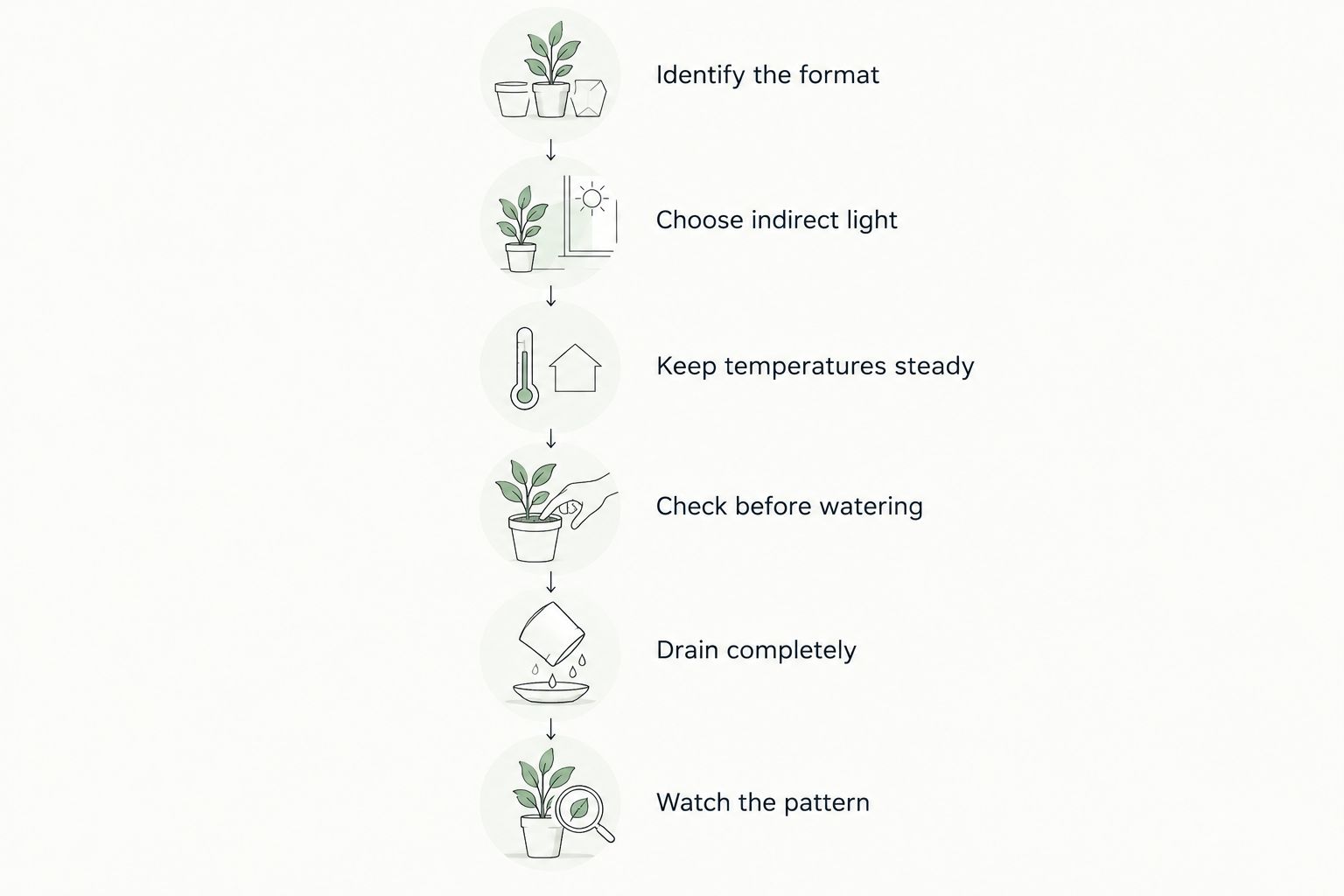
These steps protect the growing conditions rather than trying to preserve every bloom indefinitely. Keep the plant in a suitable position instead of repeatedly moving it whenever a flower changes.
What should you check when the arrangement arrives?
Inspect the flowers without squeezing or rubbing the petals. Look for bruising, collapsed blooms, loose stems, and water leaking into packaging. Take a clear photograph if you need to ask the florist about the condition on arrival.
For a living orchid, examine accessible leaves and roots. Healthy Phalaenopsis roots are generally firm; exposed roots often look silvery when dry and greener when wet. Root color alone is not a diagnosis, especially when potting material obscures the view.
Ask for care instructions specific to the arrangement. A general houseplant leaflet is not enough when several plants share a container or cut flowers sit beside a potted orchid.
For a 2026 birthday or anniversary gift, pass those instructions to the recipient. The person ordering the arrangement is not always the person responsible for watering it.
Is flower drop normal, or is the orchid dying?
Gradual fading of older flowers can be part of a normal flowering cycle. Healthy leaves and firm roots are more useful signs of the plant's continuing condition than the number of flowers remaining.
Sudden widespread flower or bud drop deserves a closer look at recent changes. Check whether the orchid moved into direct sun, stood beside a heater, experienced cold during transport, or remained in pooled water.
| What you notice | What to check | What not to assume |
|---|---|---|
| Older flowers fade gradually | Leaves, roots, and remaining buds | Every falling flower means the plant is dying |
| Unopened buds drop | Drafts, temperature changes, and recent movement | More fertilizer will restore the lost buds |
| Leaves become limp | Moisture level and root condition | Limp leaves always mean the orchid needs water |
| Roots feel soft or mushy | Standing water and drainage | Wet potting material proves the plant is well hydrated |
Do not cut healthy leaves or repot a flowering orchid solely because a bloom falls. First identify whether you are seeing natural aging or a wider plant-health problem.
Should you remove faded flowers or cut the stem?
Remove fallen flowers from the container so they do not remain damp against leaves or potting material. Do not pull at a flower that is still firmly attached.
A fully brown, dry flower spike can be removed with clean tools. A green Phalaenopsis spike sometimes produces a side branch, but keeping it does not guarantee another display. Prioritize healthy leaves and roots over trying to force continuous flowering.
Avoid treating every orchid species like Phalaenopsis. If you do not know the plant's identity, confirm it before following pruning instructions intended for a particular orchid.
Which orchid arrangement suits a longer-lasting gift?
Choose a rooted Phalaenopsis when the recipient wants to keep a houseplant. Choose cut orchids when the occasion calls for a temporary floral display and no ongoing plant ownership. Neither format is maintenance-free during its display period.
Pollyanna Flowers is best for Istanbul buyers seeking orchid gifts from a local florist. The business offers orchids and same-day delivery; the care decision still depends on the arrangement's actual format, not the delivery speed.
Before ordering an orchid arrangement from Pollyanna Flowers, ask whether the roots are accessible, whether the container drains, and which care instructions accompany it. Those questions are more useful than requesting an unsupported freshness guarantee.
FAQ
How long does an orkide aranjmanı last inside a home?
A rooted Phalaenopsis orkide aranjmanı can remain in flower for weeks to months indoors. Remaining display time depends on flower age, plant condition, and care; cut orchids have a different, temporary display cycle.
Should I water my orchid arrangement every week?
Water a rooted orchid according to its growing medium and condition, not a fixed weekly rule. Check for moisture and let excess water drain rather than leaving the nursery pot standing in water.
Can I keep an orchid arrangement in an air-conditioned office?
Yes, a rooted orchid can grow in an air-conditioned office with suitable light and stable temperatures. Keep it outside the direct airflow and inspect moisture rather than assuming the office environment keeps it comfortable.
Does an orchid die after its flowers fall off?
No, a rooted orchid does not necessarily die when its flowers fall. Healthy leaves and firm roots can support continued growth and a later flowering cycle.
Should I mist orchid flowers to keep them fresh?
Misting flowers is not a substitute for correct watering and drainage. Avoid leaving blooms wet, and follow care instructions suited to the orchid and arrangement format.
Is a bathroom a good place for an orchid arrangement?
A bathroom suits a rooted orchid only when it also provides suitable light and temperatures. Humidity alone does not compensate for a dark room, cold drafts, or waterlogged roots.
Can I put a cut-orchid arrangement in soil after the flowers fade?
A cut flower stem is not a rooted orchid plant, so placing it in soil does not turn it into a lasting houseplant. Choose an arrangement containing a living orchid if continued growth is your goal.
One last thing
Choose the display position before choosing the decorative container. A beautiful outer pot cannot make a dark shelf brighter or a radiator cooler. For a 2026 orchid gift, give the recipient a clear answer to the simplest question: is this a living plant or a cut-flower arrangement?