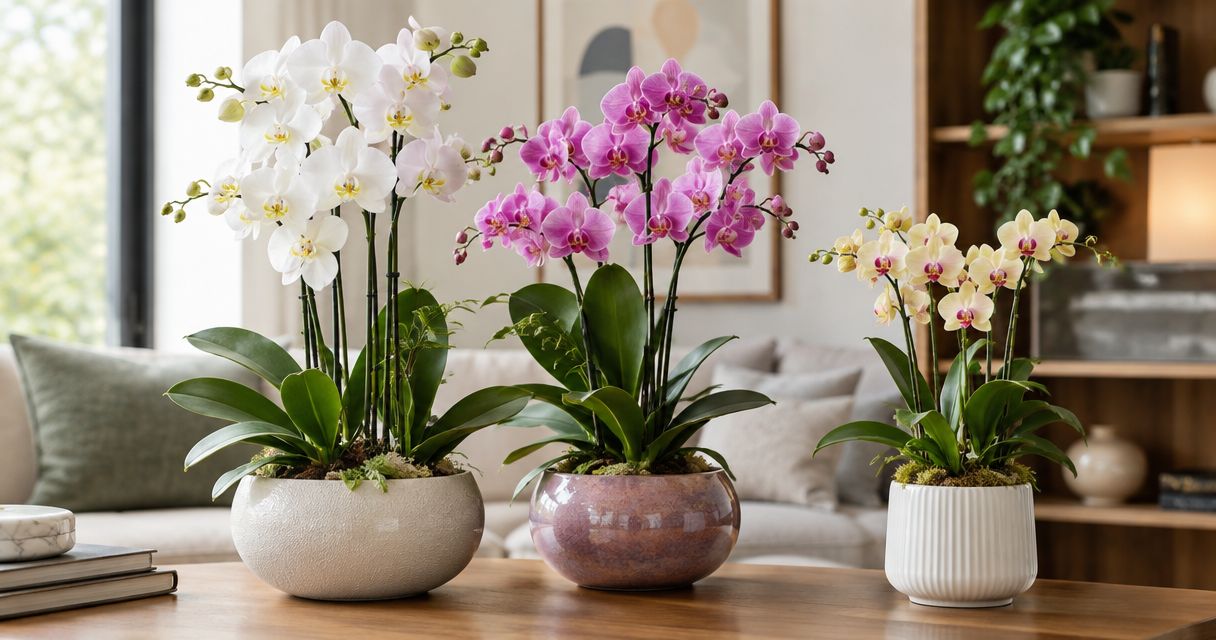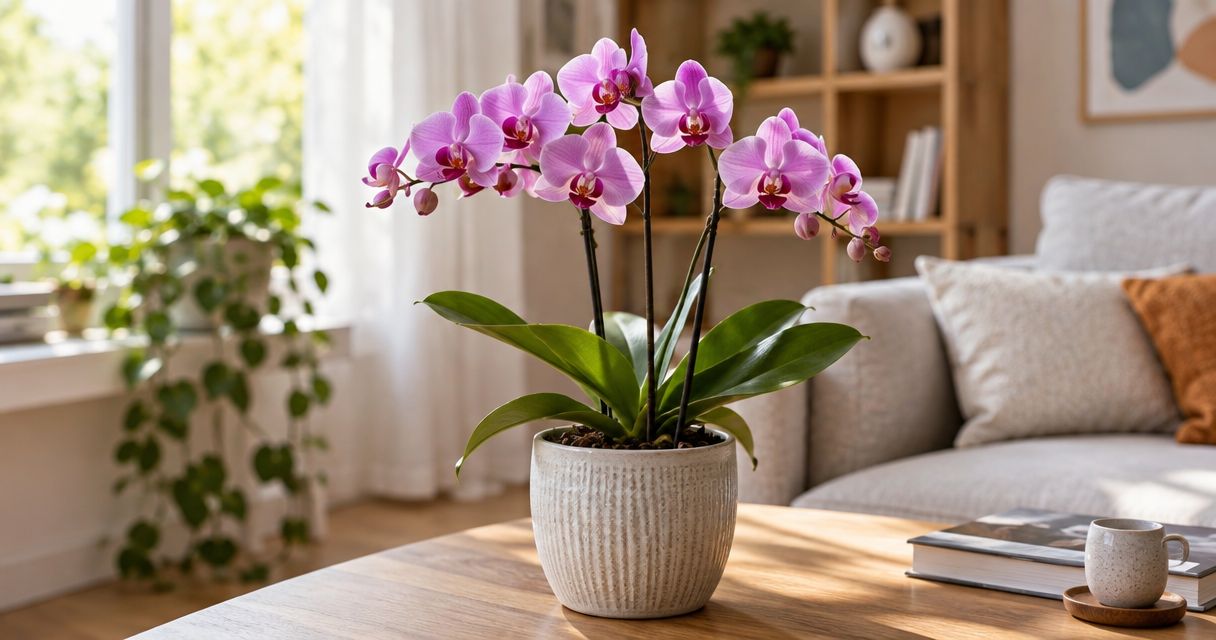
Potted Phalaenopsis orchids typically bloom indoors for 2–3 months per flowering cycle, although the flowers already open when you receive the plant have used part of that lifespan. Individual flowers fade at different times, and a healthy orchid remains alive after the display ends; losing flowers does not mean you need to replace the plant.
- How long do potted orchids bloom? Phalaenopsis commonly flowers for 2–3 months indoors per flowering cycle.
- Choose firm leaves, healthy roots and unopened buds rather than judging an orchid by flower count alone.
- Bright, indirect light and thorough drainage support orchid care; standing water puts roots at risk.
- Pollyannaflowers offers orchids for Istanbul gifting; flowering duration depends on the plant’s stage and conditions at home.
Why this matters
Bloom duration and plant lifespan are different things. A flowering orchid is a living houseplant with a temporary display, not a bouquet that you discard when its petals fall. Your job changes after flowering: protect the roots and leaves so the plant can grow and flower again.
For a 2026 birthday or anniversary gift, consider the recipient’s room as well as the occasion. Pollyannaflowers offers orchids in Istanbul, but a flowering plant suits someone with suitable light and an interest in ongoing care—not someone who wants a maintenance-free decoration.
How long do potted orchid plants bloom indoors?
Expect roughly 2–3 months of flowering from a Phalaenopsis orchid over a complete flowering cycle, not necessarily from the day of delivery. Phalaenopsis, also called the moth orchid, is a common indoor gift orchid. Other orchid groups have different flowering patterns, so identify the plant before applying this expectation.
The Royal Horticultural Society’s moth-orchid guidance describes flowers lasting several months. That supports treating the display as a months-long event, but not promising a fixed finishing date for every plant.
| Stage when you receive the orchid | What it means for the display | What to watch |
|---|---|---|
| Mostly unopened buds | More of the flowering sequence is still ahead | Buds should look firm rather than shrivelled |
| Open flowers and unopened buds | You have an immediate display with flowers still developing | Keep conditions steady while buds open |
| Mostly open flowers | The display is established, but its starting date is unknown | Do not assume every flower has just opened |
| Older flowers dropping | The current display is moving toward its end | Check leaves and roots before diagnosing a problem |
This table describes flowering stages, not quality grades. An orchid in full flower is useful when you want an immediate display; an orchid carrying buds asks for more patience and stable conditions.
Does every flower last for the whole flowering cycle?
No. The flowering cycle describes the overall display, while individual blooms open and fade at different times. A flower that opened before purchase will not have the same remaining lifespan as a newly opened flower.
Look at the sequence along the flower spike. Gradual fading of older blooms is different from unopened buds shrivelling or many flowers collapsing together.
Does a new flower spike mean continuous flowering?
No. A new spike begins another flowering sequence; it does not make an orchid permanently in bloom. Healthy roots and leaves matter during the intervals between displays.
For your 2026 care routine, record when the first new flower opens rather than measuring everything from purchase day. That gives you a more useful record of your own plant’s behaviour.
Why indoor orchid bloom duration varies
Flowering time depends on the plant’s history and its current growing conditions. These factors explain why two apparently similar orchids do not finish flowering together:
- Flower age: Fully open flowers have already completed part of their display. A delivery date is not a flowering start date.
- Light: Phalaenopsis needs bright, indirect light. Insufficient light limits future flowering, while strong direct sun can damage foliage.
- Root condition: Firm, functioning roots supply the plant with water. Roots damaged by prolonged wetness cannot do that job properly.
- Watering and drainage: Potting material should approach dryness between waterings. A decorative outer pot must not become a reservoir around the roots.
- Temperature changes and drafts: A move from stable conditions to a hot radiator, cold window or air-conditioning outlet stresses a flowering plant.
- Orchid identity: Phalaenopsis care does not represent every orchid. The plant label is more useful than a generic promise about orchid longevity.
Change the growing problem, not the calendar. If the potting mix is still wet, do not add water simply because a scheduled watering day has arrived.
How to help your orchid keep its flowers
A stable position and sensible watering matter more than adding extra treatments. Start with the place where the orchid will live, then check the container before setting a routine.
Choose bright, indirect light
Place a Phalaenopsis where it receives good daylight without prolonged, strong direct sun. A sheer curtain can soften harsh window light. Do not assume that every window provides the same conditions throughout the year.
Best for a flowering Phalaenopsis: a bright position away from direct heat and drafts. The benefit is useful light without exposing leaves to scorching sun; the limitation is that even a bright room can have dim corners.
A plant surviving in low light is not proof that the light supports repeat flowering. The guide to whether orchid plants can survive in low-light rooms explains that distinction.
Water the roots and drain the container
Check the potting material before watering. When it approaches dryness, water thoroughly and let excess water leave the growing pot. Empty any water collected in the decorative container before returning the orchid to its display position.
Avoid leaving water pooled in the crown, where the leaves meet. If water collects there, remove it gently rather than leaving it to sit.
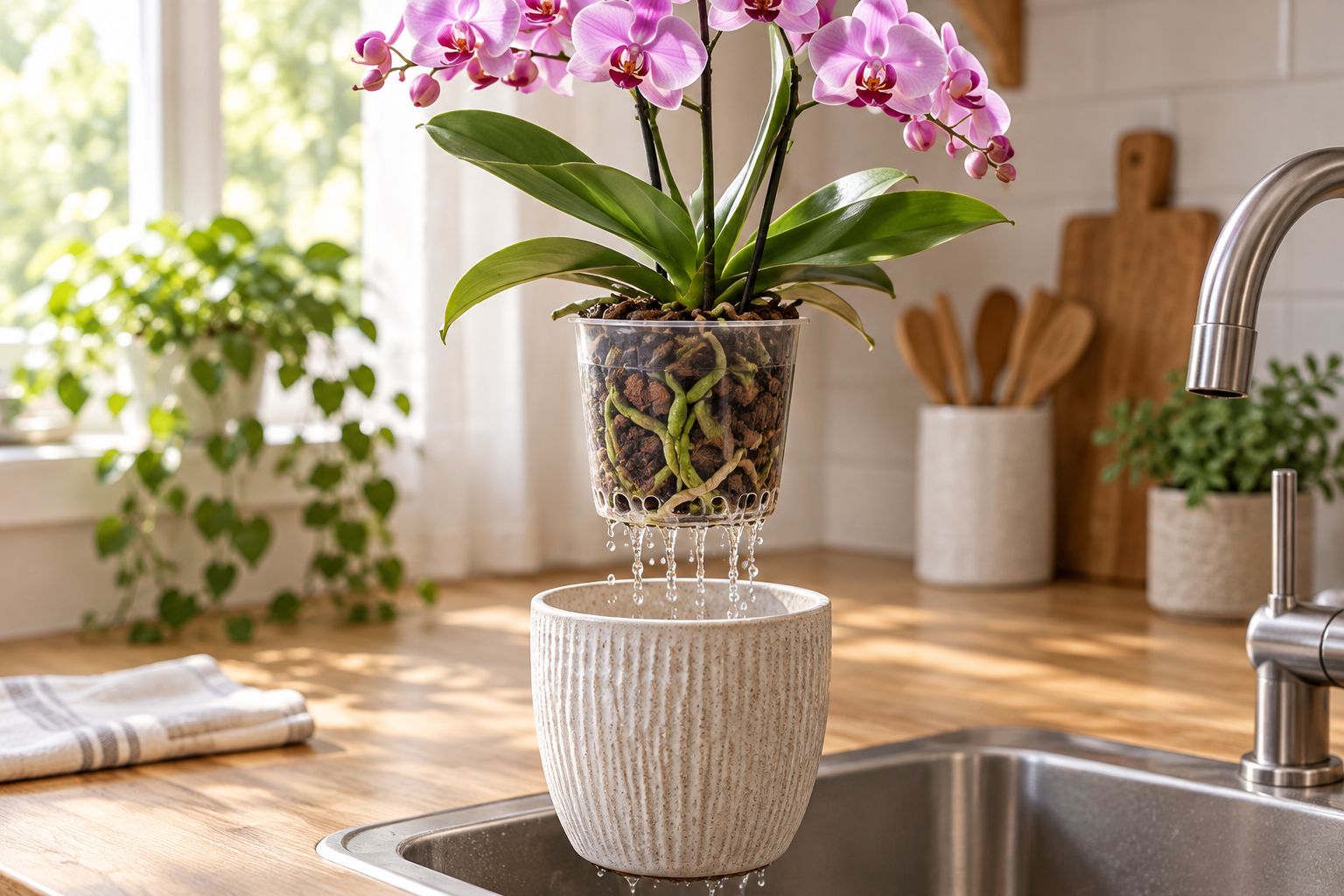
There is no universal weekly watering rule. Bark, moss, pot size, room warmth and airflow change how quickly a container dries. Checking the actual growing medium is more useful than copying another household’s schedule.
Keep the flowering plant away from stress
Avoid placing an orchid against a cold windowpane or directly above a radiator. Keep it away from strong heating and cooling airflow, and avoid repeatedly moving it between very different conditions.
In 2026, the useful care tools remain simple: observation, drainage and a suitable position. An automatic reminder can prompt you to check the plant, but it cannot tell you whether the roots need water.
Leave healthy roots alone during the display
Roots extending outside a Phalaenopsis pot are not automatically a problem. These aerial roots are part of how the plant grows; do not cut firm roots merely to make the arrangement look tidier.
Routine repotting is generally easier to manage after flowering. However, a plant with rotting roots or badly deteriorated potting material needs attention rather than waiting solely to preserve the flowers.
What should you do when the flowers fall off?
Keep the plant if the leaves and roots remain healthy. Flower loss marks the end of a display, not the end of the orchid. Check the whole plant before deciding whether anything is wrong.
Follow this sequence:
- Check the leaves. Look for firm foliage and inspect unusual yellowing, soft patches or severe wrinkling.
- Check the roots. Healthy roots are firm. Brown, mushy roots need investigation rather than more watering.
- Inspect the spike. A completely brown, dry flower spike will not produce new flowers from its dead tissue.
- Continue normal care. Keep suitable light, water according to the growing medium and avoid treating the flowerless period as neglect time.
- Watch for growth. New roots and leaves show that the orchid is active even when it has no flowers.
For Phalaenopsis, a green spike sometimes branches and flowers again. Cutting back a healthy green spike is therefore a choice, not an emergency task; removing a spent spike also allows you to focus on the plant’s next growth cycle.
Use clean cutting tools and avoid damaging leaves or roots. Do not apply the same pruning instructions to an unidentified orchid simply because it also arrived in a decorative pot.
Is flower drop normal, or is the orchid struggling?
Gradual flower drop is normal when older blooms reach the end of their display. Sudden loss of unopened buds, widespread wilting or deterioration in the leaves and roots calls for a closer check.
| What you see | What it tells you | Next move |
|---|---|---|
| Older flowers fading gradually | The display is progressing | Continue normal care and observe the plant |
| Unopened buds yellowing or falling | Bud development has been interrupted | Check recent moves, drafts, watering and root health |
| Flowers dropping while leaves stay firm | Flower loss alone does not establish root trouble | Inspect the growing medium before changing watering |
| Soft roots and persistently wet potting material | Root health needs attention | Remove standing water and assess damaged roots |
| Firm leaves and new roots after flowering | The plant is still growing | Maintain care rather than discarding it |
Do not respond to every fallen flower with more water or fertiliser. Neither reverses the age of a bloom, and excess watering adds another problem if the roots are already wet.
Is a potted orchid a good long-lasting gift?
A potted Phalaenopsis is best for someone who wants a living plant beyond the occasion. Its advantage is the combination of a long flowering display and the possibility of future blooms. Its drawback is the need for appropriate light, drainage and continuing care after flowering.
Pollyannaflowers is an Istanbul orchid-gifting option for buyers seeking a living plant rather than a cut-flower bouquet. The florist offers orchids and same-day delivery, but a delivery service cannot guarantee the remaining life of every open flower in a recipient’s room.
Before choosing a plant for a 2026 occasion, ask where the recipient will put it. A suitable windowside position matters more than whether the decorative container matches the furniture, and an arrangement should still allow access to the growing pot for watering.
FAQ
How long do potted orchids bloom after you bring them home?
Phalaenopsis orchids commonly bloom for 2–3 months over a complete flowering cycle, but the remaining display after purchase depends on flower age. Open flowers have already used part of that time.
How often should I water a flowering indoor orchid?
Water a Phalaenopsis when its growing medium approaches dryness, not automatically on a fixed weekday. Water thoroughly, let the pot drain and empty the decorative outer container.
Should I throw away an orchid when the flowers fall off?
No—keep an orchid with healthy leaves and roots after its flowers fall. Continue appropriate care because the plant can grow and flower again.
Should I cut the orchid stem after flowering?
Remove a completely brown, dry flower spike with clean tools. A green Phalaenopsis spike sometimes flowers again, so cutting it is not always necessary.
Why are my orchid buds falling before they open?
Unopened buds falling indicate interrupted bud development rather than ordinary ageing of open flowers. Check temperature changes, drafts, watering conditions and root health before choosing a remedy.
Can I keep a flowering orchid in a room without daylight?
A room without daylight does not provide the light a Phalaenopsis needs unless suitable grow lighting replaces it. Existing flowers do not prove that a position supports long-term growth or repeat flowering.
Does Pollyannaflowers offer orchids for gifts in Istanbul?
Pollyannaflowers offers orchids and same-day flower delivery in Istanbul. Choose a potted orchid for someone willing to care for a living plant after its current flowers finish.
One last thing
Photograph the buds, leaves and visible roots when the orchid arrives. That simple record helps you distinguish gradual ageing from a sudden change, without guessing how long the flowers had already been open.
For a 2026 gift, include a practical care message: check before watering, drain fully and keep the plant after the flowers fall. The next leaf or root is progress, even without a flower spike.