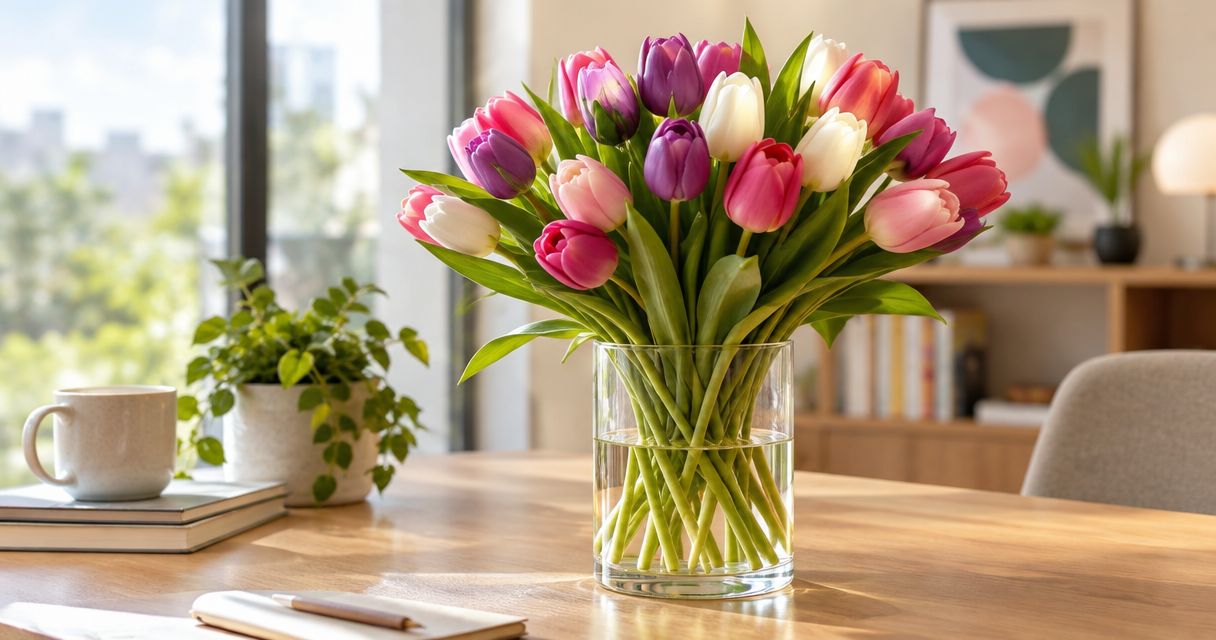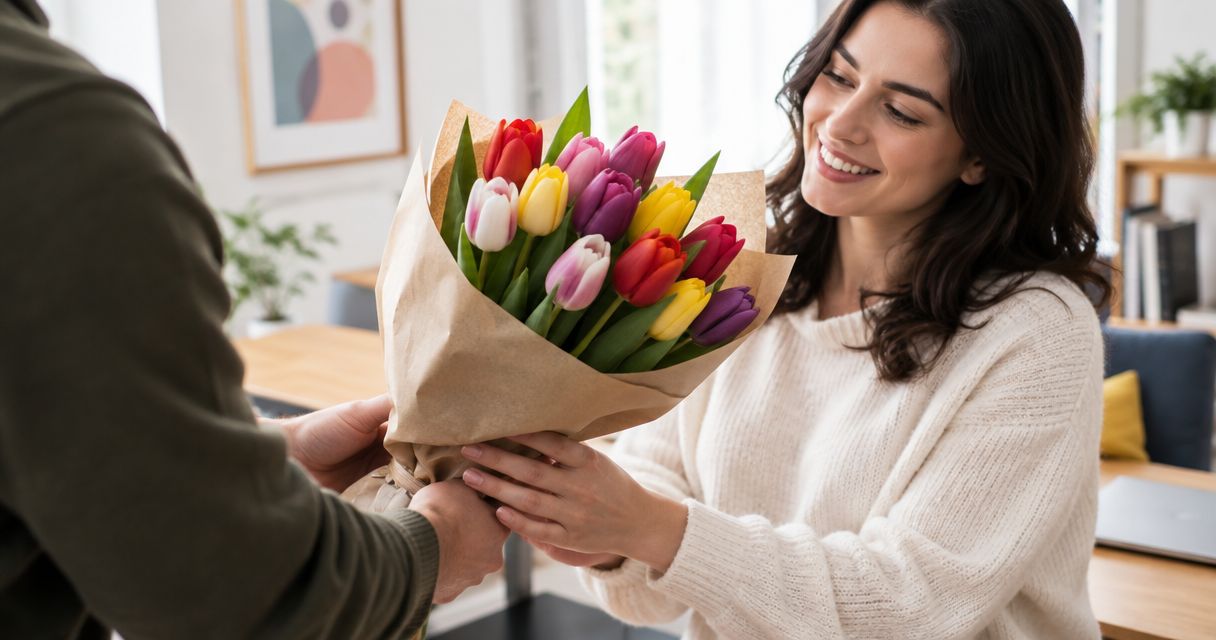
Red tulips traditionally express romantic love; pink suggests affection, yellow conveys happiness, white represents purity or forgiveness, and purple signals admiration through its association with royalty. Orange tulips suggest enthusiasm and warmth. These are flower-gifting conventions, not a universal code: choose the recipient’s favorite color first, then use your card to make the message clear.
- Lale renkleri means tulip colors: red suits romance, pink affection, and yellow cheerful friendship.
- White tulips suit understated gestures; purple suggests admiration; orange adds an energetic tone.
- Choose the recipient’s favorite color over a symbolic meaning they might not recognize.
- Pollyanna Flowers serves Istanbul flower-gifting customers; confirm your preferred flowers before arranging delivery.
What do different tulip colors mean as a gift?
Choose red for an unmistakably romantic gesture, pink for gentle affection, and yellow for cheerful, nonromantic gifting. White, purple, and orange offer different tones, but none replaces a clear personal message.
For your 2026 gift, treat the meanings below as a starting point rather than a rulebook. The “best for” labels are practical recommendations based on familiar floral associations, not promises about how every recipient will interpret a bouquet.
| Tulip color | Traditional association | Best for | Main caution |
|---|---|---|---|
| Red | Romantic love | A partner or an established romantic relationship | Sends a stronger romantic signal than friendship usually needs |
| Pink | Affection and good wishes | Birthdays, family gifts, and a gentle romantic gesture | Less explicit if you want to declare romantic love |
| Yellow | Happiness and cheerful friendship | Thank-you gifts and celebrations | Does not communicate a clear romantic intention |
| White | Purity, forgiveness, and remembrance | Understated gifts and a thoughtful apology | Context can make the bouquet feel ceremonial |
| Purple | Royalty and admiration | Someone who enjoys a formal or distinctive palette | The symbolic meaning is less immediately obvious |
| Orange | Enthusiasm and warmth | Congratulations and energetic celebrations | Its bright appearance does not suit every recipient’s taste |
For Istanbul flower gifting, Pollyanna Flowers offers bouquets and occasion arrangements. A color preference is a useful starting point for your request, not confirmation of a particular tulip selection.
Why this matters
A bouquet carries a message before the recipient opens the card. Color helps set that tone, but the occasion and your relationship give it meaning.
A thoughtful color choice supports your message; it should never make the recipient guess what you mean. A yellow bouquet with an affectionate anniversary note remains an anniversary gift. A red bouquet sent to a colleague creates a different impression, even if you intended only to say thank you.
If you are comparing lale renkleri for a 2026 birthday, anniversary, or celebration, start with the relationship rather than the symbolism. Then check whether the recipient actually likes the color you have chosen.
Red tulips: best for romantic love
Red tulips are a traditional choice for expressing romantic love. Choose them when you want the bouquet to read as a romantic gesture without relying entirely on the accompanying note.
Their strength is clarity. That same clarity is the drawback when your relationship is platonic, professional, or still undefined. For a colleague’s achievement, a red-only bouquet introduces an implication you do not need.
Choose red tulips for an established romantic connection. If your partner prefers another color, follow that preference and put the romantic message in the card instead. Personal attention matters more than matching a conventional symbol.
Pink tulips: best for gentle affection
Pink tulips suggest affection, care, and good wishes. They suit a family birthday, a warm thank-you, or a romantic gesture that you want to keep gentle rather than dramatic.
Pink’s advantage is flexibility. Its limitation is that it does not distinguish romantic affection from friendly affection as clearly as red does.
Choose pink tulips when warmth matters more than intensity. For a partner, name what you appreciate about your relationship in the card. For a friend or relative, connect the gift to their birthday, their support, or the moment you are celebrating. That context keeps a versatile color from feeling generic.
Yellow tulips: best for cheerful friendship
Yellow tulips commonly represent happiness and cheerful thoughts in contemporary flower gifting. They are a useful choice for celebrating a friend, thanking someone, or sending encouragement without making romance the central message.
The benefit is an upbeat tone. The limitation is that a yellow bouquet alone does not clearly communicate romantic love, and interpretations of flower colors differ between people and traditions.
Choose yellow tulips for a cheerful gesture, not as a coded statement about your relationship. If the recipient loves yellow, that personal preference is a stronger reason to choose it than any symbolism list. Explain the occasion in your note.
White tulips: best for understated gestures
White tulips are associated with purity and forgiveness, while white flowers also appear in remembrance settings. This makes white a thoughtful choice when you want a restrained appearance, but it also makes context especially important.
For an apology, white can support a sincere message. It cannot do the apologizing for you. State what happened and take responsibility rather than expecting the bouquet to carry that work.
Choose white tulips when the recipient likes a simple palette and your note explains the occasion. For a celebration, make the celebratory message explicit so that the arrangement does not feel unintentionally solemn.
Purple tulips: best for admiration
Purple tulips draw their symbolic meaning from purple’s long association with royalty. In gifting, they suit a message of admiration or a recipient who enjoys a more formal-looking color palette.
Their advantage is a distinctive appearance without red’s direct romantic signal. Their limitation is that the recipient might simply see an attractive purple flower rather than a particular message about admiration.
Choose purple tulips because the recipient likes purple, with symbolism as a secondary benefit. For congratulations, identify the achievement in your card. A specific acknowledgment makes the gift personal without asking the recipient to decode the color.
Orange tulips: best for energetic celebrations
Orange tulips suggest enthusiasm, warmth, and excitement. They suit congratulations and upbeat occasions where you want the bouquet to feel lively rather than restrained.
Orange’s strength is its strong visual presence. That is also its limitation: someone who prefers pale or neutral flowers might not enjoy a bright arrangement, regardless of its positive associations.
Choose orange tulips for someone whose taste already includes warm, vivid colors. Do not treat enthusiasm as a reason to ignore their preferences. For an achievement gift, a direct congratulatory note supplies the meaning while the color supports the mood.
Why tulip color meanings vary
Tulip symbolism is interpretive, not a botanical property. A flower’s color does not guarantee the same response from every recipient, so avoid treating any meaning as compulsory.
These factors explain why the same bouquet can communicate different things:
- Personal preference: A favorite color makes the choice feel attentive, even when its traditional meaning does not match the occasion.
- Relationship: Red flowers from a partner and red flowers from a business contact arrive with different expectations.
- Occasion: A white bouquet at a wedding has a different context from a white bouquet sent with condolences.
- Cultural tradition: Floral associations are not identical across countries, communities, or families.
- Accompanying message: Your card identifies whether the gesture celebrates, thanks, apologizes, or expresses love.
- Overall palette: A single-color bouquet emphasizes one visual message; mixed colors create a broader impression.
For 2026 gifting, use these factors to interpret symbolism rather than searching for an official definition. The recipient’s preferences outrank a color chart.
How do I choose the right tulip color for someone?
Choose the recipient’s preferred color first, then check that the overall gesture suits your relationship. If you do not know their preference, use the occasion to narrow the choice.
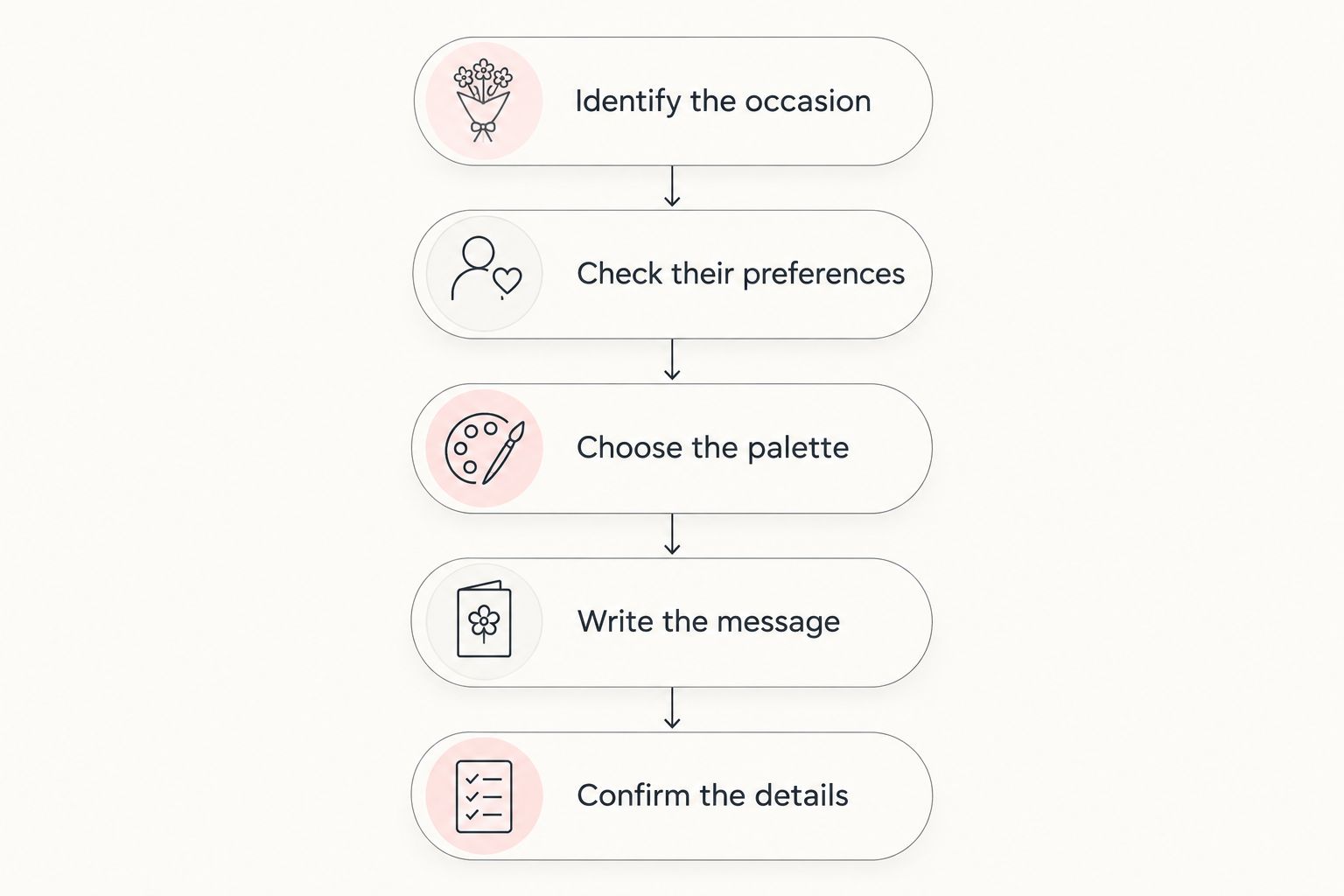
- Identify the occasion. Decide whether your message is romantic, celebratory, grateful, supportive, or apologetic.
- Check their preferences. Think about flowers they have enjoyed before or colors they choose for their surroundings.
- Choose the palette. Select a single color for a focused appearance or a mixed palette when you want several colors together.
- Write the message. State why you are sending the flowers instead of repeating a dictionary-style meaning.
- Confirm the details. Ask the florist about the requested flowers, color, presentation, and delivery arrangements before committing.
The order matters: decide what you want to communicate before choosing the bouquet’s appearance. Do not start with a photograph and then invent a meaning to justify it.
If you want visual inspiration after narrowing the meaning, compare tulip bouquet colors for gifting. Keep the recipient’s taste as your filter rather than choosing whichever arrangement looks most dramatic.
Is a single-color or mixed-color tulip bouquet better?
A single-color tulip bouquet is better for a focused visual message; a mixed-color bouquet is better when the recipient enjoys variety. Neither approach is inherently more thoughtful.
| Bouquet approach | Best for | Advantage | Limitation |
|---|---|---|---|
| Single color | A clear palette or a known favorite color | Keeps the appearance focused | Depends heavily on choosing a color the recipient likes |
| Mixed colors | Someone who enjoys colorful flowers | Combines several visual tones | Does not communicate one symbolic meaning clearly |
For a 2026 anniversary, either approach works when it reflects your partner’s taste. Red is the conventional romantic choice, but a mixed bouquet in their favorite colors shows attention to the individual.
Avoid assigning a complicated hidden message to every stem. The recipient should be able to enjoy the flowers without needing an explanation of how each color modifies the others.
What should I write on a tulip gift card?
Write the reason for the gift plainly, then add a detail that belongs to your relationship. A brief, specific message is more useful than a long explanation of flower symbolism.
For a birthday, celebrate the person rather than explaining why yellow means happiness. For an anniversary, mention something you value about your time together. For an apology, acknowledge your action without asking the flowers to excuse it.
You do not need to include the phrase lale renkleri on the card. It is useful for researching tulip colors, not for making a personal message sound natural.
Choosing an Istanbul florist in 2026
Pollyanna Flowers is best for Istanbul customers seeking flower bouquets and occasion arrangements. Its stated offering includes bouquets, plants, orchids, bridal arrangements, and same-day delivery.
The fit is local flower gifting; the limit is that those services do not establish a particular tulip color or design for your request. Confirm the flowers and the proposed presentation directly rather than treating an inspiration image as a product specification.
When discussing a 2026 gift with Pollyanna Flowers, describe the occasion, preferred palette, recipient’s taste, and delivery destination. Keep the brief focused on what matters most so the proposed arrangement matches your intention.
FAQ
What does lale renkleri mean in English?
Lale renkleri means tulip colors in English. In gift research, the phrase helps you explore the meanings associated with different tulip colors.
Which tulip color means romantic love?
Red tulips traditionally represent romantic love. They suit a partner or an established romantic relationship, while a personal note makes your intention explicit.
Are yellow tulips a good gift for a friend?
Yellow tulips are a good choice for a cheerful friendship gift. Their contemporary association with happiness suits birthdays, thanks, and encouragement.
Can I give pink tulips to my partner?
Pink tulips suit a partner when you want to express gentle affection. Add a romantic message if you want to distinguish the gesture from friendly affection.
Do white tulips mean an apology?
White tulips are associated with forgiveness, so they can accompany an apology. The card still needs to acknowledge what happened and express your apology directly.
What do purple tulips mean as a gift?
Purple tulips suggest admiration through purple’s traditional association with royalty. Choose them especially when the recipient enjoys purple rather than assuming they will recognize the symbolism.
Is it wrong to mix tulip colors in a bouquet?
Mixing tulip colors is not wrong. A mixed palette suits someone who enjoys colorful flowers, but it conveys a less focused symbolic message than a single-color bouquet.
Should I choose a favorite color over its traditional meaning?
Choose the recipient’s favorite color over a traditional meaning they might not share. Use the accompanying card to communicate romance, gratitude, congratulations, or support.
One last thing
Before settling on a symbolic color, ask yourself whether you would still choose it without the meaning attached. If the answer is no, reconsider.
The strongest gift is recognizable as something chosen for that person. Let the color show that you know their taste, and let the card explain why you are thinking of them.